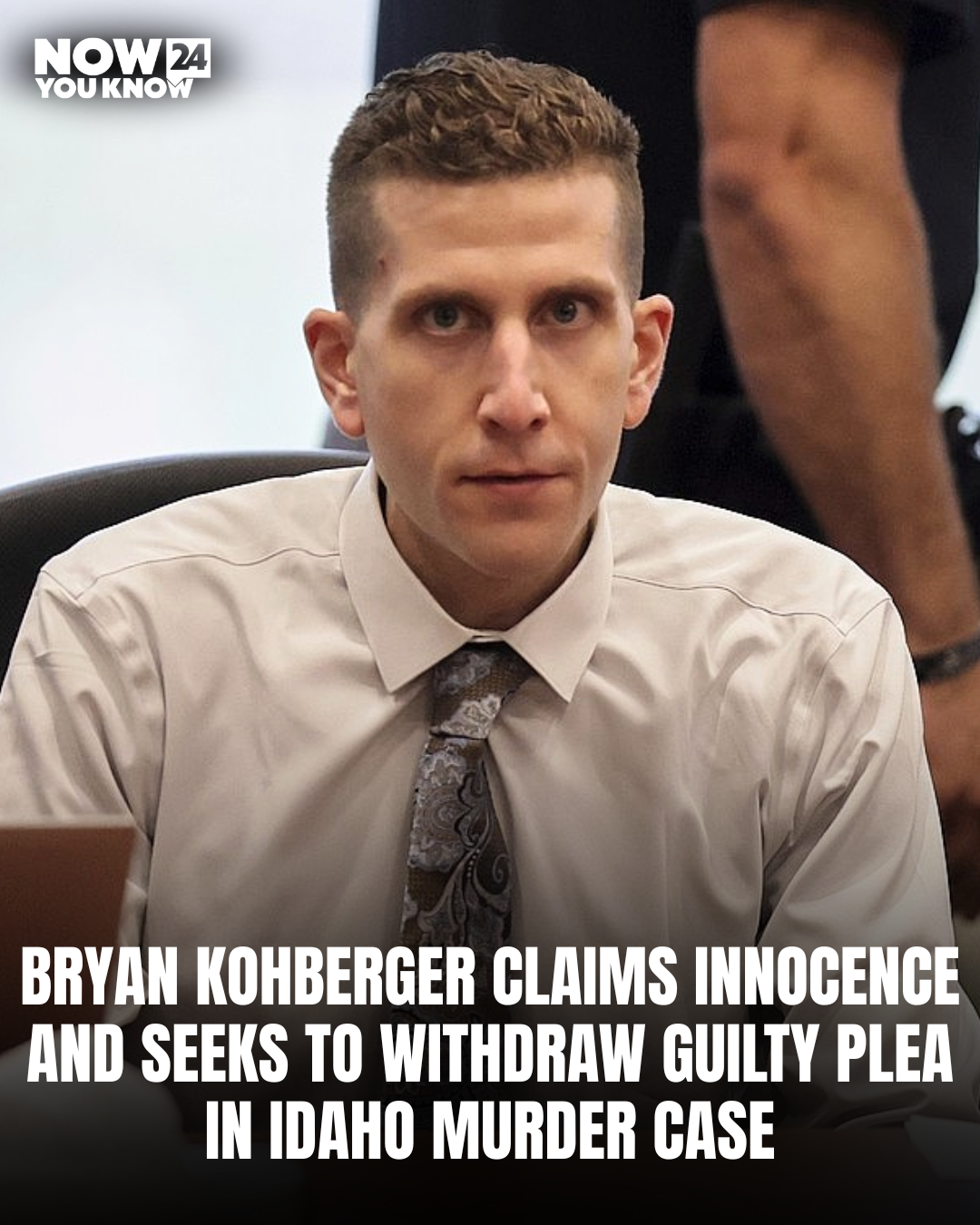

More than a year after accepting a plea deal that sent him to prison for life, Bryan Kohberger is now claiming he is innocent and attempting to challenge his conviction in the case that shocked Idaho and the nation.
Kohberger, who was sentenced to four consecutive life sentences for the murders of four University of Idaho students, says he wants to withdraw his guilty plea and pursue a new legal battle. His claims come despite his admission in court and the agreement that helped him avoid the death penalty.
Kohberger Challenges His Conviction
In a statement shared with The New York Times, Kohberger said his “actual innocence” is the reason he is seeking to overturn the plea. He argued that the agreement was based on what he described as “false promises” and claimed that justice was not served.
The former criminology student did not provide specific details about the evidence against him or explain why he accepted the plea deal if he maintained his innocence. His request now faces significant legal hurdles, as overturning a guilty plea after sentencing is extremely difficult.
A Case That Captured National Attention
Kohberger was convicted in connection with the deaths of Madison Mogen, Kaylee Goncalves, Xana Kernodle, and Ethan Chapin, four University of Idaho students who were found stabbed to death in an off-campus home in Moscow, Idaho, in November 2022.
The investigation attracted widespread media attention due to the brutality of the crime and the lengthy search for a suspect before Kohberger’s arrest in December 2022.
The Plea Deal That Avoided the Death Penalty
In 2025, Kohberger pleaded guilty to four counts of murder and one count of burglary as part of an agreement with prosecutors. In exchange, prosecutors agreed not to seek the death penalty.
Judge Steven Hippler later sentenced him to life in prison without the possibility of parole, along with additional penalties related to the burglary charge.
Legal Experts Question the Challenge
Requests to withdraw a guilty plea after conviction are rarely successful, especially when the defendant has already admitted guilt in court. Typically, a person seeking to reverse such a plea must show significant legal errors, coercion, or new evidence that could change the outcome.
Kohberger’s legal team has not publicly detailed what arguments they plan to use in their effort to reopen the case.
Victims’ Families Still Await Closure
The families of the victims have previously described the case as deeply painful and emotionally devastating. Kohberger’s decision to challenge his conviction could bring renewed attention to a case many hoped had reached its conclusion.
For now, he remains incarcerated at the Idaho Maximum Security Institution, while courts will determine whether his request to revisit the plea agreement has legal grounds.