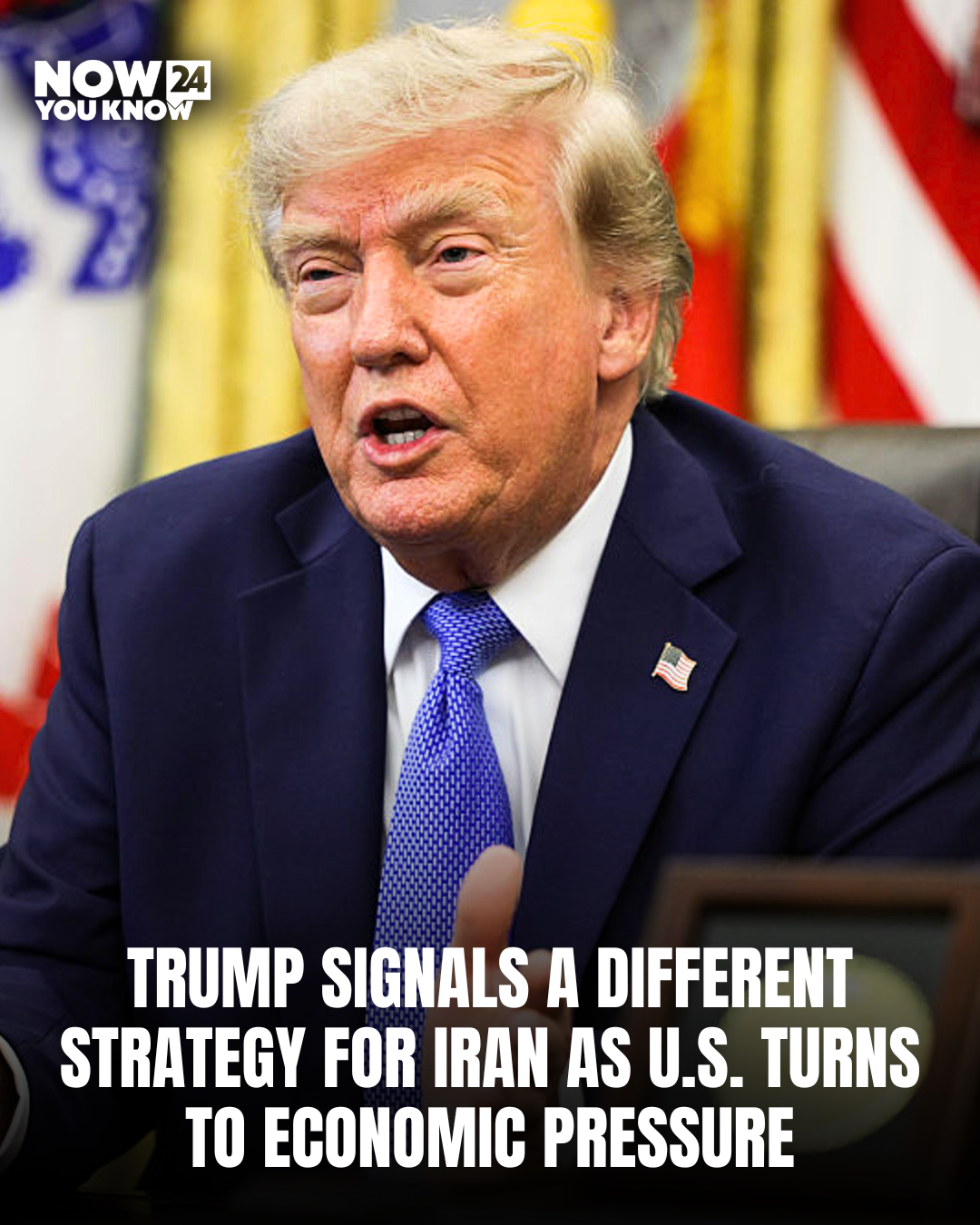

President Donald Trump is signaling a more restrained approach toward Iran, saying the United States is currently relying on economic pressure rather than immediately launching additional major military strikes.
In an interview with Axios, Trump said Washington was “low-keying it” and described the current negotiations with Tehran as only partly serious. He pointed to the pressure already being placed on Iran’s economy and suggested that the situation could eventually force Iranian leaders back toward an agreement.
Why the Strategy Is Changing
Trump argued that Iran is facing severe economic difficulties, including high inflation and financial pressure on its government. The U.S. has also maintained a naval blockade targeting Iranian ports, adding another layer of pressure alongside sanctions.
The change does not mean the military option has disappeared. Trump and other U.S. officials have continued to emphasize that Washington has multiple tools available, including diplomatic, economic and military measures. For now, however, the administration appears to be giving economic pressure more time to work.
Oil prices have also become an important part of the calculation. Trump pointed to crude prices around the mid-$70s per barrel, arguing that the relatively lower prices have reduced some of the economic pain Americans could otherwise feel from the conflict.
The Strait of Hormuz Problem
Much of the uncertainty centers on the Strait of Hormuz, one of the world’s most important energy-shipping routes. Iran and Oman have been involved in discussions about establishing a route for commercial shipping, but a broader reopening of the waterway remains unresolved.
Iran has said that the United States must change its behavior before the strait can fully reopen, including demands involving the naval blockade, military operations and compensation for wartime damage. Those conditions remain a major obstacle to a wider agreement.
The situation is therefore far from settled. A shipping arrangement could reduce some pressure on global energy markets, but it would not necessarily represent a comprehensive peace agreement between Washington and Tehran.
For Trump, the current strategy amounts to a high-stakes economic gamble. The administration is betting that sanctions, restrictions on Iranian trade and pressure on the country’s economy can achieve what further military action might not, while avoiding another major escalation.
That could also matter for American consumers. If oil markets remain relatively stable and shipping through the region improves, the economic effects of the conflict could become less visible at the gas pump. But any renewed fighting or major disruption around Hormuz could quickly reverse that trend.