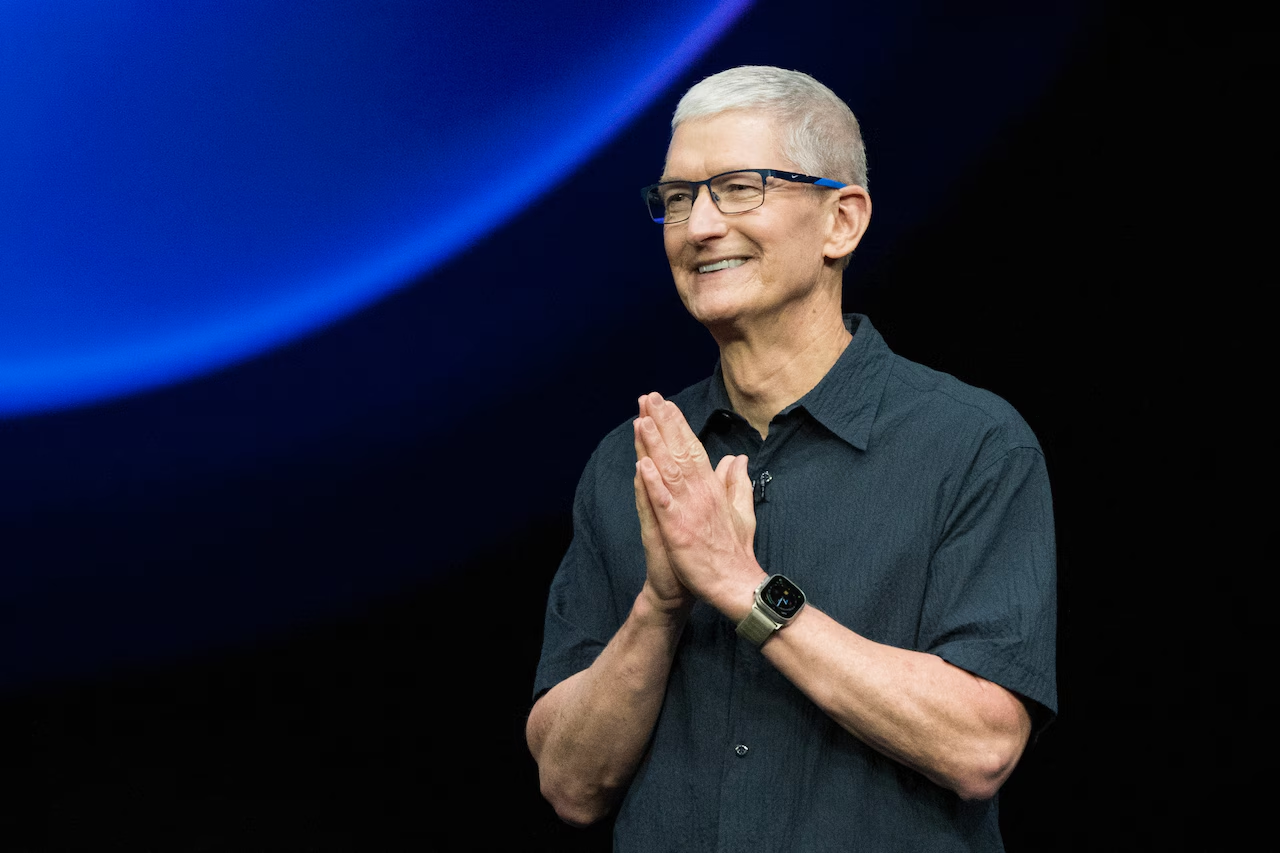

The technology world is preparing for a historic transition as Tim Cook announces his departure from Apple’s CEO position after 15 years at the helm. Come September 1, 2026, Cook will assume the role of Executive Chairman, passing the chief executive torch to John Ternus, Apple’s current hardware engineering boss.
This leadership change marks the end of an era that began in 2011 when Cook faced the seemingly impossible task of succeeding Steve Jobs, Apple’s legendary co-founder. Yet Cook’s tenure has proven that effective leadership isn’t about mimicking predecessors but rather forging your own path while building on established foundations.
**The Numbers Behind Cook’s Success**
Cook’s achievements speak volumes about his leadership approach. During his tenure, Apple sold approximately 3 billion iPhones and witnessed its market capitalization explode from $300 billion to an astounding $4 trillion. This growth trajectory is particularly impressive considering the average CEO tenure in the first half of 2025 was just 6.8 years, according to Russell Reynolds data – Cook doubled that average.
The transformation wasn’t just about maintaining the status quo. Cook successfully expanded Apple’s ecosystem with game-changing products like the Apple Watch and AirPods, while revolutionizing the company’s services division by transforming the struggling MobileMe subscription into the highly successful iCloud storage service.
**The Art of Asking Difficult Questions**
One of Cook’s most distinctive leadership traits is his methodical approach to problem-solving through rigorous questioning. Unlike leaders who dominate through volume, Cook employs what colleagues describe as surgical precision in his inquiries.
Greg Joswiak, Apple’s senior vice president of worldwide marketing, characterizes Cook as a “quiet leader” who isn’t prone to raising his voice. Instead, Cook deploys an arsenal of probing questions that ensure every team member thoroughly understands their responsibilities. This interrogative style proved particularly effective in managing Apple’s complex supply chain, ensuring the company could meet the intense global demand for its products.
During his time as Chief Operating Officer before becoming CEO, Cook developed a reputation for wearing down unprepared executives with what one insider described as “an endless barrage of questions.” This approach wasn’t about intimidation but rather about maintaining the exceptional standards that define Apple’s operations.
**Building Success Without Imitation**
Perhaps Cook’s greatest achievement was resisting the temptation to become a Steve Jobs impersonator. Instead of adopting Jobs’ charismatic, larger-than-life persona, Cook leveraged his operational expertise and diplomatic skills to chart a different course for Apple.
Morningstar analyst William Kerwin highlights Cook’s key accomplishments: “Tim Cook’s greatest accomplishments are the financial evolution of the company, the integration of Apple silicon, and maintaining the iPhone’s dominant walled garden ecosystem.” This assessment underscores how Cook transformed Apple by playing to his strengths rather than trying to replicate his predecessor’s style.
**Strategic Focus Over Trend Chasing**
While competitors rushed into artificial intelligence with massive investments, Cook maintained a more measured approach. Though some critics view Apple as lagging in the AI race, Cook’s strategy of careful evaluation over hasty adoption may prove prescient as other tech giants grapple with the enormous costs of AI development.
Instead, Cook focused on strengthening Apple’s core ecosystem, launching accessories and services that kept customers firmly within the Apple universe. This strategy drove consistent growth in the services sector, creating recurring revenue streams that complemented hardware sales.
**The Power of Personal Diplomacy**
Cook’s diplomatic approach to business and politics has yielded tangible benefits for Apple. His willingness to engage directly with political leaders, regardless of their alignment with his personal views, has proven invaluable. In 2019, President Donald Trump noted that Cook was the only tech leader who called him personally.
This relationship-building paid dividends when Cook successfully negotiated exemptions for various Apple products from tariffs. More recently, Cook announced Apple’s commitment to invest $600 billion in U.S. manufacturing over the next four years, demonstrating his ability to navigate complex political landscapes.
“I feel very strongly about engaging with people regardless of whether they agree with you or not,” Cook explained in a 2023 GQ interview. “I actually think it’s even more important to engage when there’s disagreement.”
**Personal Values as Professional Strength**
Despite his generally private nature, Cook made history in 2014 by becoming the first Fortune 500 CEO to publicly come out as gay. This decision, detailed in a Bloomberg Businessweek essay, wasn’t about personal publicity but rather about providing hope to young people struggling with their identity.
“Being gay has given me a deeper understanding of what it means to be in the minority and provided a window into the challenges that people in other minority groups deal with every day,” Cook wrote. This perspective has informed his advocacy for LGBTQ+ rights, including criticism of his home state Alabama’s stance on equality issues.
**Looking Ahead**
As Cook prepares to transition to Executive Chairman, his successor John Ternus inherits a company fundamentally transformed from the one Cook took over in 2011. The lessons from Cook’s tenure – the importance of authentic leadership, strategic patience, diplomatic engagement, and personal conviction – offer a blueprint for executives navigating today’s complex business environment.
Cook’s legacy demonstrates that successful leadership isn’t about being the loudest voice in the room or blindly following industry trends. Instead, it’s about asking the right questions, building on existing strengths, and having the courage to lead authentically while staying true to core values.