
When Apple announced John Ternus as its next chief executive on Monday, with Tim Cook transitioning to executive chairman, it marked the end of an era defined by one of the boldest strategic decisions in modern business history. Cook’s transformation of China from a manufacturing hub into the cornerstone of Apple’s global empire reshaped not just one company, but the entire technology industry.
**From Crisis to Opportunity: The Early Years**
The story begins in 1998, when Cook joined a struggling Apple that was merely 90 days from bankruptcy, according to cofounder Steve Jobs’ own assessment from 1997. Hired specifically to overhaul the company’s chaotic operations, Cook made a decision that would define Apple’s future: moving production to China.
This wasn’t simply about cutting costs. Cook recognized that China’s emerging manufacturing ecosystem offered something unique—the ability to scale production with unprecedented speed and flexibility. The country was actively transitioning from producing low-cost goods like toys and textiles to sophisticated electronics, creating perfect timing for Apple’s ambitious plans.
**The Foxconn Partnership That Changed Everything**
Around 2000, Cook met Terry Gou, whose company Foxconn would become Apple’s primary manufacturing partner. This relationship proved transformative. Foxconn assembled the early iPods after their 2001 launch, but the real test came with the iPhone’s 2007 debut. The partnership enabled Apple to produce and distribute products globally at a scale that left competitors struggling to keep pace.
**Building a Consumer Empire**
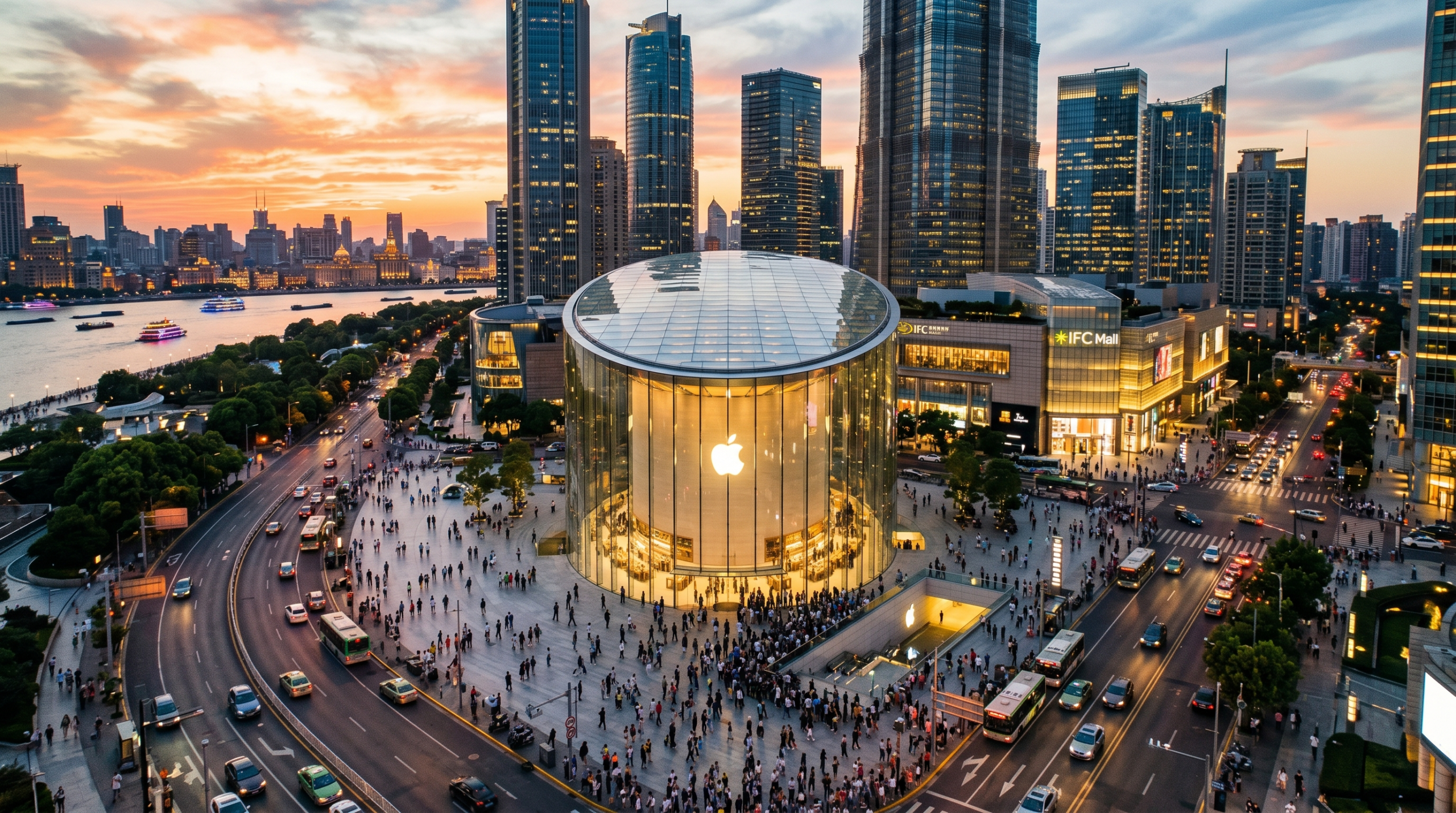
While manufacturing was the foundation, Cook’s vision extended far beyond factories. In 2001, Apple established its first official presence in China through a Shanghai-based trading company. By the early 2010s, the company was aggressively expanding its retail footprint across major Chinese cities.
The watershed moment arrived in 2013 when Apple secured a partnership with China Mobile, then the world’s largest carrier with hundreds of millions of subscribers. Cook personally championed this deal, describing it as bringing “the world’s best smartphone to the very largest and now the fastest network in China” during a 2014 CNBC interview.
This consumer strategy paid remarkable dividends. China’s contribution to Apple’s revenue grew from approximately $59 billion in 2015 to $64 billion by 2025, consistently ranking among the company’s largest markets. By last year, Apple had captured 22% of China’s smartphone market, claiming the top position.
**The $275 Billion Investment Strategy**
Cook’s commitment to China went far beyond simple business transactions. In 2016, Apple invested $1 billion in Didi Chuxing, China’s dominant ride-hailing platform—the largest investment in that company’s history. Cook explained this move as essential for understanding the Chinese market more deeply.
Perhaps most significantly, in 2021, Cook signed a massive $275 billion agreement with Chinese officials. This deal, reported by The Information, included commitments to retail expansion, research and development centers, and renewable energy projects. It was designed to ease regulatory pressures while cementing Apple’s position in the country. As recently as March 2025, Cook announced an additional $101 million energy fund during a China visit, reinforcing the company’s long-term commitment.
**Navigating Geopolitical Tensions**
Cook’s tenure required extraordinary diplomatic skills as US-China relations deteriorated. During the 2018 trade war, he successfully lobbied President Donald Trump about the competitive disadvantages tariffs would create against rivals like Samsung. Trump later acknowledged Cook had made a “good case,” leading to 10 of 15 tariff exemption requests being approved in 2019. Apple’s smartphones and electronics were again spared from tariffs in 2025.
Simultaneously, Cook maintained strong relationships with Chinese officials, regularly attending forums like the China Development Forum and meeting with senior regulators. This delicate balancing act allowed Apple to thrive despite escalating tensions between the world’s two largest economies.
**The Double-Edged Sword**
Cook’s China strategy undeniably powered Apple’s rise to become one of the world’s most valuable companies. However, this deep integration now presents significant risks. Supply chain disruptions, regulatory changes, or geopolitical conflicts could severely impact Apple’s operations. The company’s heavy reliance on Chinese manufacturing and consumers makes it vulnerable to factors beyond its control.
**Looking Forward**
As John Ternus prepares to take the helm, he inherits both the benefits and challenges of Cook’s China legacy. The incoming CEO, previously senior vice president of hardware engineering, must navigate an increasingly complex relationship while potentially diversifying Apple’s geographic exposure.
Cook’s transformation of Apple through China represents one of the most successful strategic pivots in corporate history. From near-bankruptcy to global dominance, the journey illustrates both the rewards and risks of deep international integration. As Cook transitions to executive chairman, his China strategy remains the defining achievement—and ongoing challenge—of his remarkable tenure.