




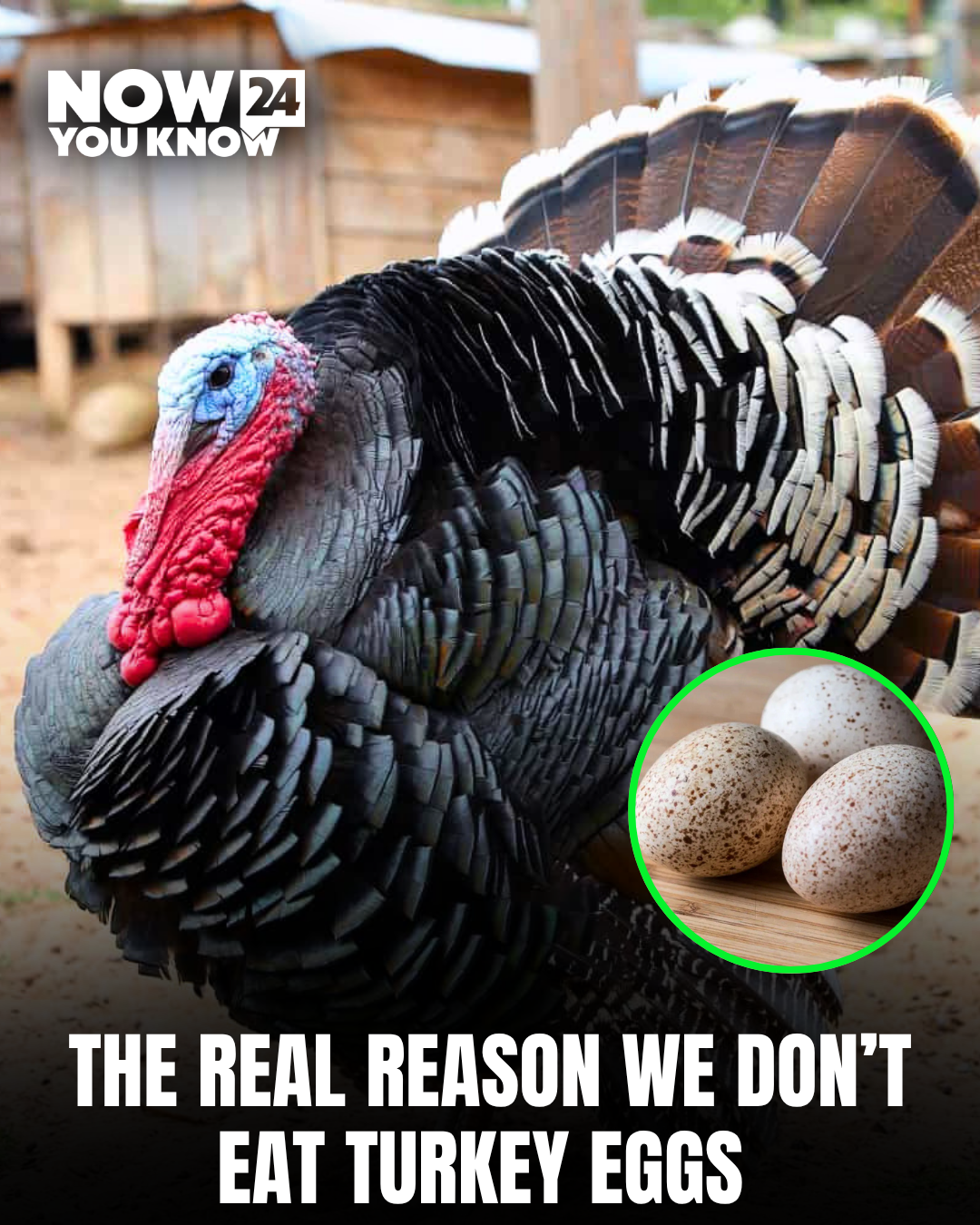

Many people are only just discovering the reason turkey eggs are rarely eaten or sold in supermarkets, despite being perfectly edible.
At first glance, it might seem strange, especially since turkeys are widely farmed for meat. However, the answer comes down to cost, production, and practicality rather than taste or safety.

Turkey eggs are actually safe to eat and very similar to chicken eggs, just larger with slightly thicker shells and a richer texture. In fact, many people who have tried them say they taste almost the same.
The real issue is how turkeys reproduce compared to chickens. A hen can lay an egg almost every day, but turkeys only lay around one to two eggs per week, making production far lower.
On top of that, turkeys take longer to reach egg-laying age and require more space, food, and care to raise.
This means turkey eggs are simply not economically viable for large-scale farming. When they do appear, they can cost several dollars per egg, making them far more expensive than standard chicken eggs.
Because of this, most farmers choose to focus on raising turkeys for meat rather than eggs, which brings in far more consistent profit and demand.
There’s also a practical issue: turkey eggs are larger, harder to handle, and less efficient to package and distribute, which further limits their commercial use.
Despite all this, turkey eggs are still considered nutritious, offering a good source of protein and other nutrients similar to chicken eggs.
So while they may not be common on breakfast tables, it’s not because they’re unusual or unsafe — it’s simply because they don’t make economic sense to produce on a large scale.