
Here’s what most home cooks get catastrophically wrong about summer cooking: they think it’s about keeping things light and simple, so they under-season, under-char, and under-develop the very flavors that make seasonal ingredients sing. The result? Bland grilled chicken, watery tomato salads, and vegetables that taste like they’re apologizing for existing.
I’ve spent two decades in Michelin kitchens learning one fundamental truth: summer ingredients are concentrated flavor bombs that demand bold technique, not timid treatment. When MasterChef winner Brin Pirathapan shares summer recipes, he understands this instinctively — and his approach reveals exactly where conventional summer cooking goes wrong.
The Science Behind Summer Flavor Intensity
Summer produce contains 20-40% more natural sugars than winter vegetables due to extended sunlight exposure and rapid ripening cycles. These sugars are your secret weapon, but only if you know how to caramelize them properly. The Maillard reaction — the chemical process that creates complex flavors through browning — doesn’t take a vacation just because it’s hot outside.
Research published in the Journal of Food Science shows that vegetables cooked at high heat (above 285°F/140°C) develop over 600 distinct flavor compounds compared to just 40 in raw or steamed versions. Yet home cooks consistently undercook summer vegetables, afraid of “heaviness” and missing the entire point of seasonal cooking.
Your farmers market tomatoes, zucchini, and corn aren’t delicate flowers — they’re concentrated repositories of umami, sugars, and volatile aromatic compounds waiting to be unlocked through proper heat application and seasoning.
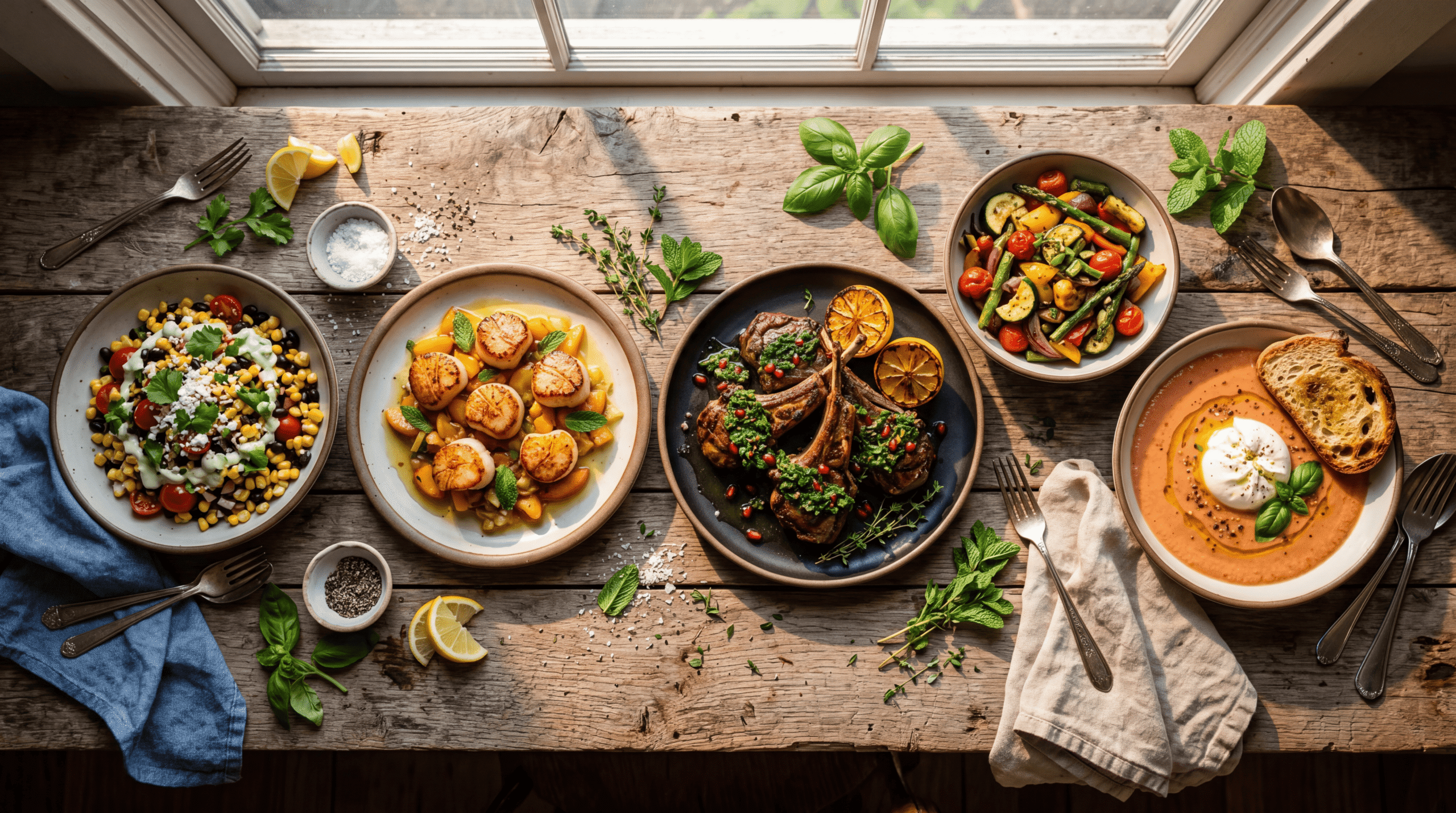
Recipe 1: Charred Corn Salad With Lime Crema (The Way It Should Taste)
Most corn salads are criminally underseasoned messes of raw kernels swimming in mayo. This version builds flavor through layered charring and fat-soluble flavor extraction.
Why it works: Corn kernels contain locked starches that only release their sweetness under intense heat. By charring whole cobs over direct flame (not boiling, never boiling), you trigger caramelization while maintaining structural integrity. The char isn’t aesthetic — it’s flavor architecture.
Ingredients:
- 6 ears fresh corn, husks removed
- 3 tablespoons neutral oil (grapeseed or avocado)
- 1 cup Mexican crema or full-fat sour cream
- 2 limes, zested and juiced
- 1 teaspoon ground cumin (toasted)
- ½ cup crumbled Cotija cheese
- ¼ cup fresh cilantro, roughly chopped
- 1 jalapeño, finely minced
- Flaky sea salt and black pepper
Technique: Brush corn with oil and season aggressively with salt. Place directly over high flame or under a broiler set to maximum. Rotate every 2-3 minutes until 30% of kernels show deep brown to black spots — this takes courage but delivers flavor. Cut kernels from cobs. Mix crema with lime juice, zest, and cumin. Toss warm corn with crema mixture, cheese, cilantro, and jalapeño. Season with more salt than feels comfortable — corn needs it.
The lime acid cuts through the char’s bitterness while amplifying the corn’s natural sweetness through flavor contrast. This is chemistry, not cooking.
Recipe 2: Seared Scallops With Brown Butter and Stone Fruit
Summer seafood suffers from the same timid treatment as vegetables. Scallops are 80% water and pure protein — they demand aggressive heat to develop the golden crust that makes them worth eating.
The critical mistake: Home cooks add scallops to insufficiently hot pans with too little space between them, causing them to steam rather than sear. You need a smoking hot pan and scallops so dry they feel almost sticky.
Ingredients:
- 12 large sea scallops (dry-packed, never “wet” or treated)
- 3 tablespoons clarified butter or ghee
- 2 ripe peaches or apricots, sliced into wedges
- 2 tablespoons unsalted butter
- 1 tablespoon white wine vinegar
- Fresh basil leaves
- Flaky salt
Technique: Pat scallops completely dry with paper towels, then let them air-dry on a rack for 20 minutes (this is non-negotiable). Season with salt just before cooking. Heat clarified butter in a cast-iron skillet until it shimmers and just begins to smoke. Add scallops with 2 inches between each one. Do not touch them for 90 seconds. Flip once when deep golden crust forms. Cook 60 seconds more. Remove to plate.
In the same pan, add whole butter and stone fruit wedges. Let butter brown (it will foam, then settle, then turn nutty and golden). Add vinegar to deglaze. The acid-fat-fruit trinity creates a sauce with more complexity than any recipe deserves. Spoon over scallops and finish with basil and flaky salt.
The Maillard reaction on the scallop crust creates melanoidins — brown pigment compounds that taste simultaneously sweet, savory, and roasted. This is why searing matters more than any other single step.
Recipe 3: Grilled Lamb Chops With Herb Salsa Verde
Summer doesn’t mean abandoning bold proteins — it means pairing them with bright, acidic counterpoints that cut through richness. Lamb chops are underutilized summer stars because cooks fear their intensity.
Why lamb works in summer: Lamb fat melts at a higher temperature than beef or pork, meaning it stays solid at room temperature but liquefies gloriously on the grill, self-basting the meat while crisping the edges. The key is purchasing rib chops with the fat cap intact, not trimmed away by timid butchers.
Ingredients:
- 8 lamb rib chops, frenched, at room temperature
- Olive oil, salt, black pepper
- For salsa verde: 1 cup flat-leaf parsley, 1 cup cilantro, ½ cup mint, 2 anchovy fillets, 2 garlic cloves, 3 tablespoons capers, ½ cup excellent olive oil, 2 tablespoons red wine vinegar, zest of 1 lemon
Technique: Season lamb chops generously 30 minutes before cooking. Grill over direct high heat for 3 minutes per side for medium-rare (internal temperature 130°F). Let rest 5 minutes. Meanwhile, pulse all salsa verde ingredients in a food processor until chunky-smooth. The herbs should be chopped but not pureed.
Serve lamb with generous spoonfuls of salsa verde. The chlorophyll in fresh herbs actually helps your palate perceive the lamb as less heavy through aromatic interference — a phenomenon studied extensively at the Culinary Institute.
Recipe 4: Pan-Roasted Summer Vegetables With Garlic Confit
The single biggest failure in home cooking is treating vegetables as side dishes rather than the main event. Summer squash, peppers, and eggplant contain enough natural sugars and umami compounds to rival any protein — if you stop boiling them into submission.
Ingredients:
- 2 medium zucchini, cut into 1-inch coins
- 1 large eggplant, cut into 1-inch cubes
- 2 red bell peppers, cut into thick strips
- 1 pint cherry tomatoes
- 1 head garlic, cloves separated and peeled
- ½ cup olive oil
- Fresh thyme sprigs
- Red wine vinegar
- Salt, pepper
Critical technique: Make garlic confit first by simmering peeled garlic cloves in olive oil at 200°F for 45 minutes until golden and soft. This converts harsh allicin compounds into sweet, caramelized luxury. Strain and reserve the garlic oil.
Heat a large cast-iron skillet until smoking. Add vegetables in a single layer (work in batches if necessary). Do not stir for 4 minutes. Let them develop serious char. Flip and repeat. Add garlic confit cloves, thyme, and cherry tomatoes in final 2 minutes. Finish with a splash of red wine vinegar and aggressive seasoning.
The char creates a Maillard crust while the interior steams in its own moisture — giving you contrasting textures and concentrated flavor that no raw or steamed vegetable can match.
Recipe 5: Chilled Tomato Soup With Burrata and Basil Oil
Cold soups are the ultimate test of a cook’s understanding of seasoning. Without heat to amplify flavors, you must build intensity through layering, acidity, and fat.
Ingredients:
- 3 pounds peak-season tomatoes (mixed varieties)
- 1 cucumber, peeled and roughly chopped
- 1 red bell pepper, charred and peeled
- 2 garlic cloves
- ¼ cup sherry vinegar
- ½ cup excellent olive oil
- Salt, to taste (more than you think)
- Fresh burrata
- For basil oil: 2 cups basil leaves, ½ cup olive oil, blanched and shocked
Technique: Roughly chop tomatoes and let them sit with 2 tablespoons salt for 30 minutes — this draws out moisture and concentrates flavor through osmosis. Blend tomatoes, cucumber, charred pepper, garlic, and vinegar until smooth. With blender running, stream in olive oil to emulsify. Strain through fine-mesh sieve. Taste and add more salt and vinegar until flavors pop. Chill for at least 4 hours.
For basil oil, blanch basil leaves 10 seconds, shock in ice water, squeeze completely dry, and blend with oil. Strain through cheesecloth. Serve soup in chilled bowls topped with torn burrata and basil oil.
The cold temperature numbs your taste receptors, which is why this soup needs double the seasoning of a hot preparation. The fat from burrata coats your tongue and carries flavor compounds that water-based soup cannot, while the basil oil adds aromatic volatile compounds that enhance perceived freshness.
Common Mistakes That Ruin Summer Dinners
Mistake 1: Under-salting because “it’s summer.” Summer vegetables have high water content, which dilutes seasoning. You need 40% more salt than you think. Always taste and adjust before serving.
Mistake 2: Fear of char and browning. That slightly burnt edge on your zucchini isn’t a mistake — it’s concentrated flavor. The bitter notes from char balance the sweetness of summer produce through taste contrast. Embrace it.
Mistake 3: Using low-quality fats and acids. Summer cooking relies on fewer ingredients, meaning each one must be exceptional. Cheap olive oil and bottled lemon juice will ruin these dishes. Invest in cold-pressed extra virgin olive oil and fresh citrus.
Mistake 4: Overcrowding the pan. When you pile vegetables or proteins into a pan without space between them, they steam rather than sear. Steam creates soft, bland textures. Searing creates crust, which is where flavor lives. Use a bigger pan or cook in batches.
Mistake 5: Serving everything cold because it’s hot outside. Temperature contrast is delicious. Warm proteins on cold salads, room-temperature vegetables with chilled sauces — these contrasts make food interesting and keep you engaged with every bite.
The Professional Difference: Building Flavor in Layers
What separates MasterChef-level summer cooking from backyard mediocrity is the understanding that flavor builds through layers, not single techniques. Each recipe here combines multiple flavor development methods: charring for Maillard compounds, acid for brightness, fat for richness, fresh herbs for aromatics, and aggressive seasoning for baseline flavor.
Research from Serious Eats and culinary scientists confirms that dishes with 4-5 distinct flavor elements (salt, acid, fat, bitter, sweet) are perceived as more complex and satisfying than those with fewer elements, regardless of actual ingredient count.
Summer cooking isn’t about simplicity — it’s about letting world-class ingredients shine through world-class technique. That means high heat, bold seasoning, and the confidence to push flavors further than feels comfortable.
One Technique to Transform Your Summer Cooking Today
Start finishing every summer dish with a three-part punch: a squeeze of fresh citrus (lemon, lime, or grapefruit), a drizzle of your best olive oil, and a sprinkle of flaky salt. This acid-fat-salt trinity activates different taste receptors simultaneously, making your brain perceive the dish as more complex and complete. It takes 10 seconds and turns good food into food that haunts you until you cook it again. That’s not magic — that’s understanding flavor science and refusing to accept mediocrity just because it’s hot outside.