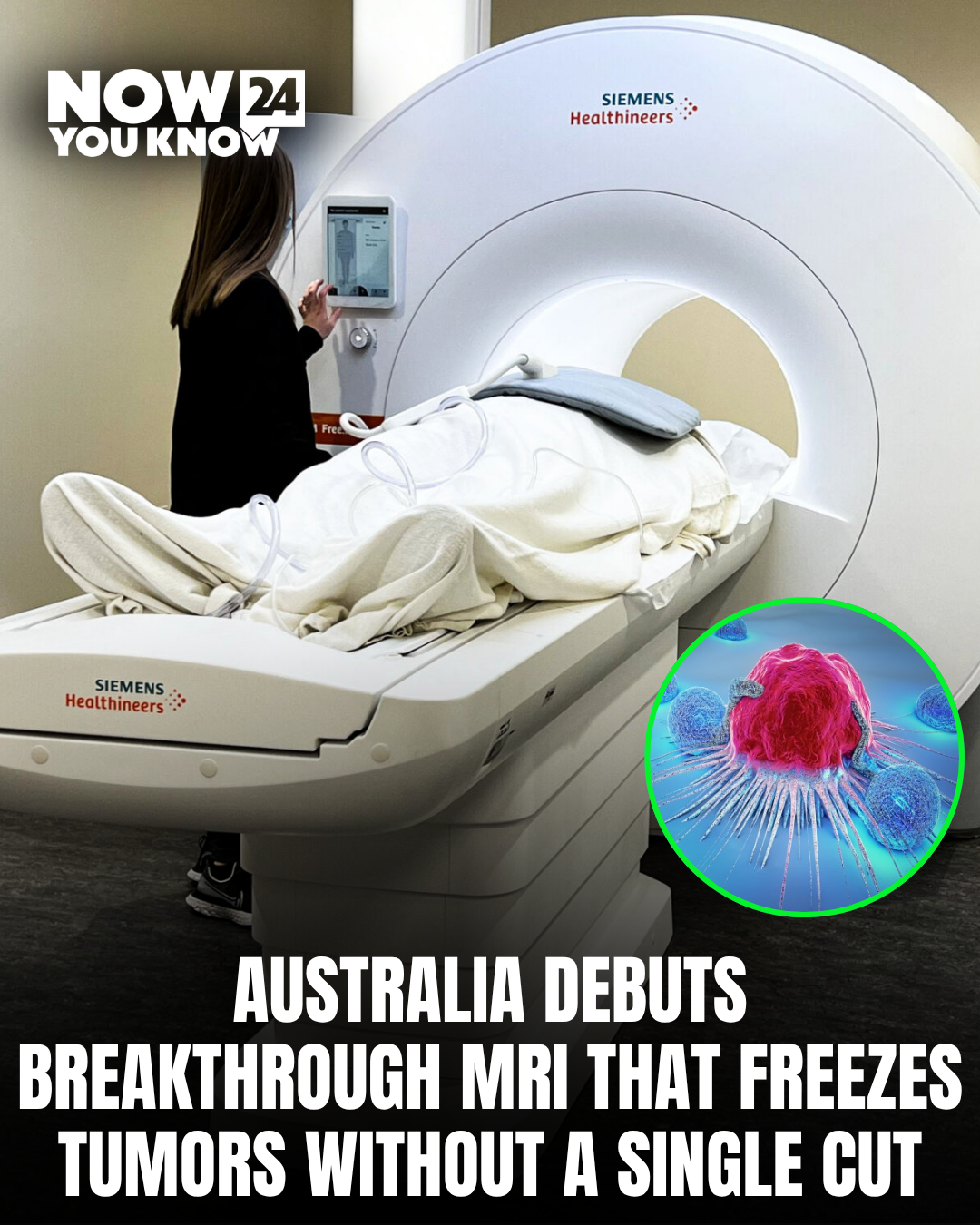

Liverpool Hospital in Sydney has introduced Australia’s first MRI-guided cryoablation program, offering patients a highly precise, minimally invasive way to treat certain tumors without traditional open surgery.
The technology combines real-time MRI imaging with cryoablation, a procedure that destroys targeted tissue by freezing it at extremely low temperatures. Specialists say the approach could be particularly valuable for tumors located near sensitive structures such as the spine, kidneys, and liver.
How the Procedure Works
During treatment, doctors insert thin cryoablation probes directly into the tumor using MRI guidance. Compressed argon gas is then released through the probes, creating temperatures low enough to form an “ice ball” around the targeted tissue.
The freezing process damages cancer cells and disrupts their blood supply, causing the tumor tissue to die while minimizing damage to nearby healthy structures. MRI imaging allows doctors to monitor the freezing zone in real time with exceptional accuracy.
A Major Advantage for Difficult Tumors
One of the biggest benefits of MRI-guided cryoablation is its ability to treat tumors in locations where surgery may be risky or highly invasive.
According to Liverpool Hospital specialists, the technology can help physicians target lesions near critical nerves, organs, and bones while preserving surrounding tissue. This level of precision is difficult to achieve with many conventional surgical approaches.
Faster Recovery for Patients
Unlike traditional tumor removal procedures, cryoablation requires only small needle punctures rather than large surgical incisions.
Many patients can return home the same day or after a short hospital stay, significantly reducing recovery times compared with conventional surgery. The procedure may also provide rapid pain relief for patients suffering from painful tumors or bone lesions.
Led by Australian Specialists
The program was pioneered by interventional radiologist Dr. Glen Schlaphoff and his team, who have performed cryoablation procedures for years using CT and ultrasound guidance.
Liverpool Hospital’s new integrated imaging suite now allows MRI, CT, and angiography technologies to work together, creating one of the most advanced interventional radiology environments in Australia.
Not a Cure-All, But a Significant Step Forward
Experts caution that cryoablation is not suitable for every cancer type or every patient. Treatment decisions still depend on factors such as tumor size, location, and whether the cancer has spread.
However, specialists believe MRI-guided cryoablation represents an important advancement in interventional oncology, expanding treatment options for patients who may not be ideal candidates for major surgery.
The Future of Cancer Care?
As medical technology continues to evolve, minimally invasive treatments like MRI-guided cryoablation are becoming increasingly important.
For many patients, the ability to destroy tumors through a tiny probe rather than a major operation could mean less pain, shorter recovery times, and a faster return to normal life. Liverpool Hospital’s new program may offer a glimpse into the future of cancer treatment.