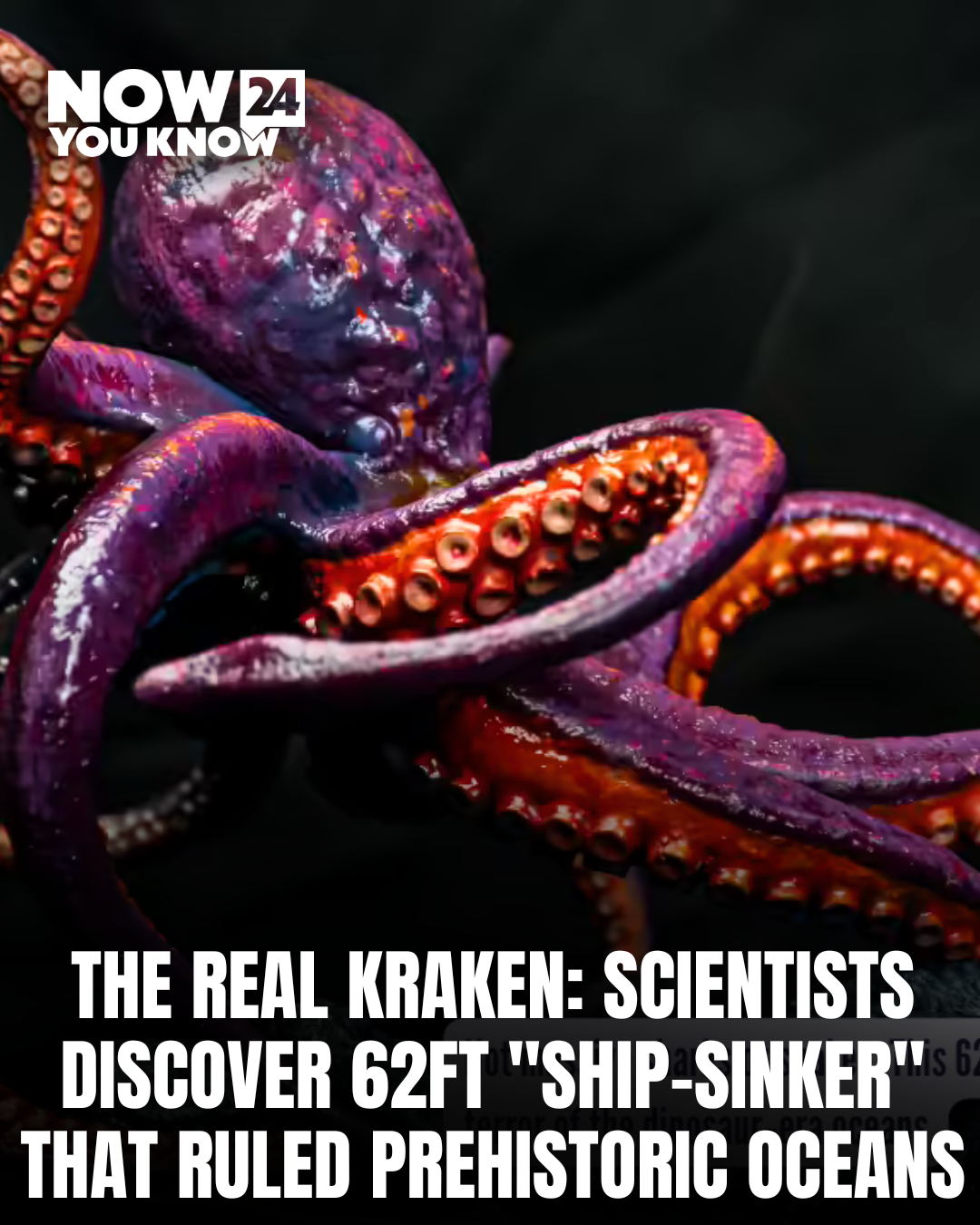

A New Look at the “Kraken” Legend
The idea of a sea monster capable of dragging ships underwater has long been part of Scandinavian folklore, where the legendary Kraken terrified sailors for centuries.
Now, scientists say there may be a surprising real-world inspiration behind those stories.
Ancient Fossils Point to Massive Octopus Species
A recent study published in a scientific journal linked to the American Association for the Advancement of Science suggests that enormous cephalopods once lived in the oceans during the Cretaceous period.
The Cretaceous era lasted from around 145 million to 66 million years ago, a time when marine ecosystems were dominated by large reptiles and early forms of modern sea life.
How Big Were These Creatures?
Researchers estimate that some of these ancient octopus-like animals could have reached lengths of up to 62 feet.
That size would place them among the largest marine predators of their time, potentially capable of competing with other apex hunters in the ocean.
What Scientists Found in the Fossils
The study focused on fossilized remains, including jaw structures that showed unusual wear patterns.
These patterns suggest the animals may have fed on large marine reptiles such as plesiosaurs and mosasaurs, both dominant predators of prehistoric seas.
Possible Signs of Intelligence
Researchers also noted asymmetry in the wear patterns, which they believe could indicate differences in behavior between limbs or hunting techniques.
This has led to speculation that these ancient octopods may have had more complex neurological abilities than previously thought.
Connection to the Kraken Myth
Scientists emphasize that these creatures lived millions of years before human civilization, meaning they could not have directly inspired Kraken legends.
However, their size and predatory nature could explain how ancient sightings of large marine animals helped shape mythological sea monster stories.
A Reminder of How Little We Know About the Ocean
Despite modern science, experts estimate that only a small fraction of the world’s oceans has been fully explored.
This leaves open the possibility that many unusual or previously unknown species may have once existed or could still be undiscovered.
A Prehistoric Ocean of Giants
The findings add to growing evidence that ancient oceans were home to far more extreme life forms than previously understood.
From massive reptiles to possible giant cephalopods, the prehistoric seas were likely far more dangerous and dynamic than today’s oceans.