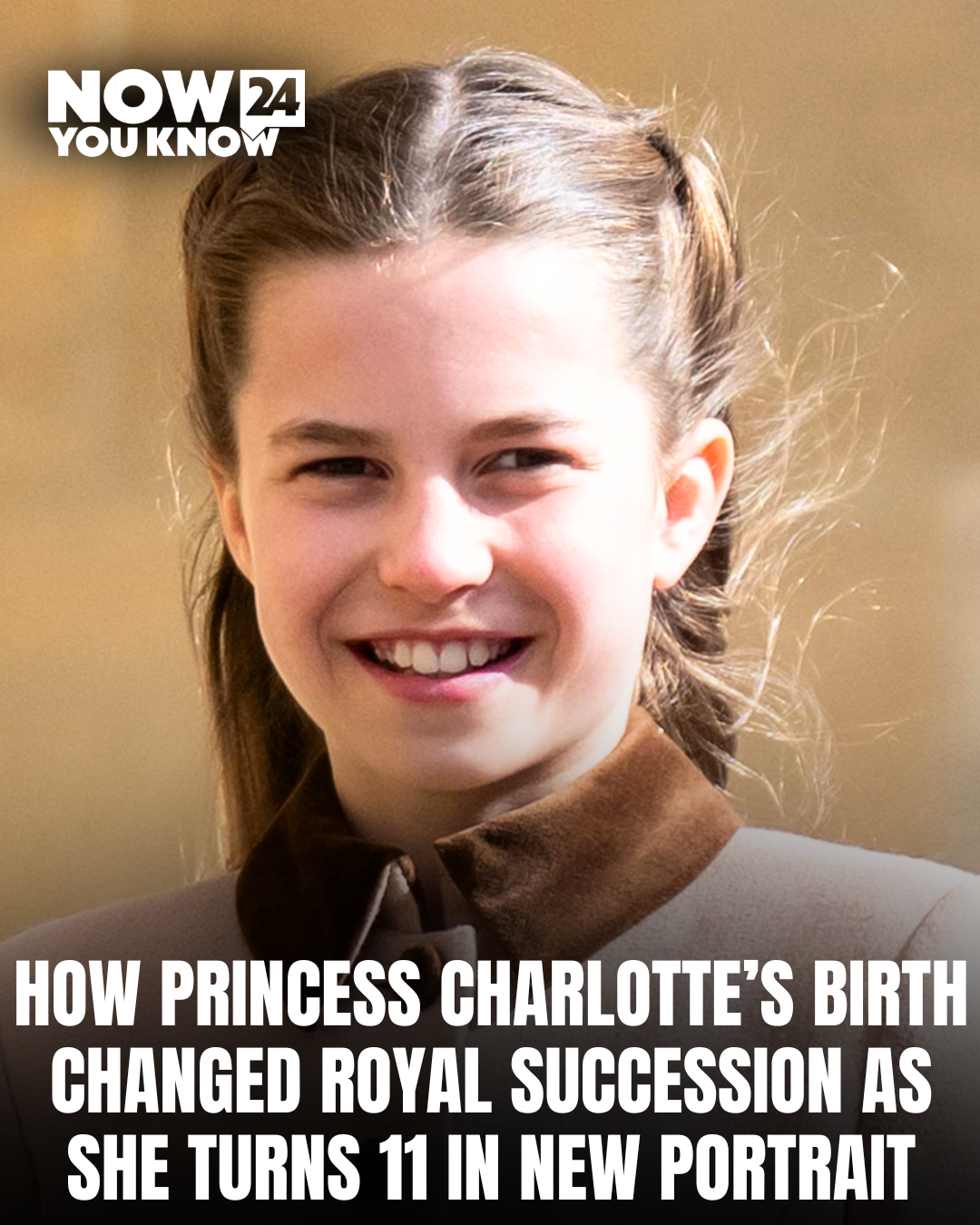

A new portrait released by the Royal Family has marked Princess Charlotte’s 11th birthday, showing her walking through a field of daisies during the family’s Easter break in Cornwall. The image has drawn attention not only for its warm, informal style but also for the constitutional history tied to her place in the line of succession.
Princess Charlotte is the second child of the Prince and Princess of Wales and holds a unique position in modern royal history.
A Birthday Portrait Released by the Royal Family
The new image, shared on official royal social media channels, shows Princess Charlotte in a relaxed outdoor setting during a family trip to Cornwall. The photograph continues a recent tradition of marking royal birthdays with personal and informal portraits.
The release quickly attracted public attention, with many commenting on how much she resembles her father, Prince William.
Why Princess Charlotte’s Birth Was Historically Significant
Princess Charlotte’s birth in 2015 coincided with one of the most important modern updates to royal succession law. The change came through the Succession to the Crown Act 2013, which reformed how heirs to the British throne are determined.
Before this law, male heirs would automatically take precedence over older female siblings, even if they were born later.
How the Law Changed Royal Tradition
Under the updated rules, succession is now determined strictly by birth order, regardless of gender. This marked a major modernization of royal protocol.
As a result, Princess Charlotte became the first female royal in British history whose position in the line of succession would not be displaced by a younger brother.
This change ensured that her place remained secure even after the birth of Prince Louis in 2018.
Current Line of Succession
The current line of succession places Princess Charlotte third in line to the throne, following her father and older brother:
- Prince William
- Prince George
- Princess Charlotte
- Prince Louis
- Prince Harry
- Prince Archie
- Princess Lilibet
This structure reflects the updated rules established under the 2013 reform.
A Modern Royal Upbringing
Princess Charlotte’s upbringing has been increasingly visible through official photographs and family updates. Alongside her siblings, she is gradually becoming a more public-facing member of the royal household.
Recent posts have also included family milestones such as pet celebrations and anniversaries, offering a more personal view of royal life than in previous generations.
Public Reaction to the Birthday Portrait
Following the release of the image, public reaction was largely focused on how much Princess Charlotte resembles her father, Prince William. Many observers noted similarities in facial features and expressions.
The portrait was widely shared online, continuing the strong public interest in the younger generation of royals.