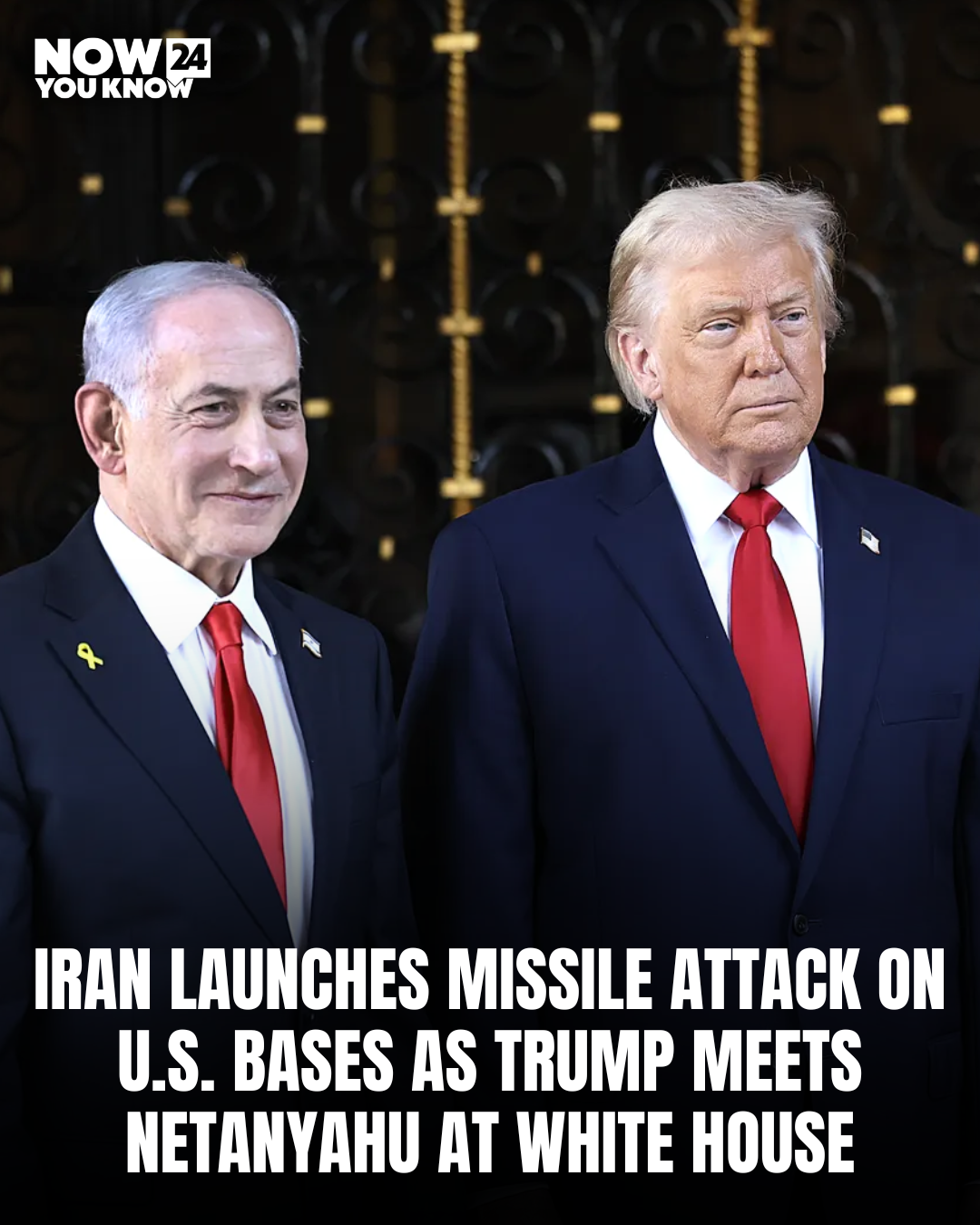

Tensions in the Middle East escalated sharply after Iran launched ballistic missiles toward U.S. military bases, coinciding with a White House meeting between President Donald Trump and Israeli Prime Minister Benjamin Netanyahu. According to the U.S. military, all incoming missiles were intercepted, and no immediate casualties have been reported.
The latest exchange threatens to undermine recent diplomatic efforts and raises fresh concerns about the risk of a broader regional conflict.
US Says Missiles Were Intercepted
The U.S. Central Command (CENTCOM) said Iran’s Islamic Revolutionary Guard Corps (IRGC) fired multiple ballistic missiles at American forces stationed in the Middle East. CENTCOM stated that all missiles were successfully intercepted and that U.S. personnel remain on high alert.
Iran, however, said it had targeted a U.S. airbase and a CENTCOM facility in Jordan, describing the strikes as a response to what it called ongoing American actions against Iranian interests.
Attack Comes During Trump-Netanyahu Meeting
The missile launches occurred while Trump was meeting with Netanyahu at the White House, where the two leaders were expected to discuss regional security and Iran’s nuclear program.
Analysts say the timing of the attack appears intended to demonstrate that Iran wants to remain a central player in any future negotiations involving the United States and Israel.
Diplomatic Efforts Face New Challenge
The latest developments follow a recent pause in U.S. military strikes against Iran, with President Trump previously saying diplomatic discussions were making progress.
Despite those comments, Iran has denied that formal negotiations with Washington have resumed. The renewed exchange of military action is expected to complicate any future efforts to reduce tensions.
Shipping Dispute in the Strait of Hormuz
Iran also announced that it had stopped three oil tankers in the Strait of Hormuz, claiming the vessels ignored safety warnings. The strategic waterway carries a significant share of the world’s oil exports, making any disruption a concern for global energy markets.
Iran also rejected a proposal from Oman for joint management of shipping traffic through the strait, saying it prefers to retain control over navigation in its territorial waters.
Oil Prices Rise
Financial markets reacted quickly to the renewed tensions. U.S. crude oil and Brent crude prices climbed after news of the missile attack, reflecting investor concerns that any disruption to shipping through the Strait of Hormuz could affect global energy supplies.
Energy analysts continue to monitor the situation closely as developments unfold.