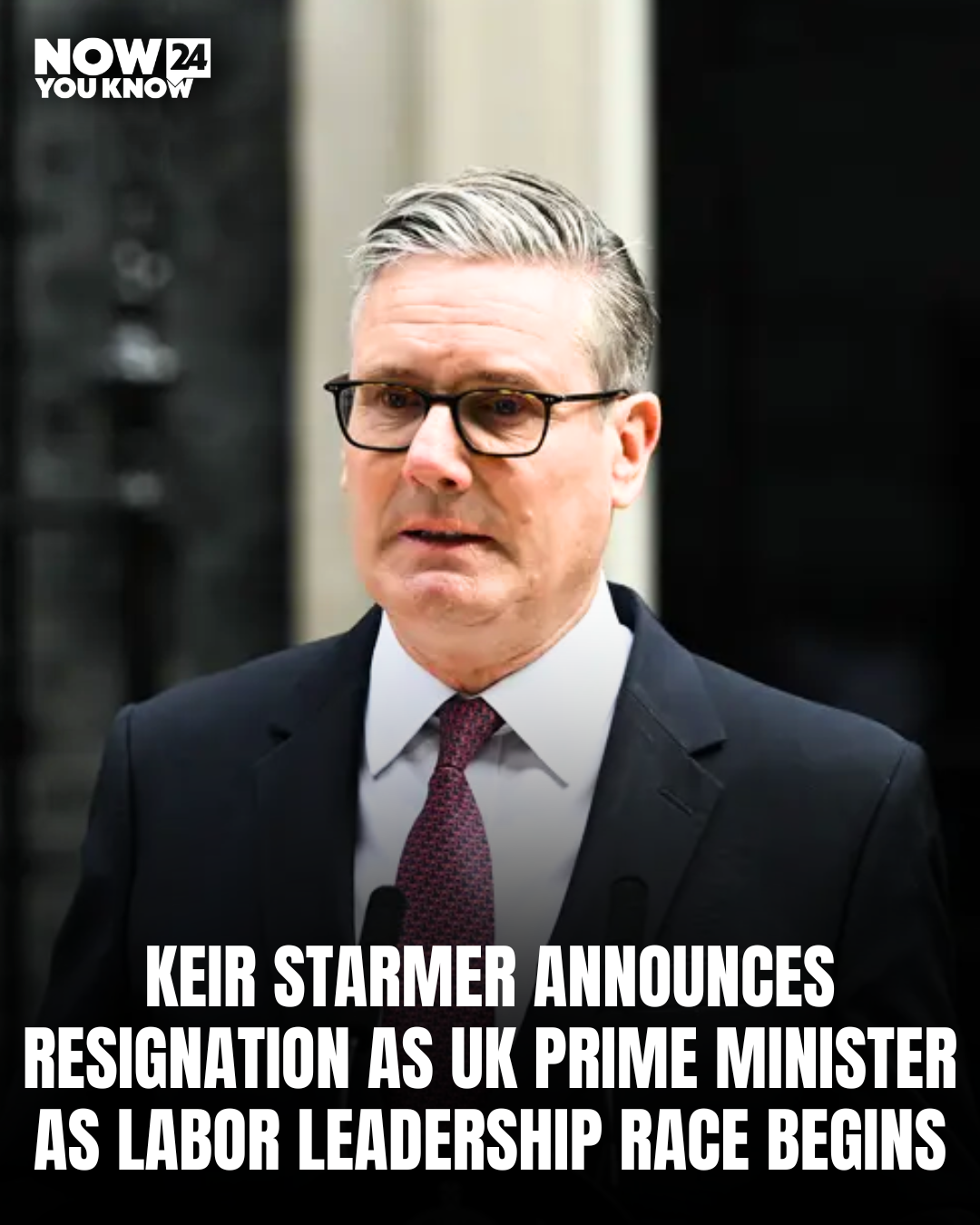

British Prime Minister Keir Starmer has announced his resignation, bringing a dramatic end to a premiership that began with a landslide election victory less than two years ago.
In an emotional address outside 10 Downing Street on Monday, Starmer confirmed he would step down as both prime minister and leader of the Labour Party, saying he had accepted that many within his party no longer believed he was the right person to lead them into the next general election.
“The question my party is asking now is whether I am best placed to lead us into the next general election,” Starmer said.
“That is why I will resign as leader of the Labour Party.”
An Emotional Farewell
The prime minister became visibly emotional while thanking his wife, Victoria, and reflecting on his political journey.
Starmer described entering Downing Street in 2024 as the proudest moment of his life and highlighted achievements he believes his government delivered during its time in office, including economic reforms and efforts to rebuild trust in the Labour Party.
His resignation comes after months of growing pressure from within Labour, following poor local election results, ministerial resignations and declining popularity among voters.
Why Is Starmer Stepping Down?
While Starmer had repeatedly insisted he would remain in office and fight any leadership challenge, pressure intensified in recent weeks as several senior figures resigned and calls for new leadership grew louder.
Many political observers point to the return of Andy Burnham to Parliament as a major turning point.
Burnham, long viewed as a potential future Labour leader, recently won a parliamentary seat and is now considered the frontrunner to replace Starmer.
Former Health Secretary Wes Streeting has also been mentioned as a possible contender.
What Happens Next?
The Labour Party will officially open nominations for a leadership contest on July 9.
Party members and affiliated supporters will eventually vote to choose the next Labour leader, who will automatically become Britain’s next prime minister because Labour still holds a parliamentary majority.
Starmer will remain in office as caretaker prime minister until a successor is selected, with a new leader expected to be in place before Parliament returns in September.
Will There Be a General Election?
Despite the dramatic resignation, a general election is not automatically triggered.
Under the UK’s parliamentary system, the governing party can replace its leader without returning to voters.
That means whoever wins the Labour leadership race will become prime minister without a nationwide election, just as several recent British leaders did before them.
A Remarkable Political Downfall
Starmer’s departure marks a stunning reversal of fortunes.
After leading Labour back to power with a historic victory in 2024, he leaves office less than two years later amid internal divisions, falling approval ratings and growing concerns within his own party about its electoral future.
His resignation also means Britain is set to have its seventh prime minister in just ten years — a remarkable period of political instability for a country once known for government continuity.