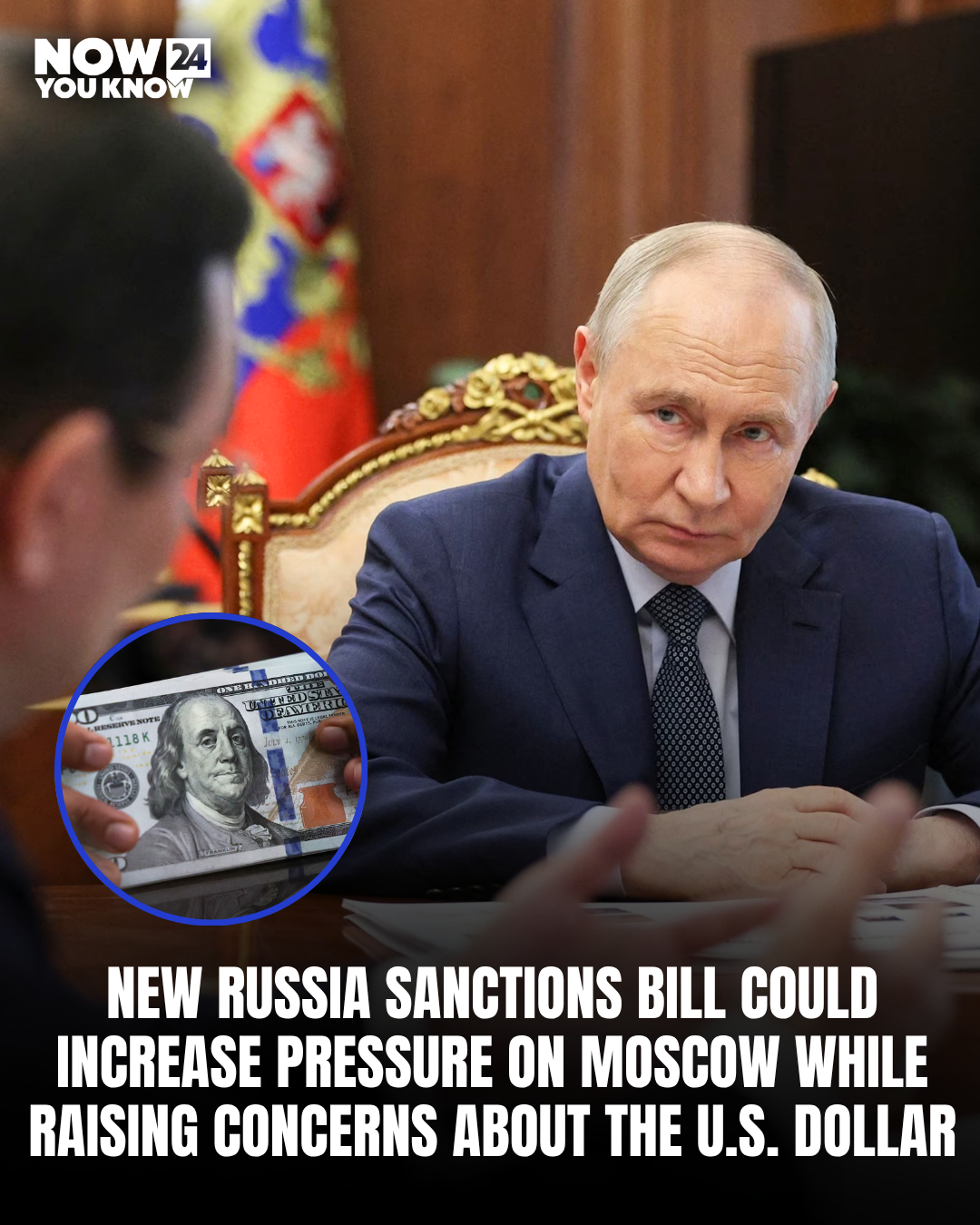

A proposed Russia sanctions bill is gaining support in Washington, but it is also creating a new debate inside the Trump administration. While lawmakers want tougher penalties on Moscow and its partners, some officials are concerned that expanding sanctions too aggressively could encourage more countries to reduce their reliance on the U.S. dollar.
What the Bill Would Do
The legislation would expand sanctions targeting Russia and could introduce new measures against countries that continue buying Russian energy. According to reports, the White House has also discussed broadening the proposal to cover groups and nations linked to Iran and Hezbollah, although final details have not been announced.
Concerns Over the Dollar’s Global Role
Administration officials have increasingly warned that frequent use of financial sanctions may encourage countries to seek alternatives to the U.S. dollar. Nations facing American restrictions have explored using other currencies, including China’s renminbi, to conduct international trade outside the U.S.-led financial system.
Treasury Signals a Different Approach
Treasury Secretary Scott Bessent has argued that sanctions are most effective when they are targeted and tied to clear policy goals. In recent months, the Treasury Department has also removed outdated sanctions listings involving deceased individuals, inactive companies, and decommissioned vessels as part of a broader modernization effort.
Sanctions Remain a Powerful Tool
Despite reviewing parts of the sanctions program, the United States continues to rely on financial penalties to pursue foreign policy objectives. This week, the Treasury Department announced additional sanctions targeting networks accused of helping Iran’s Islamic Revolutionary Guard Corps acquire weapons and evade existing restrictions.
Experts See a Difficult Balancing Act
Economists say the United States faces a delicate challenge: maintaining the effectiveness of sanctions while preserving confidence in the dollar as the world’s leading reserve currency. Although some sanctioned countries have increased the use of alternative payment systems, the U.S. dollar still accounts for the majority of global foreign exchange reserves, according to International Monetary Fund data.
What Happens Next?
The sanctions bill is expected to receive further consideration in Congress in the coming weeks. If approved, it could significantly increase economic pressure on Russia while reigniting debate over how the United States should use financial sanctions without weakening its long-term influence over the global economy.