




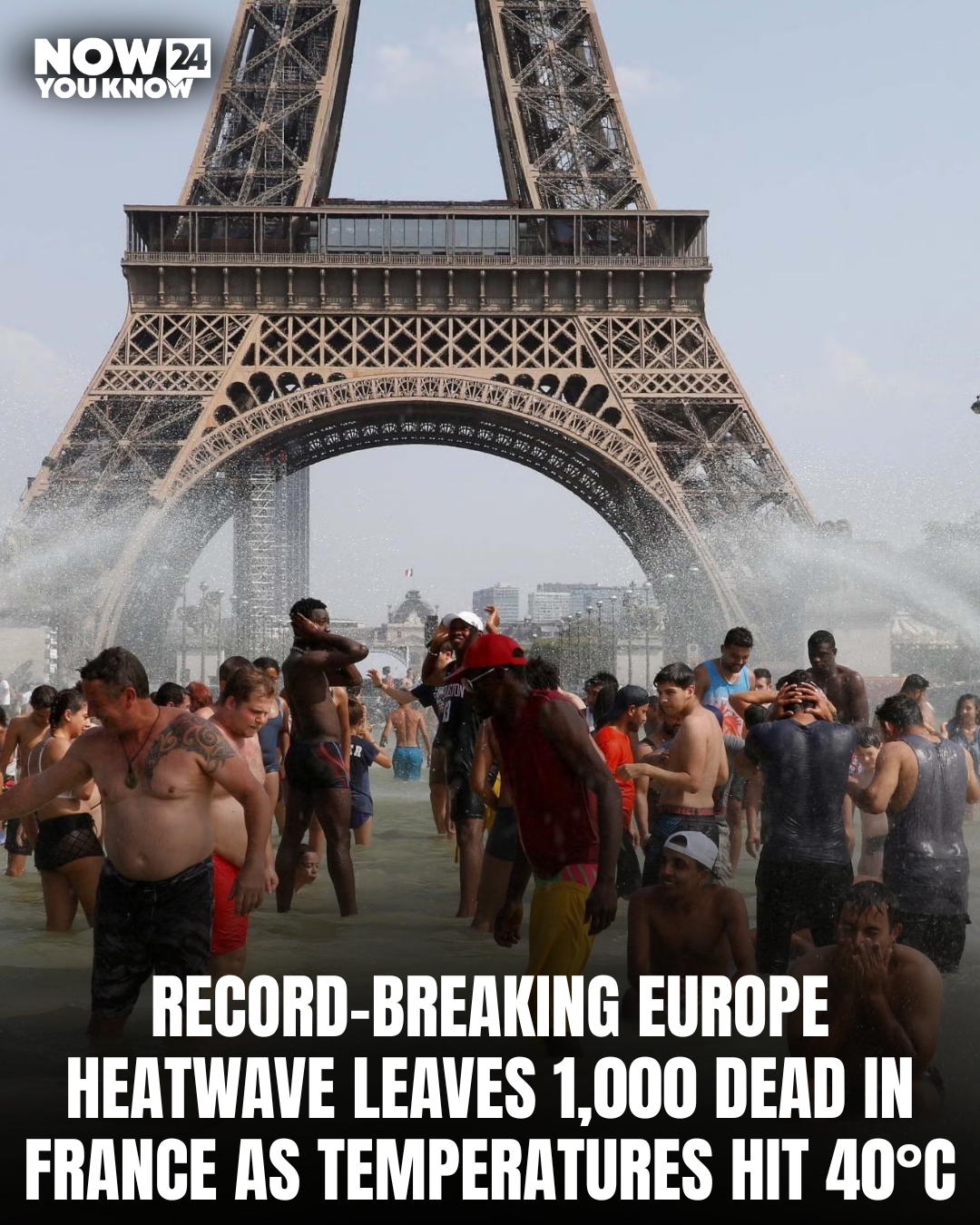

A record-breaking heatwave sweeping across Europe has claimed at least 1,000 lives in France alone, with officials warning the death toll is expected to rise as the continent continues to grapple with extreme temperatures.
France’s public health agency said most of the victims were elderly people, adding that more deaths are likely to be confirmed as authorities receive additional reports from care homes and private residences.
The unprecedented heatwave, which began on June 20, has pushed temperatures close to or above 40°C (104°F) across several European countries, straining healthcare systems, disrupting transportation, damaging infrastructure and affecting electricity production.
The World Health Organization warned that around 150 million people are currently living under extreme heat conditions.
“Right now 150 million people are living under extreme heat, hundreds have died, schools are shut, grids are buckling,” WHO Director-General Tedros Adhanom Ghebreyesus wrote on X.
He added that climate change has turned what were once considered “once-in-a-generation” heatwaves into increasingly frequent events, warning that many European homes, schools and workplaces are not equipped to cope with such temperatures.
Scientists have also concluded that the current heatwave would have been virtually impossible without human-caused climate change, saying unusually high nighttime temperatures are now around 100 times more likely than they were just two decades ago.
The scorching conditions have caused widespread disruption across Europe.
In Germany, rail services were reduced on major routes in North Rhine-Westphalia, while tram services in Leipzig were suspended due to the extreme heat. Many residents stayed indoors until sunset as temperatures soared.
Italy has also been heavily affected, with the River Po shrinking dramatically as seawater pushes further inland, threatening agriculture and protected wetlands. Hungary’s Paks nuclear power plant is expected to reduce electricity production again because the Danube River has become too warm to efficiently cool its reactors.
Authorities have also reported dozens of drowning deaths as people sought relief from the intense heat by swimming in rivers and lakes.
Meanwhile, severe thunderstorms have begun sweeping across parts of France and Germany, bringing cooler temperatures but also causing fresh disruption.
More than 36,000 households in northern and central France were left without electricity after powerful storms damaged power infrastructure.
Although temperatures have eased across much of western France, several northeastern regions remain under heat alerts.
French Health Minister Stéphanie Rist warned that the health impacts of the heatwave are far from over.
“The episode is not finished,” she said, noting that heat-related deaths can continue to occur for up to 10 days after temperatures begin to fall.
Meteorologists expect cooler weather to gradually spread across Western Europe during the coming days, while the heatwave shifts eastward into Central Europe and the Balkans.