




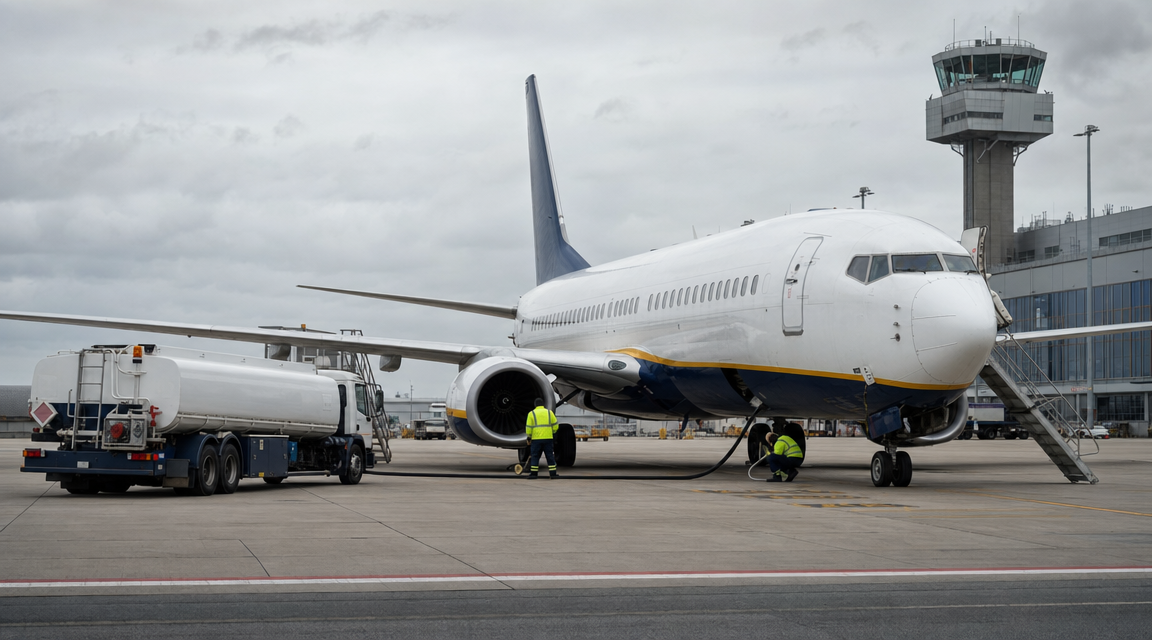

Ryanair’s chief financial officer warned that rising jet fuel costs tied to the Iran war could push already-weak airlines into bankruptcy this winter. According to reports by Business Insider (May 18, 2026), CFO Neil Sorahan said on CNBC: “I think we will see some of the weaker carriers who were already struggling before the war possibly go to the wall in the winter.” He added the airline has contingency plans for an “Armageddon situation” but does not expect to need them.
The spike in oil followed the outbreak of the Iran war in late February. Brent crude has risen more than 50% to above $110 a barrel, and jet fuel briefly approached $200 a barrel before easing to about $163, according to the International Air Transport Association. Jet fuel is typically an airline’s second-largest expense after labor. As reported by Business Insider, budget carrier Spirit Airlines—already in Chapter 11 since last August—ceased operations earlier in May, citing rising fuel costs.
Ryanair says its balance sheet gives it resilience. CEO Michael O’Leary told investors that roughly 80% of Ryanair’s fuel is hedged at $67 per barrel. “We do not expect to be cutting flights or schedules because of higher oil prices,” O’Leary said during a Monday earnings call, and Sorahan told CNBC the airline plans to operate a full summer schedule and to maintain schedules into winter.
Sorahan said Europe is now less reliant on oil transiting the Strait of Hormuz because supplies have shifted toward the US, Venezuela and Brazil, but he expects prices “to remain higher for longer,” which he said strengthens Ryanair’s position given its hedges. For the 2026 financial year the carrier reported carrying 208 million passengers and a 40% rise in profit after tax to €2.26 billion ($2.6 billion), figures Business Insider included in its reporting.
Current status: Ryanair describes itself as prepared for multiple scenarios—protected by extensive fuel hedging and a full operational schedule—while warning weaker competitors face increased bankruptcy risk if elevated fuel prices persist.