




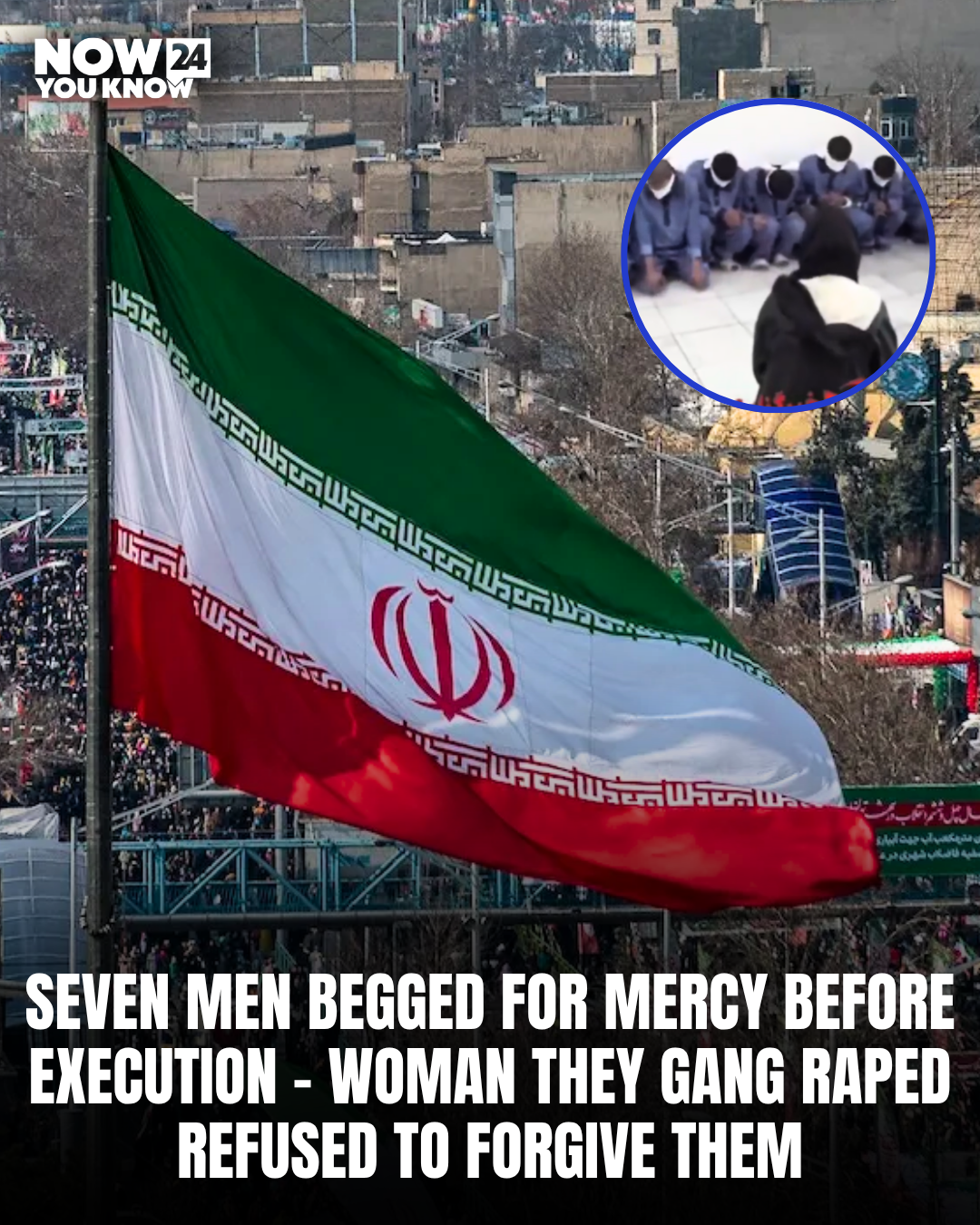

Seven men convicted of gang raping a woman in Iran were executed after the survivor refused to grant them forgiveness, a decision that, under Iranian law, could have spared their lives.
The case drew widespread attention because of Iran’s unique legal system, which allows victims or their families to play a direct role in determining whether certain convicted offenders are executed or pardoned.
According to Iran’s judiciary, the seven men were found guilty of abducting and gang raping a woman. Before their sentences were carried out, the convicted men reportedly pleaded with the victim to forgive them.
Under Iran’s qisas (retribution) laws, victims or their families can choose to grant forgiveness, often in exchange for financial compensation known as diyah (blood money), which can result in a death sentence being commuted.
In this case, however, the woman declined to forgive the men.
You can watch the video where she is face to face with them here.
Following her decision, Iranian authorities proceeded with the executions by hanging.
The case has sparked renewed international discussion about Iran’s justice system, where victims can have significant influence over the final outcome in capital punishment cases.
Human rights organizations have long criticized Iran’s extensive use of the death penalty, while supporters of the country’s legal framework argue that giving victims the option to forgive or seek retribution provides them with a measure of justice and agency.
The executions have once again placed global attention on Iran’s application of capital punishment and the country’s interpretation of Islamic criminal law.