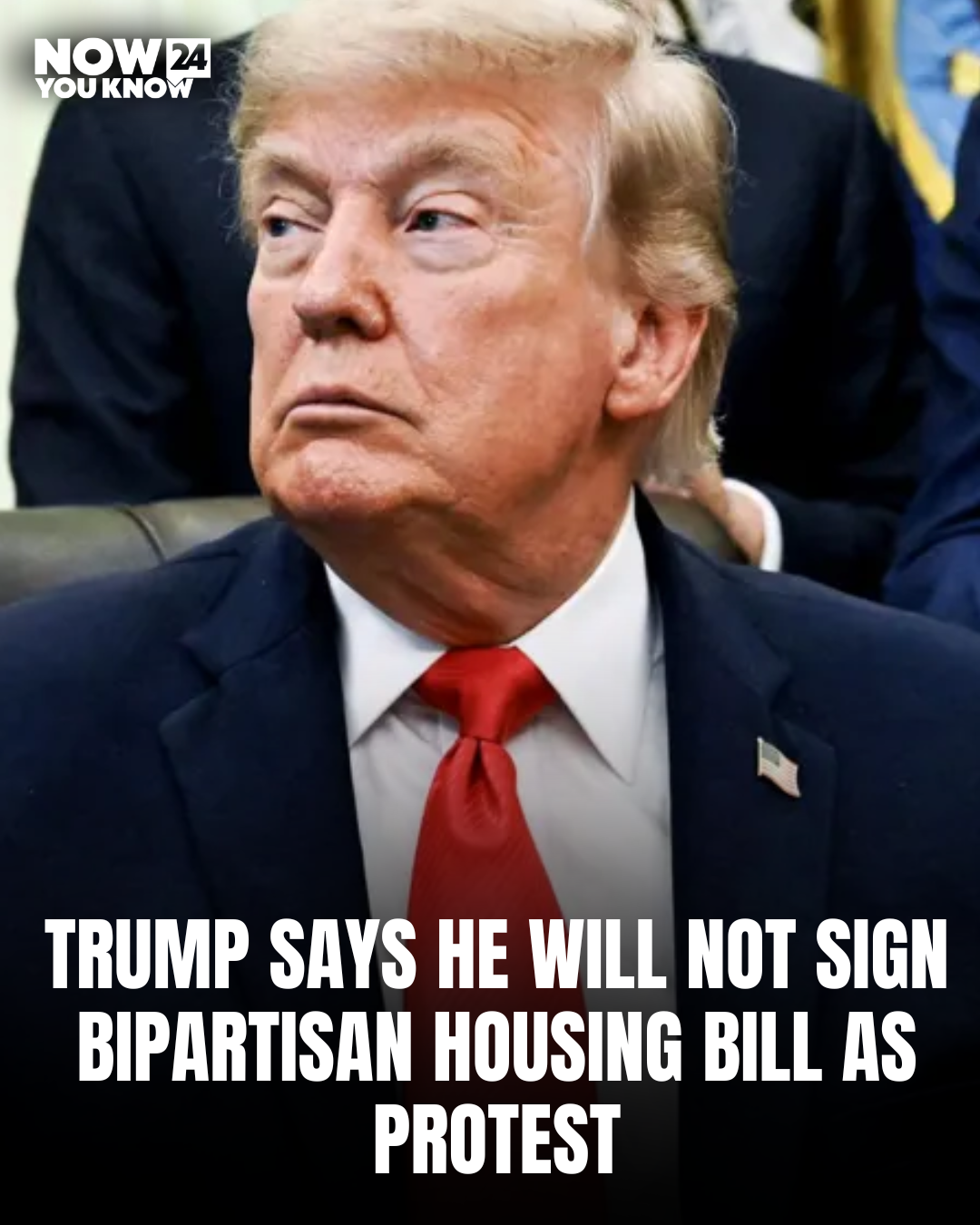

Trump Links Housing Bill to Election Measure
President Donald Trump announced that he will not sign a bipartisan housing affordability bill passed by Congress, saying his decision is a protest against the Senate’s failure to advance the SAVE America Act, a Republican-backed election bill focused on stricter voter registration requirements.
Despite Trump’s announcement, the legislation is still expected to become law because the U.S. Constitution allows a bill to take effect without the president’s signature if it is neither signed nor vetoed within the required timeframe while Congress remains in session.
What the Housing Bill Would Do
The legislation, known as the 21st Century ROAD to Housing Act, is considered one of the most significant bipartisan housing packages in decades. It includes measures intended to increase housing supply, streamline home construction, and improve affordability for buyers and renters.
Trump previously canceled a planned signing ceremony for the bill, arguing that Congress should first pass the SAVE America Act, which he has made one of his top legislative priorities ahead of the upcoming midterm elections.
Political Reactions Intensify
The president reiterated his support for the election proposal on social media, calling its failure to pass a major concern. He also renewed his call for Senate Republicans to eliminate the filibuster, a move that party leaders have so far resisted.
Democratic lawmakers criticized Trump’s decision, arguing that housing affordability should remain a priority as Americans continue to face elevated home prices and mortgage costs. The announcement has added another layer to the ongoing political debate over economic and election-related legislation.
Housing Costs Remain in Focus
The dispute comes as the U.S. housing market continues to face affordability challenges, with home prices remaining near record highs in many parts of the country. Lawmakers from both parties have described the housing package as a rare example of bipartisan cooperation on an issue affecting millions of Americans.