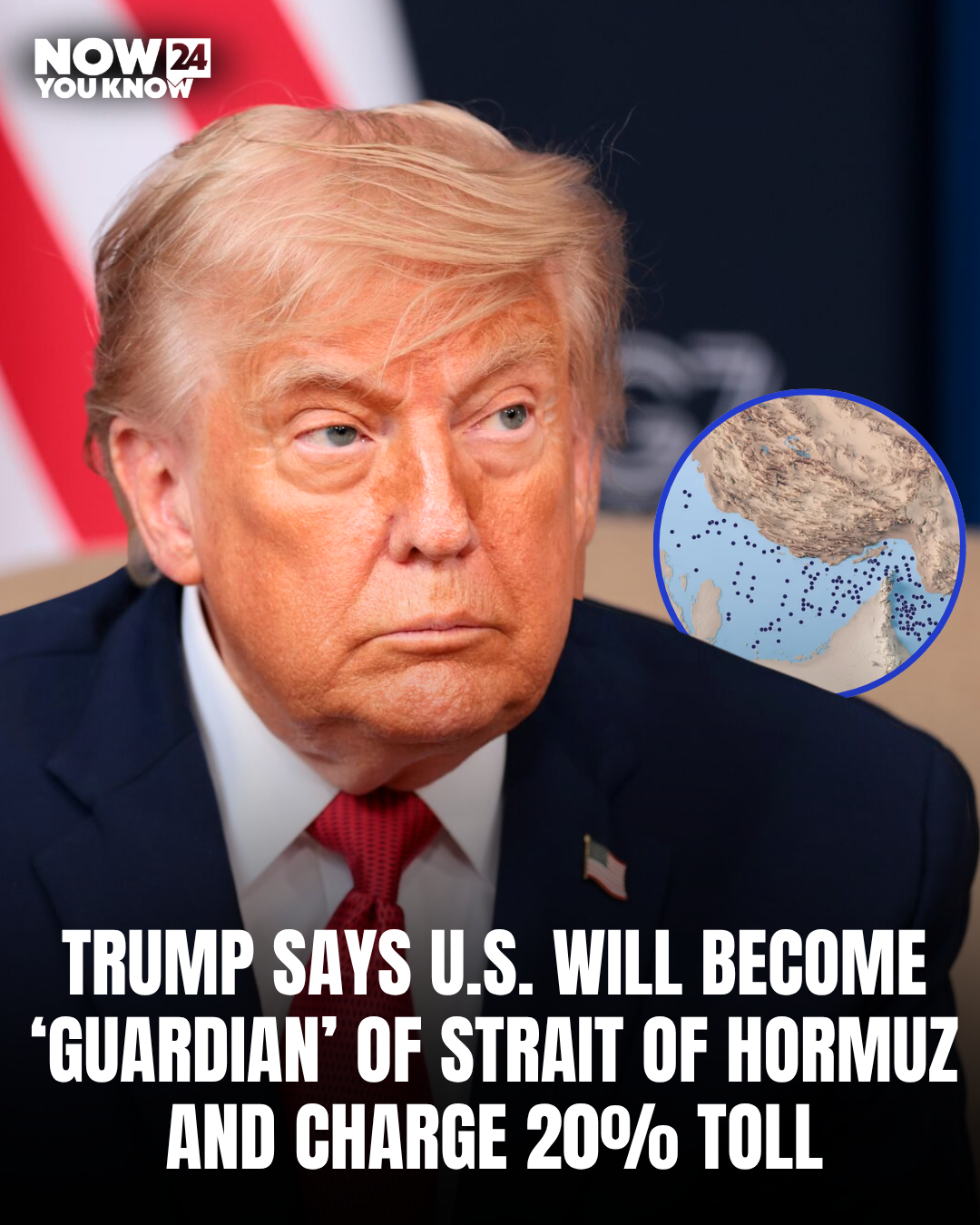

President Donald Trump has announced that the United States will reimpose a naval blockade on Iran and take on what he described as the role of “guardian” of the Strait of Hormuz, proposing that ships using the strategic waterway pay a 20% cargo toll to help cover U.S. security costs.
The announcement comes as tensions between Washington and Tehran continue to escalate, with both sides exchanging new military strikes that threaten ongoing diplomatic efforts to end the conflict.
Trump Unveils New Strait of Hormuz Plan
In a post on Truth Social and later during an interview with Fox News, Trump said the United States would resume blocking Iranian maritime activity while continuing to protect commercial shipping through one of the world’s busiest energy routes.
“The U.S.A. will, from this point forward, be known as ‘THE GUARDIAN OF THE HORMUZ STRAIT,’” Trump wrote.
He also proposed that vessels using the waterway pay 20% of their cargo’s value as reimbursement for the cost of maintaining security in the region.
The Strait of Hormuz handles roughly 20% of global oil and natural gas shipments, making it one of the most strategically important waterways in the world.
Iran Rejects U.S. Control
Iran quickly dismissed Trump’s proposal, insisting that the United States has no authority to manage or control passage through the strait.
Iran’s military warned that any attempt by the U.S. or its allies to interfere with shipping routes without Tehran’s approval would be viewed as a violation of Iranian sovereignty and could trigger a military response.
Officials also warned neighboring countries against providing logistical support for any expanded U.S. operations in the area.
Peace Talks Face New Uncertainty
The latest exchange of attacks has raised fresh concerns about the future of negotiations between the two countries.
Earlier agreements had aimed to reduce hostilities while allowing discussions over Iran’s nuclear program, sanctions, frozen assets and long-term security arrangements in the Strait of Hormuz.
However, renewed military action and conflicting interpretations of the agreement have placed those talks under increasing strain, with commercial shipping through the waterway already declining as security concerns grow.