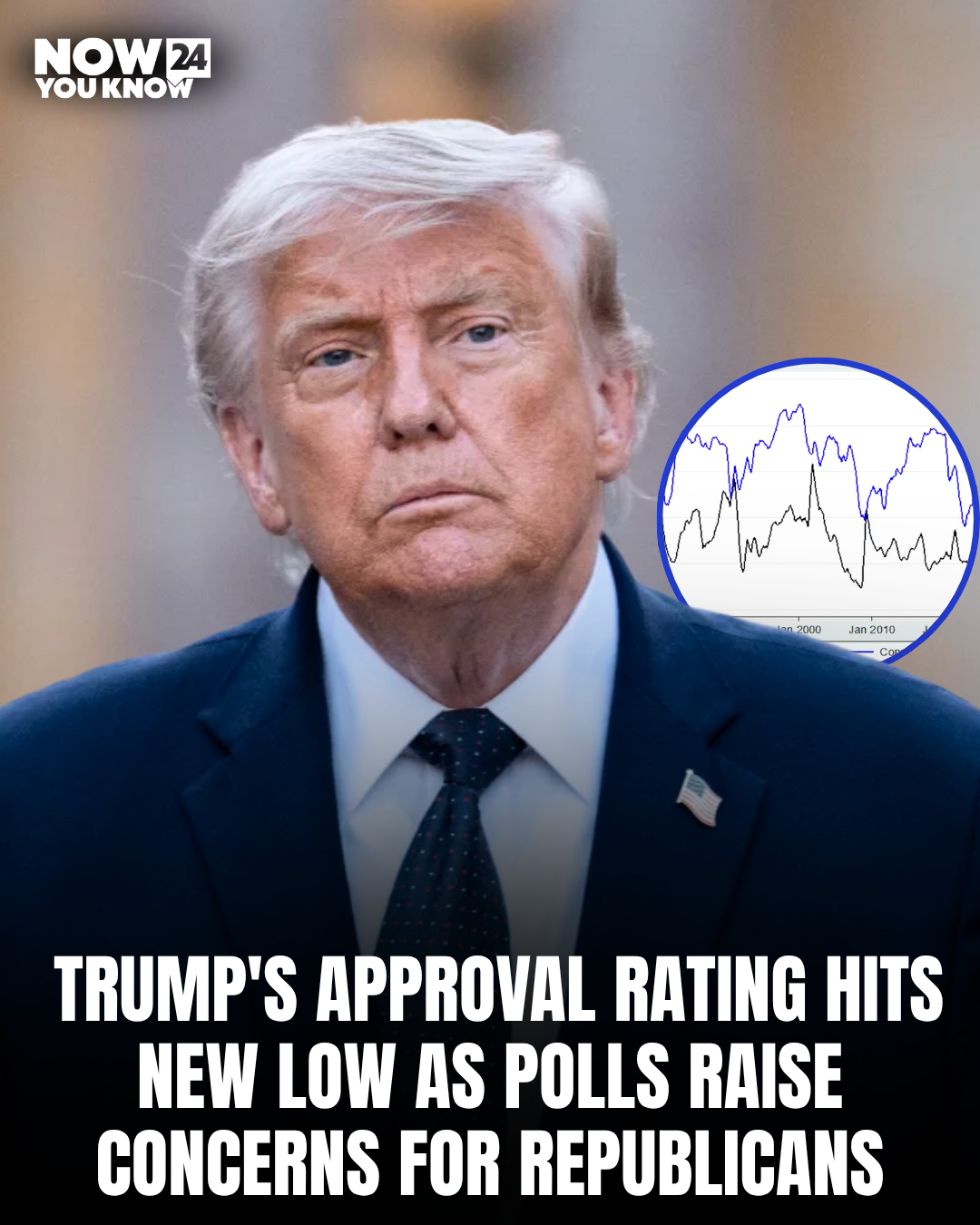

President Donald Trump’s approval rating has fallen to one of its lowest levels yet, according to recent polling, raising fresh questions about the political outlook for Republicans heading into upcoming elections.
A recent Economist/YouGov survey placed Trump’s approval rating at 35%, a figure that sits below the average rating he recorded during his first term in office. While individual polls can vary, analysts say the broader trend reflects growing public concern about the economy.
Why the Economy Matters
Political scientists have long found a strong connection between presidential approval ratings and how Americans feel about the economy.
One of the most closely watched indicators is consumer confidence, which measures how optimistic people are about their personal finances and the country’s economic future. Historically, confidence tends to rise when voters feel financially secure and decline during periods of economic uncertainty.
A Pattern Seen Across Decades
History offers several examples of presidents whose political fortunes were heavily influenced by economic conditions.
Jimmy Carter faced declining approval ratings amid economic challenges before losing the 1980 election. George H.W. Bush saw support collapse during a recession in the early 1990s, while George W. Bush’s approval ratings suffered following the financial crisis that preceded the 2008 election.
In each case, economic anxiety played a major role in shaping voter sentiment.
Consumer Confidence Sends a Warning Signal
According to the analysis, current consumer confidence levels are significantly lower than historical averages.
Researchers argue that when confidence falls, voters often become more critical of the party in power, regardless of broader political issues. This relationship has appeared repeatedly in both presidential and congressional elections over the past several decades.
What It Could Mean for Republicans
The most immediate political test will come in the upcoming midterm elections, where control of Congress will once again be at stake.
Several recent surveys suggest Democrats currently hold an advantage in generic congressional ballot polling, though election outcomes can shift substantially before voters head to the polls.
Looking Beyond the Midterms
While Trump is constitutionally barred from seeking another term after his current presidency, analysts note that the political environment surrounding his administration could influence the Republican nominee in the next presidential election.
If economic conditions improve, approval ratings could rebound. If economic concerns deepen, history suggests the party controlling the White House often bears the political consequences.
The Bigger Picture
Presidential approval ratings can fluctuate rapidly in response to economic developments, foreign policy events, and major national issues. For now, however, the latest polling highlights a challenge that has confronted presidents from both parties for decades: when voters lose confidence in the economy, political support often follows.