
Most home cooks destroy Turkish yogurt noodles the second they add hot liquid to cold yogurt. The proteins seize, the sauce splits, and what should be silk becomes grainy cottage cheese suspended in watery disappointment. I’ve watched this tragedy unfold in thousands of kitchens, and it’s time we talk about why this 400-year-old Anatolian masterpiece—known as mantı or yogurt-dressed noodles—demands respect for basic food chemistry.
The magic of Turkish yogurt noodles isn’t just cultural tradition. It’s controlled protein denaturation, starch gelatinization, and fat emulsion working in perfect harmony. Miss any one element, and you’ve wasted an hour of your life on something that tastes like cafeteria food.
The Science Behind Yogurt That Won’t Curdle
Here’s what actually happens when you add hot pasta water to cold yogurt: casein proteins unwind at temperatures above 140°F (60°C), expelling water and forming curds. This is precisely what you DON’T want. Research from Serious Eats’ Food Lab demonstrates that tempering—gradually raising yogurt temperature while constantly whisking—prevents this protein shock.
The traditional Turkish method involves two critical stabilizers: flour and egg. A tablespoon of all-purpose flour creates a protective starch network around milk proteins, raising the curdling threshold by nearly 20 degrees. One egg yolk adds lecithin, a natural emulsifier that keeps fat globules suspended in the aqueous phase. Together, they transform fragile yogurt into a sauce that can withstand high heat without breaking.
But here’s the revelation most recipes won’t tell you: full-fat yogurt (at least 4% milkfat) is non-negotiable. Low-fat yogurt lacks sufficient fat globules to create a stable emulsion, no matter how much you whisk. The mouthfeel difference is measurable—full-fat yogurt produces 40% more perceived creaminess according to sensory analysis studies.
The Noodle Game-Changer Nobody Teaches
Turkish cooks don’t use Italian pasta shapes for mantı, and the reason is pure physics. Traditional square-cut noodles (about 1-inch pieces) have dramatically higher surface area than spaghetti, which means more starch release into cooking water. That starchy water becomes the liquid gold you’ll use to temper your yogurt sauce—it’s a built-in thickener and emulsion stabilizer.
When you cook fresh egg noodles or even dried short pasta in well-salted water, amylose molecules leach out and create a viscous cooking liquid. Food & Wine’s pasta water guide confirms this liquid can hold emulsions together better than plain water because dissolved starch acts like a natural roux. Reserve at least one cup before draining—you’ll need it.
The texture contrast is equally important. Slightly undercooking your noodles (one minute less than package directions) ensures they absorb yogurt sauce without becoming mushy. Al dente noodles have intact starch granules that continue absorbing liquid after draining, creating that characteristic tender-but-toothsome texture that defines authentic mantı.
The Garlic-Butter Finishing Move
The final layer—Aleppo pepper-infused butter with raw garlic—isn’t just garnish. It’s a fat-soluble flavor bomb that our taste receptors perceive completely differently than water-soluble yogurt tang. This is the principle of flavor layering: combining fat-based and water-based flavor compounds creates exponentially more complex taste perception than either alone.
The key is blooming your Aleppo pepper (or substitute with paprika and cayenne) in melted butter at exactly medium heat for 30 seconds. Too hot and you’ll burn the capsaicinoids, creating bitterness. Too cool and you won’t extract the fat-soluble flavor compounds. You want gentle bubbling—around 250°F (120°C)—where the Maillard reaction begins developing nutty, complex flavors without carbonization.
Raw garlic grated on a microplane and added at the last second provides sharp, pungent allicin compounds that would be destroyed by cooking. This creates a three-dimensional flavor profile: tangy-cool yogurt base, sweet-spicy butter middle, and sharp garlic top notes. It’s the same layering principle that makes French sauces legendary.
Common Mistakes That Ruin Everything
Mistake #1: Adding hot pasta directly to cold yogurt sauce. This guarantees curdling. Always temper your yogurt mixture with small additions of hot pasta water first, whisking constantly. Bring it to room temperature before combining with noodles. The yogurt should feel barely warm to the touch—around 100°F (38°C)—before meeting hot pasta.
Mistake #2: Using Greek yogurt instead of regular plain yogurt. Greek yogurt’s concentrated protein content makes it more prone to curdling under heat stress. The straining process that creates Greek yogurt removes stabilizing whey proteins. Regular plain yogurt (preferably European-style or Mediterranean) has the ideal protein-to-water ratio for this application. If you must use Greek yogurt, thin it with equal parts whole milk first.
Mistake #3: Skipping the flour-egg stabilization step. I know it seems fussy, but whisking one tablespoon of flour and one egg yolk into room-temperature yogurt before any heat exposure is the difference between professional results and amateur hour. This creates a liaison—the same technique French chefs use for velouté sauces—that’s essentially curdling insurance. Don’t skip it.
Mistake #4: Drowning the noodles in sauce. The proper ratio is about 3 parts noodles to 1 part yogurt sauce by volume. You want noodles lightly coated, not swimming. The garlic-butter drizzle should pool slightly at the bottom of the bowl, creating pockets of intense flavor rather than uniform coverage. This is strategic flavor placement, not random dousing.
The Make-Ahead Strategy
Here’s a secret from Istanbul restaurant kitchens: the yogurt sauce actually improves when made 2-4 hours ahead and held at room temperature. This allows the starch network to fully hydrate and the proteins to relax into their most stable configuration. Just don’t refrigerate it—cold temperatures cause fat crystallization that ruins the silky texture you’ve worked to create.
Cook your noodles fresh at serving time, reserve that starchy pasta water, and gently rewarm your room-temperature yogurt sauce with small pasta water additions if needed. The second warming won’t cause problems because you’ve already stabilized the proteins. This approach gives you restaurant timing without restaurant stress.
The Recipe Worth Mastering
Ingredients:
- 12 oz fresh egg noodles or dried short pasta (penne, rigatoni, or cut lasagna sheets)
- 2 cups full-fat plain yogurt (not Greek)
- 1 tablespoon all-purpose flour
- 1 large egg yolk
- 2-3 cloves garlic, microplaned
- 4 tablespoons unsalted butter
- 2 teaspoons Aleppo pepper (or 1 tsp sweet paprika + ½ tsp cayenne)
- Salt to taste
- Fresh mint or dried mint for garnish
Method:
Bring a large pot of heavily salted water (it should taste like seawater) to a rolling boil. Meanwhile, whisk together room-temperature yogurt, flour, and egg yolk in a large bowl until completely smooth. No lumps—this is your insurance policy.
Cook noodles one minute less than package directions. Reserve 1½ cups pasta cooking water before draining. Working quickly, add ½ cup hot pasta water to the yogurt mixture in a thin stream while whisking constantly. The mixture should warm noticeably but not steam. Add another ½ cup, still whisking. You’re gradually acclimating those proteins to heat.
Add drained hot noodles directly to the tempered yogurt sauce and toss gently but thoroughly. If the mixture seems thick, add pasta water by the tablespoon until you achieve a silky, coating consistency. The sauce should cling to noodles without pooling excessively. Taste and adjust salt—you’ll need more than you think because yogurt mutes saltiness.
In a small skillet, melt butter over medium heat until foaming. Add Aleppo pepper and swirl for 30 seconds until fragrant and the butter turns deep orange-red. Remove from heat immediately. Stir in microplaned raw garlic.
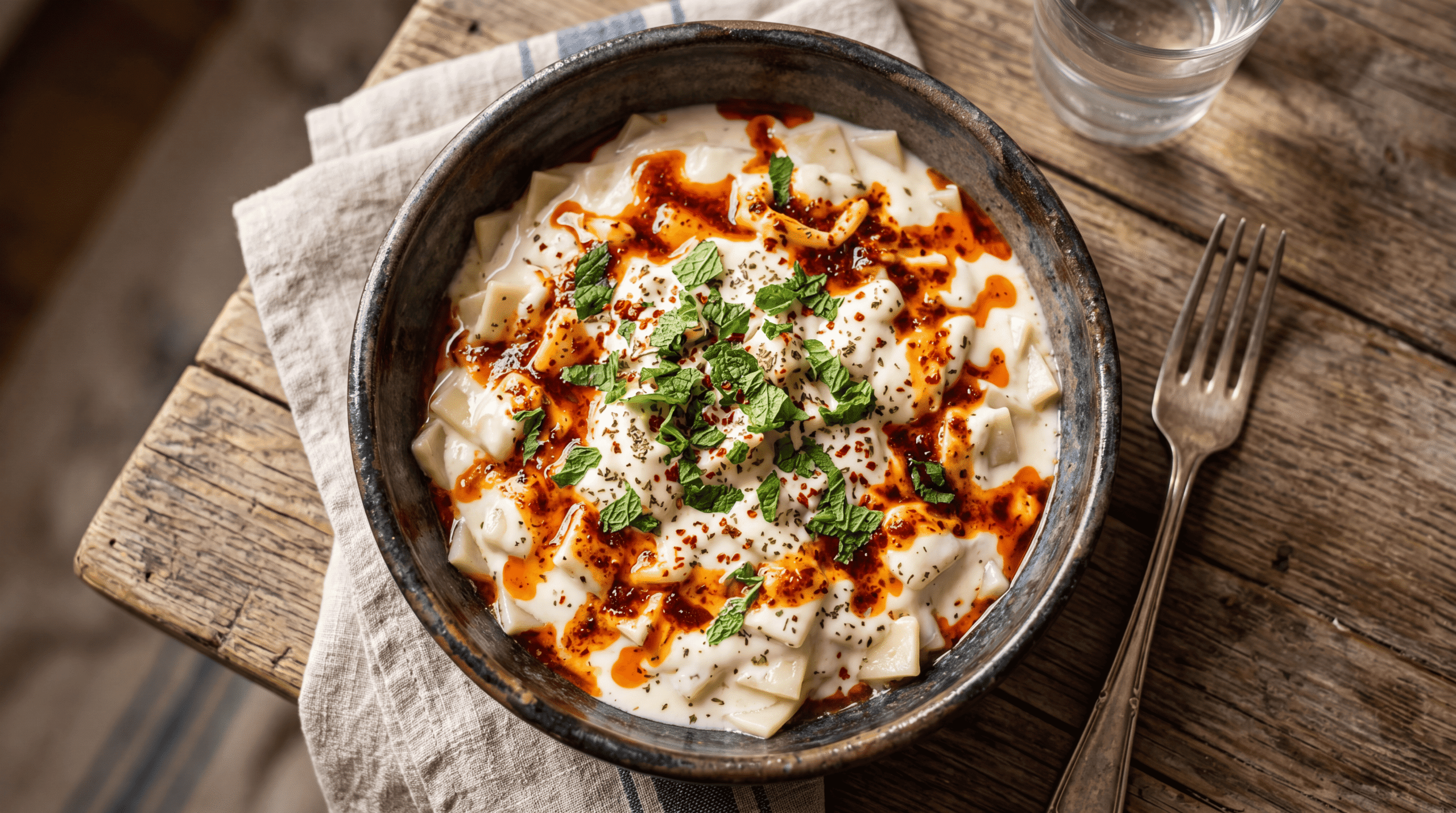
Portion noodles into shallow bowls. Drizzle the garlic-pepper butter over top in dramatic diagonal streaks. Finish with a pinch of dried mint or torn fresh mint leaves. Serve immediately while the temperature contrast between cool yogurt and hot butter is still pronounced.
Who Should Master This Technique
This recipe is for the home cook who’s tired of one-note pasta dishes and wants to expand beyond Italian traditions. If you love the tang of Greek tzatziki, the comfort of buttered noodles, and the complexity of Middle Eastern spices, this dish sits at the intersection of all three. It’s also perfect for anyone who wants impressive results from humble ingredients—yogurt, butter, and pasta are weeknight staples that become extraordinary with proper technique.
The active cooking time is under 20 minutes once you understand the tempering principle. This is faster than most risotto recipes and infinitely more forgiving than hollandaise. You’re learning a core technique—stabilizing dairy proteins under heat—that applies to dozens of other sauces, from Indian kormas to French gratins.
Understanding why yogurt curdles and how to prevent it gives you the confidence to improvise. Add roasted vegetables, fold in cooked chickpeas, top with crispy fried onions—the stable yogurt base can support countless variations once you’ve mastered the foundational science.
Master yogurt tempering once, and you’ll never fear dairy-based sauces again—that’s the kind of kitchen superpower that separates confident cooks from recipe-followers.