
The Vice President Just Declared Economic War—And Called It Self-Defense
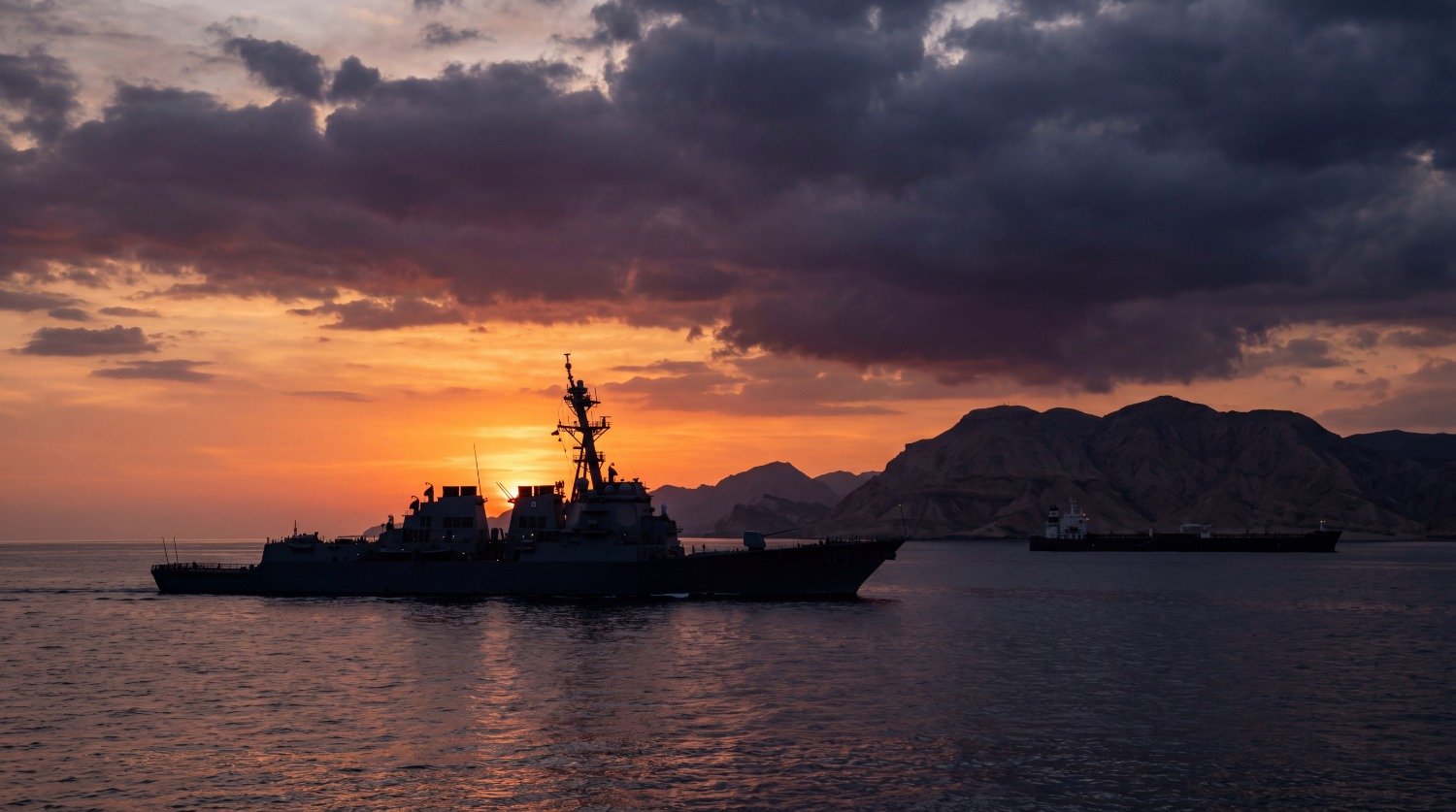
Vice President J.D. Vance stood before cameras on April 14, 2026, and announced that U.S. naval forces would enforce a “selective interdiction zone” in the Strait of Hormuz—the 21-mile-wide chokepoint through which 21% of global petroleum passes daily. He framed it as retaliation against Iran’s “economic terrorism,” a phrase that transforms sanctions evasion into a war crime. The blockade, Vance insisted, merely levels the playing field: “Two can play at this game.”
But strip away the rhetoric, and what remains is the first overt U.S. naval blockade since Cuba in 1962. This is not deterrence. This is a gamble that Iran will blink before global energy markets explode—and the timeline of how we got here suggests both sides have been engineering this collision for months.
The Negotiation That Wasn’t: A Timeline of Missed Offramps
To understand why Vance could credibly claim Iran fired first, you need to trace the escalation ladder. It began not in 2026, but in the wreckage of the 2018 JCPOA collapse, when the Trump administration’s “maximum pressure” campaign shredded Iran’s compliance incentives without offering a viable offramp.
November 2025: Tehran announces it has enriched uranium to 84% purity—within striking distance of weapons-grade. The IAEA confirms “non-cooperation” on new centrifuge sites. This is Iran’s way of saying: We’ve lost patience with negotiations that go nowhere.
January 2026: The second Trump administration proposes “The Dubai Framework”—a repackaged JCPOA with stricter sunset clauses and explicit missile restrictions. Iran’s Supreme Leader Khamenei calls it “the same poison in a new bottle.” Crucially, the proposal leaks to Council on Foreign Relations analysts before Tehran receives formal notification—a diplomatic insult that signals Washington never expected acceptance.
February 2026: Iran begins “irregular interdictions” of tankers in the Strait, citing environmental violations. Three vessels are delayed; none are boarded. It’s theater, but effective: Brent crude jumps 8% in a week. The International Crisis Group warns this is “coercive signaling, not yet escalation.”
March 2026: A Panamanian-flagged tanker carrying Qatari LNG is detained for 36 hours. Qatar—a U.S. ally hosting Al Udeid Air Base—goes ballistic. Vance, then still in listening mode, convenes a National Security Council meeting. The consensus: Iran is testing red lines, but hasn’t crossed one.
April 1, 2026: Two Iranian fast-attack craft “buzz” the USS Gravely, coming within 50 yards—well inside the Navy’s safety zone. One week later, Vance announces the blockade. The official justification: Iran’s interdictions constitute “economic terrorism” under U.S. legal interpretation. Unnamed Pentagon sources tell Reuters the decision was made “within 72 hours” of the Gravely incident.
Notice what’s missing: Any serious attempt at backchannel de-escalation. The Oman track—which brokered the 2015 nuclear deal—was never activated. European mediators were sidelined. This timeline reads less like failed diplomacy and more like a choreographed march toward confrontation, with each side performing for domestic audiences while waiting for the other to provide justification for the next move.
Why “Economic Terrorism” Is a Legally Vacant Phrase
Vance’s framing matters because it attempts to rewrite the rules of maritime law in real time. Under the UN Convention on the Law of the Sea, a coastal state can regulate passage through its territorial waters—which extend 12 nautical miles. Iran’s interdictions, however theatrical, occurred within that zone. A blockade, by contrast, is an act of war under customary international law—which is why the U.S. prefers “selective interdiction zone.”
The phrase “economic terrorism” has no standing in the Law of the Sea Treaty, the Geneva Conventions, or any body of international jurisprudence. It’s a political neologism designed to smuggle military action past the War Powers Act. If delaying tankers is terrorism, then every nation enforcing sanctions—including the U.S.—is a terror state. Vance knows this. So does Tehran. The real audience for this language is the American public, being prepped to accept economic warfare as something other than what it is: the last step before shooting starts.
What This Means For You: $6 Gas and the Return of Inflation
If you’re reading this in Des Moines or Detroit, here’s the math that should terrify you. The Strait of Hormuz moves 21 million barrels per day. Even a partial disruption—say, insurance rates quintupling due to war-risk premiums—translates to $150-per-barrel oil within weeks. That’s $6.50 per gallon at U.S. pumps, and Europe goes dark as winter approaches.
But the real damage is second-order: supply chain chaos, as petrochemical feedstocks for plastics, fertilizers, and pharmaceuticals vanish. The Federal Reserve, which just lowered rates to combat a sluggish 2026, would face the nightmare scenario of stagflation—rising prices amid economic contraction. Financial Times modeling suggests a sustained Hormuz closure could knock 1.2% off global GDP within six months.
And if shooting starts? The U.S. maintains it can keep the Strait open through superior naval power. Iran maintains it can close the Strait through asymmetric warfare—mines, swarming attacks by Revolutionary Guard fast boats, and anti-ship missiles fired from mountainous coastal terrain. Both are probably right, which means the real question is: How much global commerce are we willing to incinerate to find out?
The Power Dynamic Everyone Misses: Iran’s Weakness Is Its Leverage
Here’s the paradox: Iran is escalating from a position of desperation, which makes it more dangerous, not less. Sanctions have cratered the rial, inflation exceeds 40%, and youth unemployment is driving brain drain. The regime faces legitimacy crises at home—December 2025 saw the largest protests since 2019. Closing the Strait is economic suicide for Iran, which exports 1.3 million barrels per day through that same chokepoint.
But that’s precisely why Tehran might do it. Weak states with nothing left to lose make different calculations than secure ones. The Islamic Republic’s strategic doctrine since 1979 has been “resistance economy”—the willingness to endure deprivation if it imposes costs on adversaries. When the Houthi blockade of Yemeni ports persisted for years despite starvation, the lesson was clear: A cornered regime will weaponize its own suffering.
The U.S., meanwhile, operates from overwhelming conventional superiority but minimal pain tolerance. American voters will not accept $6 gas for long, especially not in an election year. Vance’s blockade works only if Iran capitulates quickly—within weeks, not months. The longer this drags on, the more pressure builds on Washington to either back down (humiliating) or escalate kinetically (catastrophic). Iran knows this. The question is whether Vance has accepted that his offramps are closing as fast as Tehran’s.
What Happens Next: Three Scenarios, None of Them Good
Scenario 1: The Managed Climb-Down. Within two weeks, Oman mediates a face-saving compromise: Iran pledges to cease interdictions, the U.S. lifts the blockade but maintains “enhanced patrols.” Both sides declare victory. Probability: 30%. This requires both leaders to prioritize survival over pride—and nothing in the timeline suggests either is wired that way.
Scenario 2: The Accidental War. A Revolutionary Guard commander, operating under doctrine that allows autonomous response to threats, fires on a U.S. destroyer conducting a “freedom of navigation” operation. Three American sailors die. Trump orders retaliatory strikes on Iranian naval bases. Within 72 hours, Hezbollah launches rockets into Israel from Lebanon, and the regional war everyone feared becomes reality. Probability: 45%. This is 1914 logic: nobody wants total war, but everyone’s mobilization plans make it inevitable once the first shot is fired.
Scenario 3: The Slow Strangulation. Neither side blinks, neither side shoots. The blockade becomes a frozen conflict, with U.S. warships challenging Iranian sovereignty daily while tankers reroute around Africa—adding 15 days and $400,000 per voyage. Oil stabilizes at $120 per barrel, high enough to hurt but not high enough to force resolution. This metastasizes into the new normal: a permanent crisis that reorders global energy markets and accelerates China’s pivot to land-based pipelines bypassing Hormuz entirely. Probability: 25%. History’s lesson is that frozen conflicts don’t stay frozen—they thaw at the worst possible moment.
Why This Feels Like August 1914, Not October 1962
The Cuba comparison is everywhere in Washington right now, and it’s wrong. In 1962, both Kennedy and Khrushchev had survived World War II. They understood existential risk viscerally and constructed offramps accordingly—the secret Turkish missile withdrawal that let Khrushchev save face. The Cuban Missile Crisis was terrifying because rational actors came within hours of Armageddon, then stepped back.
This feels more like the July Crisis of 1914, when a third-rate Balkan assassination triggered the worst war in history because everyone assumed mobilization was a bluff until it wasn’t. The Strait of Hormuz is our Sarajevo: a peripheral flashpoint that becomes central because alliance commitments and strategic doctrines allow no room for ambiguity. Vance thinks he’s calling Iran’s bluff. Iran thinks it’s calling America’s. In 1914, everyone was wrong.
The difference is that in 1914, leaders didn’t have 21st-century weapons or 21st-century markets. We do. Which means when this unravels, it will unravel faster than any historical parallel suggests is possible—and the world that emerges will not forgive the arrogance that assumed we could manage escalation indefinitely without paying the price.
The One Sentence That Reframes Everything
Vance calls this deterrence, but deterrence is what you do to prevent war—and when your strategy requires the enemy’s humiliation as a precondition for success, you are not preventing war, you are pricing it in installments until the final bill comes due all at once.