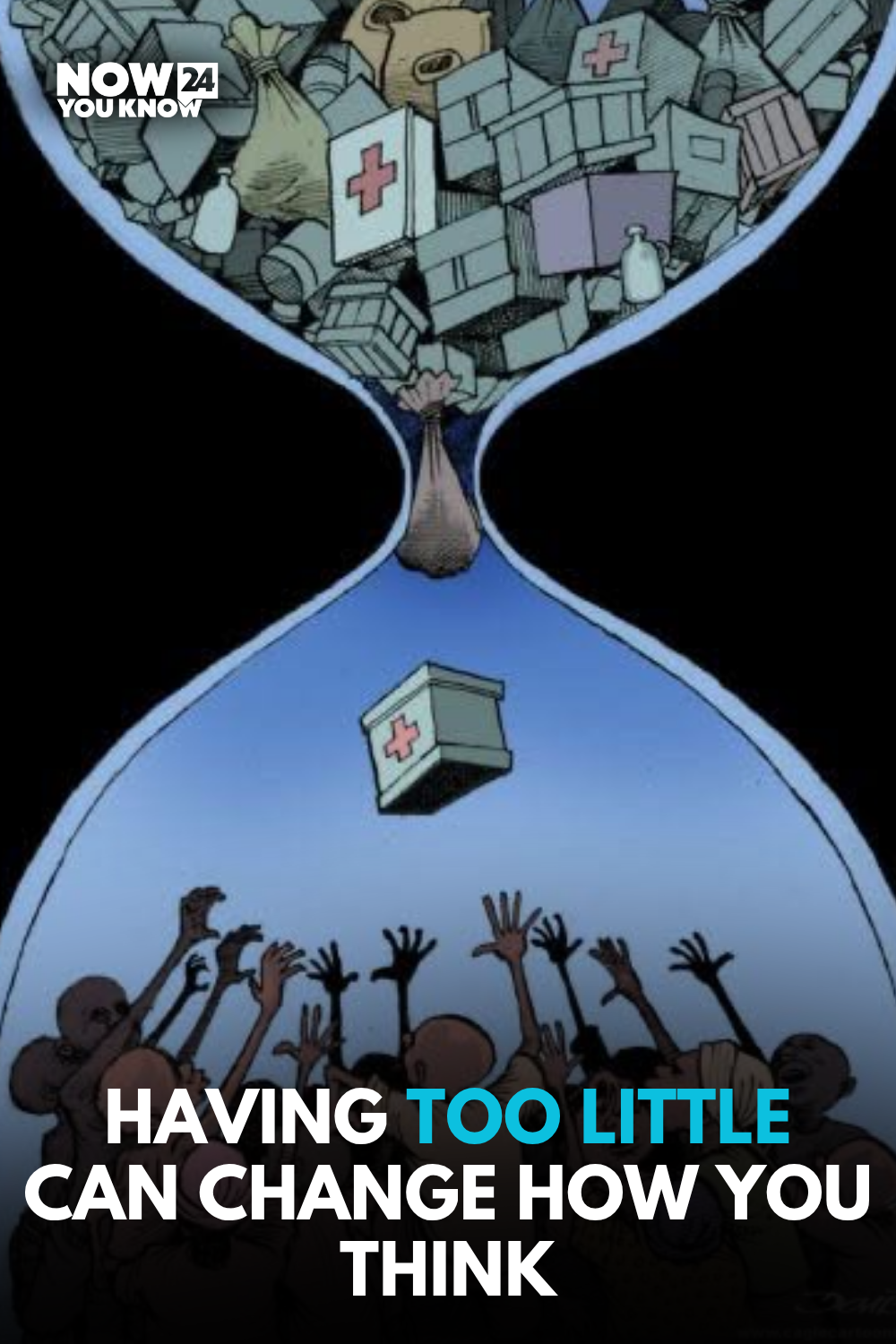

When people are struggling with money, time, food, or other basic needs, the problem may go beyond the thing they are lacking. Psychologists have found that scarcity can consume so much mental attention that there is less cognitive space available for everything else.
Princeton psychologist Eldar Shafir and economist Sendhil Mullainathan studied this phenomenon in their research on what they call the psychology of scarcity. Their work suggests that people under financial pressure are not necessarily less capable of making good decisions. Instead, their minds can become heavily focused on the immediate problem in front of them.
This effect is sometimes described as tunneling. When something feels urgently scarce, the brain gives it priority. That can make it harder to think about long-term plans, solve unrelated problems, remember important tasks, or consider the consequences of a decision.
One well-known experiment involved shoppers in a New Jersey mall. Participants were asked to think about a hypothetical car repair that would cost either a relatively manageable amount or a much larger amount. When people with lower incomes considered the more expensive repair, their performance on cognitive tests dropped significantly. The same pattern did not appear among higher-income participants.
Researchers also studied sugarcane farmers in India, whose financial circumstances changed dramatically depending on the time of year. The farmers were tested before and after their annual harvest. Their performance on cognitive tests was substantially better after the harvest, suggesting that financial scarcity itself could occupy mental resources.
The effect isn’t limited to money. Researchers have also explored time scarcity, finding that people who feel rushed can become more likely to accept tempting short-term solutions. In one experiment, students given very little time to complete a task were more likely to borrow additional time, even though doing so ultimately left them worse off.
The fascinating part is that these findings challenge the idea that poor decisions automatically mean poor judgment or low ability. A person can be equally capable while experiencing very different cognitive demands. When the pressure of scarcity eases, some of that mental capacity can become available again.
One practical lesson from this research is the value of leaving “slack” in life whenever possible. A little extra time, a small emergency fund, or fewer demands packed into a single day can provide room when something unexpected happens. Scarcity may be difficult to avoid, but reducing the mental burden it creates could make everyday decisions easier.