




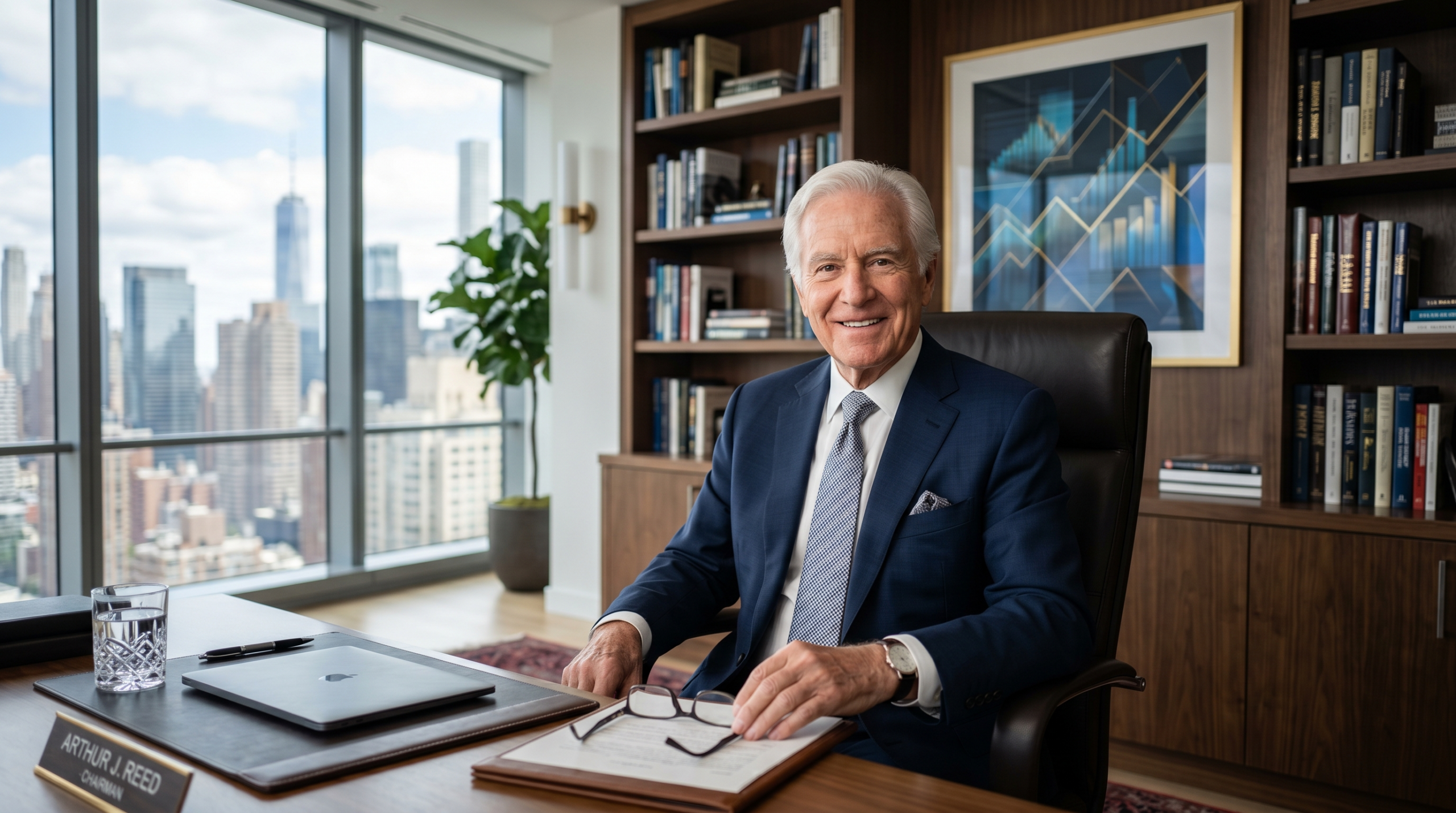

At 83 years old, most executives would have long since retired to golf courses or beach resorts. But Robert Rosenkranz, founder and chairman of Delphi Capital Management, has taken a different approach—one that has reportedly reversed his biological age by six years over the past four years.
Rosenkranz, who built his private equity firm into a powerhouse managing over $40 billion in assets during his tenure as CEO from 1987 to 2018, continues to work actively in his eighties. His philosophy stems from a belief shared by his late friend Byron Wien: “If you work forever, you’ll live forever.”
**The Science Behind the Schedule**
Rosenkranz’s daily routine centers on principles derived from longevity research, which he supports through his philanthropic work with leading scientists in life extension studies. The cornerstone of his approach is intermittent fasting—consuming all calories within an eight-hour window between 1 p.m. and 9 p.m. daily.
This practice, combined with regular exercise and quality sleep, has produced measurable results. Beyond the six-year reduction in biological age, Rosenkranz reports dramatic improvements in long-term memory, finding himself able to recall books and conversations from four decades ago with remarkable clarity.
**A Day Built on Discipline**
Rosenkranz’s day begins at 7:30 a.m. without breakfast, starting instead with coffee and newspapers. He dedicates his mornings to consuming information from the Financial Times, The Wall Street Journal, and The New York Times—sources he has relied upon throughout his career.
As a self-described “techno-optimist,” he has embraced artificial intelligence tools, regularly using Claude and ChatGPT for research and analysis. “It’s almost like having a couple of PhDs at my disposal 24 hours a day,” he explains.
Exercise forms a non-negotiable part of his routine two to three times weekly, alternating between weight training, cardio, and tennis sessions with a professional instructor. During workouts, he multitasks by watching television series, currently favoring the spy thriller “Slow Horses.”
**Strategic Work-Life Integration**
Despite stepping back from day-to-day management in 2018, Rosenkranz maintains an active role as chairman, dedicating two to three hours weekly to Delphi matters. He participates in weekly investment committee meetings and regular calls with senior management, all while maintaining homes in Aspen, London, East Hampton, and New York.
His workspace reflects both his investment success and philosophical interests. A Andreas Gursky photograph of the Chicago Board of Trade commemorates early silver trades that established his reputation, while Buddhist iconography and a Paul Strand image of Wall Street from the 1930s reveal deeper contemplations about capitalism and mindfulness.
**The Philosophy of Less**
Rosenkranz operates by a principle of “doing less, but with greater intensity.” Every hour of his day is scheduled, including social calls with longtime friends like Mike Milken, Paul Singer, and Kiril Sokoloff—relationships spanning decades that he nurtures with the same intentionality he brings to business.
Stoic philosophy, which he has studied since early in his career, guides his decision-making process. These principles help him manage emotions like anger and fear, enabling calm, rational responses to challenging situations—a skill he credits as fundamental to building his firm.
**Evening Routines and Family Balance**
Rosenkranz breaks his fast at 1 p.m. with a salad and protein, preferring office lunches for business meetings. Dinner at 8 p.m. with his wife Alexandra, prepared by personal chefs in New York and Aspen, is followed by reading sessions that span art, science, and public policy topics.
He maintains a consistent midnight bedtime, securing seven and a half hours of sleep nightly—a practice he considers increasingly critical for health and longevity with age.
Weekends are reserved for family and physical activity, though coordinating time with children and grandchildren scattered across different schools nationally requires careful planning. The family typically gathers in the Hamptons, making these reunions worth the logistical effort.
**Investment Mindset Never Stops**
For Rosenkranz, the line between work and life has essentially dissolved. “I can’t separate investment time from everything else,” he notes. “Almost everything I do has investment implications.” Whether reading about fiscal policy or new legislation, his mind automatically processes the potential impacts on inflation, interest rates, and market positioning.
This integration extends to his philanthropic work in public policy, arts, and medical science—activities that keep him intellectually engaged while contributing to causes he values.
Rosenkranz’s approach challenges conventional retirement wisdom. Rather than viewing aging as a withdrawal from active life, he demonstrates how maintaining purpose, structure, and healthy habits can potentially reverse biological decline while preserving mental acuity and professional relevance well into one’s eighties.