
Home cooks have been destroying their pasta for decades by doing one catastrophically wrong thing: they drain it. That squeaky-clean colander sitting in your sink? It’s the enemy of great pasta. The murky, starchy water you pour down the drain is liquid gold — and TikTok’s viral “dirty spaghetti” finally gets this right.
This chaotic-looking recipe has exploded across social media, racking up millions of views with its audacious promise: skip multiple steps, use one pot, and somehow end up with silkier, more luxurious pasta than the “proper” method. As someone who has made tens of thousands of pasta dishes across three continents, I can tell you exactly why this works — and why it is exposing a fundamental flaw in how most home cooks approach pasta.
What Is Dirty Spaghetti and Why Has It Gone Viral?
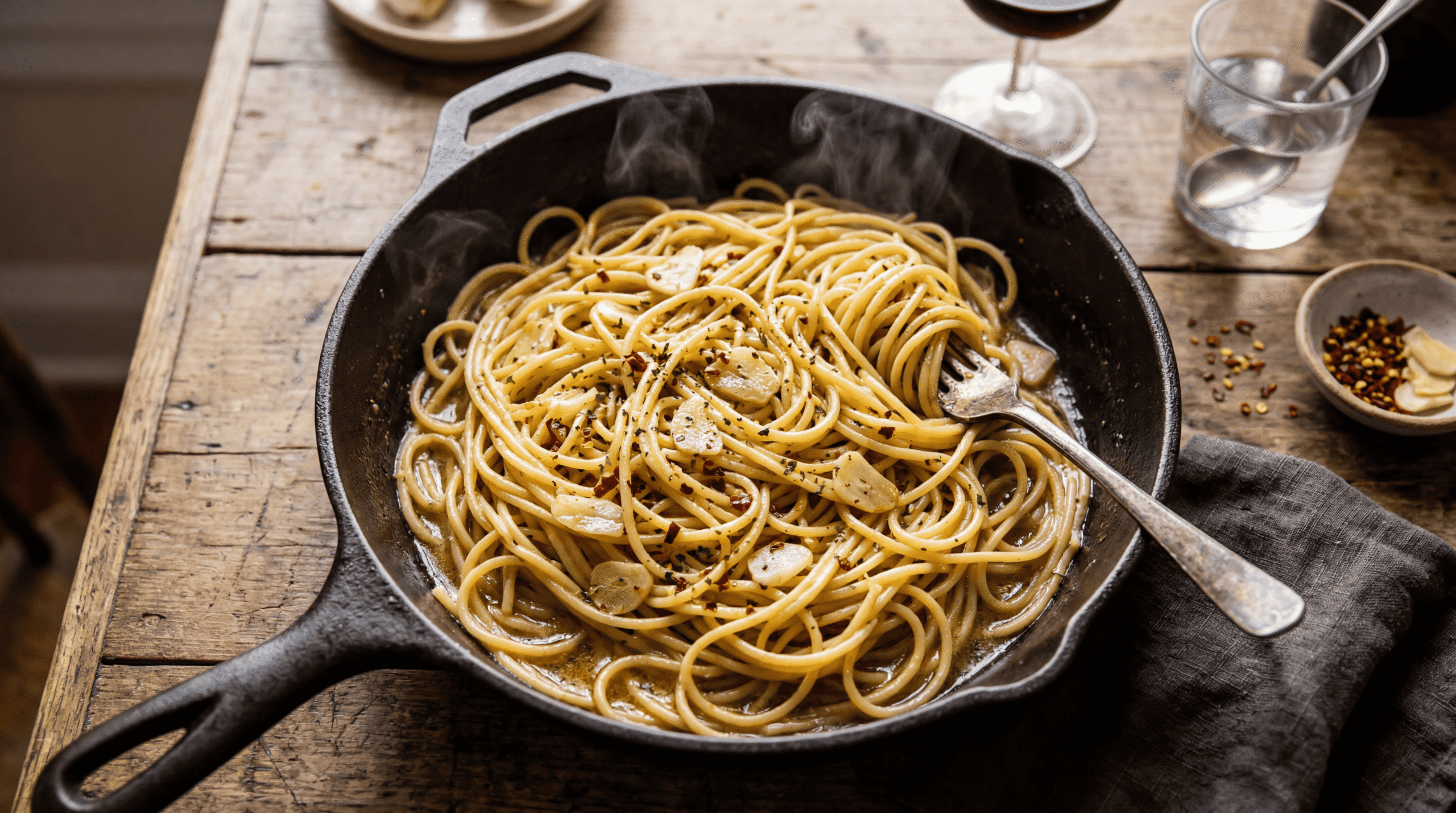
The dirty spaghetti method is shockingly simple, almost suspiciously so. You brown butter in a large pan. You add raw spaghetti directly to the pan with cold water, garlic, and chili flakes. You cook everything together in one pot, stirring occasionally, until the pasta is al dente and coated in a glossy, intensely flavored sauce that clings to every strand.
No separate pot of boiling water. No draining. No reserved pasta water measured into a cup. The pasta releases its starch directly into the cooking liquid, which simultaneously reduces into a sauce that is already perfectly emulsified by the time the spaghetti is cooked. It is the kind of technique that makes classically trained chefs uncomfortable — which is precisely why it has captured the internet’s imagination.
The method went viral because it looks wrong. The water stays cloudy throughout cooking. The pasta seems to be swimming in too little liquid. The whole thing feels like a recipe disaster in progress — until suddenly, in the final two minutes, everything transforms into glossy, restaurant-quality pasta that would cost $28 at a trattoria.
The Recipe: What You Actually Need
Here is what you need for two generous servings:
- 6 tablespoons (85g) unsalted butter
- 6-8 cloves garlic, thinly sliced
- 1-2 teaspoons red chili flakes (more if you want heat)
- 8 ounces (225g) dried spaghetti
- 3 cups (710ml) cold water
- 1 teaspoon salt
- 1/2 cup (50g) finely grated Parmigiano-Reggiano
- Fresh basil or parsley for finishing
- Freshly cracked black pepper
The technique is deliberately stripped down. Melt butter in a large skillet over medium heat and let it foam and brown lightly — you want nutty aromatics, not burnt milk solids. Add garlic and chili flakes, cooking for 30 seconds until fragrant but not colored. Break the spaghetti in half (yes, I am giving you permission) and add it to the pan with the cold water and salt.
Bring to a boil, then reduce to a vigorous simmer. Stir every 2-3 minutes to prevent sticking, making sure the pasta is submerged. As the water reduces and the spaghetti softens, the magic happens — the starch releases, the water thickens, and the sauce begins to form itself. After 10-12 minutes, when the pasta is al dente and only a few tablespoons of starchy liquid remain, kill the heat. Add the Parmigiano-Reggiano and toss vigorously until the sauce becomes glossy and clings to every strand.
The Science Behind Why This Works Better
This method works because it exploits the single most underutilized ingredient in Italian cooking: pasta water. When you cook pasta in a large pot of water, you are diluting the starch that leaches from the noodles. According to food science research at Serious Eats, pasta releases amylose and amylopectin during cooking — two starches that act as natural emulsifiers and thickeners.
In the traditional method, you drain away 90% of this starch, then try to add some back with a ladleful of pasta water. It is inefficient and imprecise. The dirty spaghetti method keeps 100% of the starch in the pan from the beginning. By cooking the pasta in exactly the amount of water it needs, you create a concentrated starch solution that is already at the perfect consistency to form a sauce.
The brown butter adds fat, which would normally separate from water-based liquids. But the starch molecules act as a bridge — their hydrophilic (water-loving) ends bond with the water, while their hydrophobic (water-fearing) ends bond with the fat. This is the same principle behind a classical emulsion like mayonnaise, except the pasta is doing the work for you. Research published in the Journal of Food Science confirms that pasta cooking water with high starch concentration creates more stable emulsions than water with low starch content.
The garlic and chili flakes bloom directly in the butter, releasing fat-soluble flavor compounds that would partially wash away in a large pot of water. By cooking everything together, you are building flavor in layers — the aromatics infuse the fat, the fat coats the pasta, and the starch binds everything into a cohesive sauce.
Common Mistakes That Ruin This Recipe
Using too much water. The entire method depends on ending with just enough liquid to create a sauce. If you add four or five cups of water instead of three, you will finish with soupy pasta, not saucy pasta. The amount of water matters more in this recipe than in traditional pasta cooking. Measure it.
Not stirring enough in the first five minutes. When pasta is added to a pan of cold water, it wants to stick to itself and to the pan. You must stir frequently in the beginning to prevent clumping. Once the pasta softens and the water comes to a boil, you can back off to stirring every few minutes. Ignore the pot early, and you will have a clumped, stuck mess.
Adding the cheese too early or over heat. Parmigiano-Reggiano contains proteins that will seize and turn grainy if heated above 160°F (70°C). You must kill the heat completely before adding cheese, then toss vigorously to create a creamy emulsion. If you add cheese while the pan is still on the burner, you will get a broken, grainy sauce instead of a glossy one.
Using pre-grated cheese from a container. Those convenient shaker bottles contain cellulose (wood pulp) to prevent clumping. Cellulose does not melt or emulsify. It just makes your sauce grainy and weird. Buy a wedge of real Parmigiano-Reggiano and grate it yourself on the finest holes of a box grater. The texture difference is not subtle.
Is Dirty Spaghetti Actually Worth Making?
Yes — but not for the reason you think. This is not about saving time or reducing dishes, though both are nice benefits. This is worth making because it teaches you the single most important principle of great pasta: the cooking water is an ingredient, not a disposal problem.
Once you understand that the starchy pasta water is what makes sauce cling to noodles, you will never make pasta the same way again. You will start using less water in your pasta pot. You will stop draining pasta completely. You will transfer pasta to sauce with a spider or tongs, bringing some of that precious starch with every strand. This recipe is a gateway drug to actually understanding Italian pasta technique.
The flavor is legitimately excellent — better than most home cooks achieve with traditional methods because the brown butter, garlic, and chili have nowhere to hide. The sauce is not diluted by excess water or separated by improper emulsification. It tastes rich, cohesive, and complete.
The texture is where this method really shines. The pasta is not just coated in sauce — it is integral to the sauce. Every strand is glossy and clingy in a way that makes you want to keep twirling your fork. This is the texture of €15 pasta in Rome, not $4 pasta from a box in your kitchen.
The One Technique You Can Use Today
Here is what changes in your cooking forever: stop using a gallon of water to boil pasta. Professional Italian cooks use barely enough water to cover the noodles because they want concentrated, starchy cooking liquid. Start with half the water you normally use — instead of six quarts for a pound of pasta, use three quarts. The pasta will cook exactly the same, but the water will be much starchier and more useful for creating sauce.
When you transfer pasta to your sauce, use tongs or a spider instead of draining it in a colander. Let some of that starchy water come along for the ride. If the sauce looks too thick, add pasta water a tablespoon at a time. If it looks too thin, let it reduce while tossing the pasta. You are not adding water to sauce — you are creating sauce from water.
This simple shift in thinking will improve every pasta dish you make, even if you never try the full dirty spaghetti method. Understanding that pasta water is a cooking medium and a sauce ingredient, not a waste product, is the difference between home cooking and restaurant cooking. The internet went viral for dirty spaghetti because it finally made this principle visible, chaotic, and impossible to ignore. And that makes you a better cook just by watching it happen.