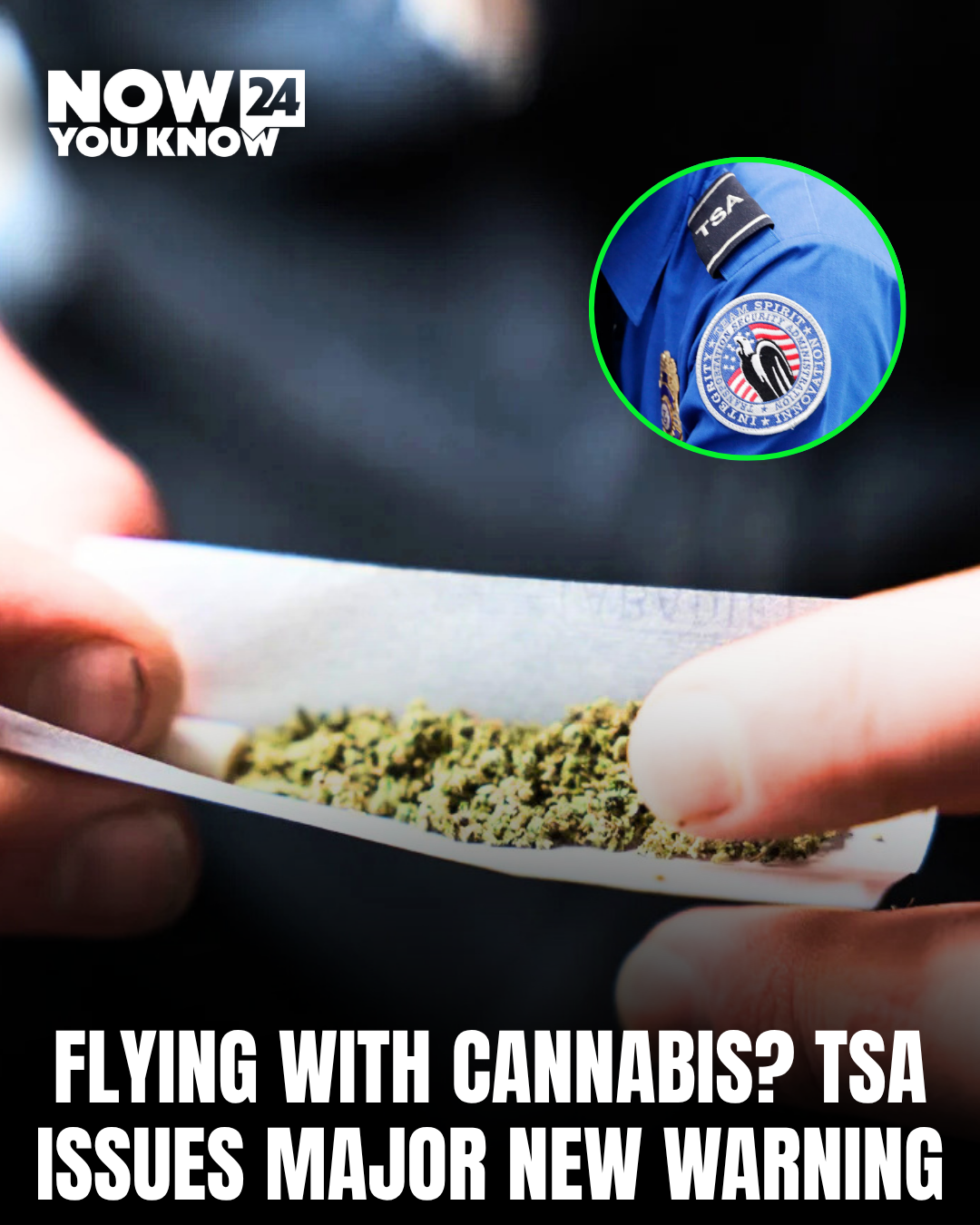

The Transportation Security Administration (TSA) has updated its guidance regarding medical marijuana, offering travelers clearer information about flying with cannabis products while also prompting renewed warnings from health experts.
The updated advice appears in the TSA’s “What Can I Bring?” directory and outlines how passengers traveling with medical cannabis may carry their medication in both carry-on and checked luggage, depending on local laws and regulations.
However, medical experts and cannabis researchers are cautioning travelers against actually using cannabis during flights due to potential health and safety risks at high altitude.
Experts Warn Against Using Cannabis Mid-Flight
While some travelers use cannabis products to manage anxiety, chronic pain, nausea, or sleep issues, specialists say airplanes are not the safest environment to experiment with dosage or unfamiliar products.
Professor Rob Mejia of Stockton University’s Cannabis Studies Department explained that many medical cannabis users simply want access to their medication once they arrive at their destination, rather than during the flight itself.
He warned that edibles and other cannabis products can affect people unpredictably during air travel, especially in pressurized cabins where oxygen levels are lower than at ground level.
Potential Risks At High Altitudes
According to research referenced by medical experts, cannabis can alter heart rhythm and increase the heart’s oxygen demand. Combined with the body’s natural response to cabin altitude, this may place additional strain on the cardiovascular system.
Researchers warn this combination can potentially trigger symptoms such as dizziness, nausea, rapid heartbeat, anxiety, or hyperventilation, particularly in people sensitive to THC or using high-potency products.
Experts also stressed that flights are not the ideal place to test a new cannabis edible or take larger doses than usual.
Legal Confusion Still Exists
Although TSA agents primarily focus on security threats rather than searching for marijuana, experts warn travelers should not assume cannabis is automatically protected during airport screening.
State laws in the US still vary widely, and local law enforcement may become involved if cannabis possession violates regional regulations.
Experts advise travelers to keep any medical cannabis products clearly labeled and stored in original packaging to avoid unnecessary attention during screening.
International Travel Remains High Risk
Cannabis laws also differ dramatically from country to country, making international travel especially risky for passengers carrying marijuana products.
Even countries that have legalized cannabis for residents may still impose strict restrictions on tourists or foreign visitors entering with the substance.
For that reason, experts strongly recommend leaving cannabis products at home when traveling internationally to avoid potential legal trouble abroad.
The updated TSA guidance has helped clarify some confusion around domestic travel, but specialists say preparation, moderation, and understanding local laws remain essential for anyone flying with medical cannabis.