
A heated debate over tipping culture has gone viral after a restaurant guest left a note questioning standard tipping expectations following a high-end dinner bill.
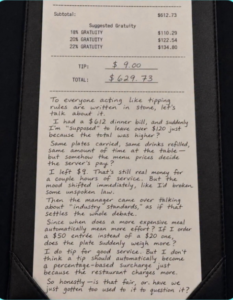
The incident reportedly took place after a woman shared her reaction to a $612 restaurant check, alongside a discussion about how tips are calculated in upscale dining.
She says she still left a $100 tip, but felt pressured expectations had shifted unfairly simply because the total bill was higher than average.
Customer Questions Percentage-Based Tipping
In the note she left behind, the customer argued that service levels did not change based on menu prices.
She pointed out that staff were still performing the same duties, including taking orders, serving plates, and refilling drinks, regardless of whether a meal cost $20 or $50 per item.
Her main argument centered on why tipping is often tied to percentages rather than effort or service quality.
She suggested that higher restaurant prices should not automatically translate into dramatically larger tips.
Restaurant Industry Standards Under Scrutiny
According to her account, the situation escalated after a manager reportedly referenced “industry standards” when addressing the tip amount.
That comment, she claims, added fuel to a wider disagreement about whether tipping expectations are becoming too rigid in modern dining culture.
Tipping practices vary widely across regions, but in the United States they are commonly calculated as a percentage of the total bill, especially in full-service restaurants.
Growing Debate Over Tipping Expectations
The situation has reignited a long-running online discussion about whether tipping culture is still fair or outdated.
Supporters of percentage-based tipping argue that higher bills often reflect more complex orders, premium service environments, and higher operational costs overall.
Others believe tipping should be based strictly on service quality and effort, not menu pricing or restaurant category.
Why the Story Is Resonating Online
The post gained traction because it highlights a growing frustration among some diners who feel tipping expectations have become inconsistent and increasingly expensive.
At the same time, many hospitality workers and industry voices argue that tips remain essential to supplement wages in service roles.
This ongoing divide continues to fuel strong reactions whenever tipping disputes surface online.
Final Outcome of the Viral Note
While opinions remain sharply split, the note has become another example of how quickly tipping debates can escalate on social media.
It reflects a broader cultural tension between customer expectations and long-standing restaurant practices.
And after all the discussion, the identity of the diner behind the viral note was simply described as a customer questioning tipping norms after a $600 meal.