


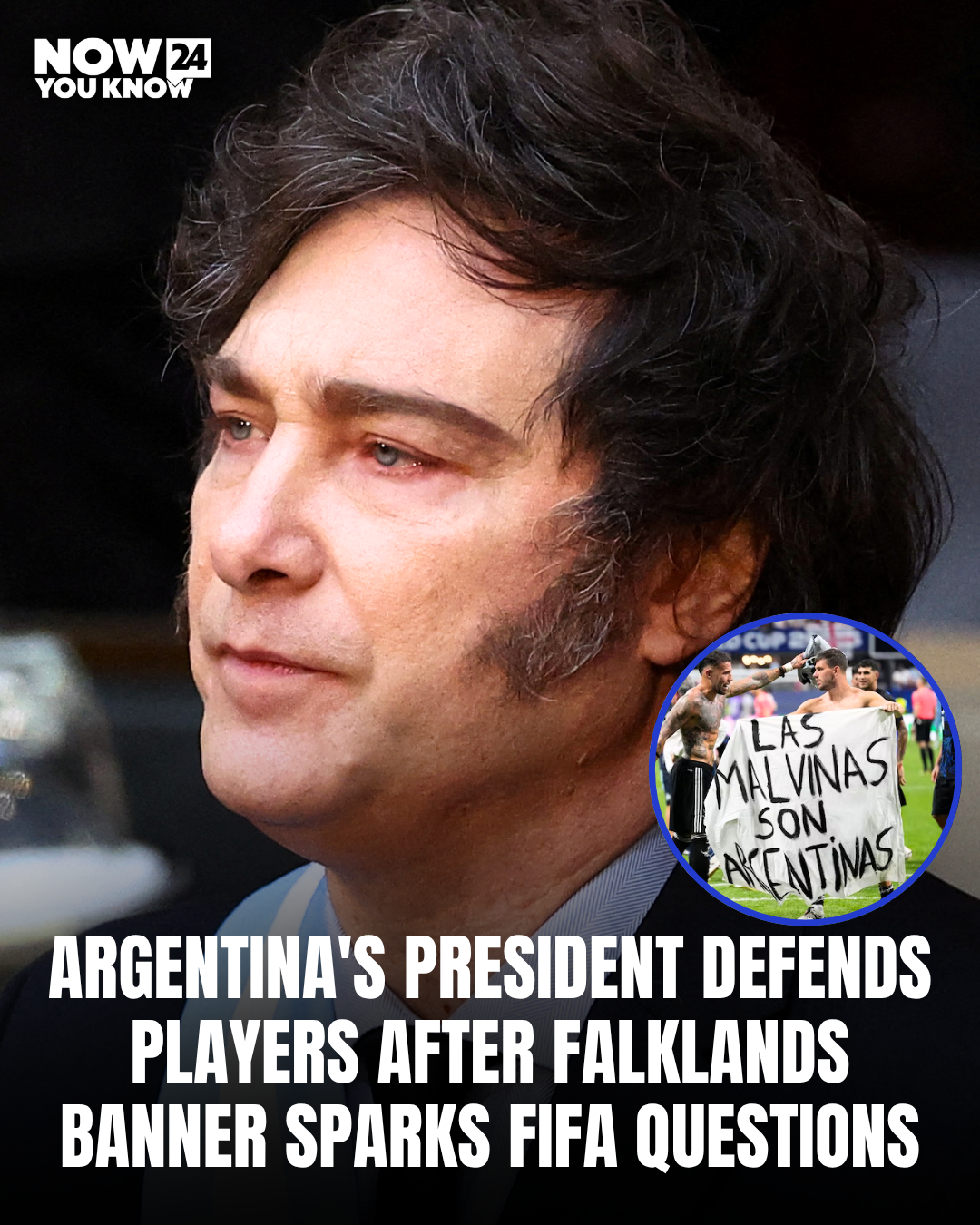

Argentina’s President Javier Milei has defended members of the national football team after they displayed a banner referencing the Falkland Islands following their victory over England. The incident has drawn political criticism, prompted discussion about FIFA’s rules on political messages, and reignited a long-running sovereignty dispute.
Celebration Turns Into Controversy
After Argentina’s win, several players celebrated with a banner reading “Las Malvinas son Argentinas” (“The Falkland Islands are Argentine”). The display quickly attracted international attention because the Falkland Islands remain a British Overseas Territory, while Argentina continues to claim sovereignty over them.
Milei Stands Behind the Team
Speaking after the match, Milei said the players were expressing genuine emotion and defended their actions as legitimate. He also suggested that, if FIFA were to impose a financial penalty, Argentina would accept the consequences rather than criticize the players.
FIFA Yet to Announce Any Decision
At the time of publication, FIFA has not announced any disciplinary action. The organization has said it is reviewing the match reports under its normal procedures before determining whether any further steps are necessary. FIFA regulations generally prohibit political messages or displays at official competitions.
UK Reaffirms Its Position
The UK government responded by reiterating that the Falkland Islanders have the right to self-determination, maintaining its longstanding position that sovereignty rests with the United Kingdom unless the islanders choose otherwise. The Falkland Islands Government also expressed disappointment over the banner and called for politics to remain separate from sport.
A Dispute That Extends Beyond Football
The sovereignty dispute over the Falkland Islands, known in Argentina as the Malvinas, has lasted for decades and remains a sensitive issue in both countries. While political leaders continue to disagree over ownership, sporting events have occasionally become flashpoints for national sentiment.