
New Advances Are Reshaping the Global Technology Race
China’s latest progress in artificial intelligence, semiconductor manufacturing, and robotics is increasing pressure on the U.S. technology sector, fueling debate among industry leaders and policymakers over how to respond. A series of recent developments has highlighted the growing competition between the world’s two largest economies in emerging technologies.
From advanced AI models to new chip production capabilities, Chinese companies are challenging long-held assumptions about U.S. dominance in several high-growth industries. The developments have also sparked fresh discussions about national security, innovation, and global competitiveness.
Open AI Models Challenge Established Players
One of the biggest shifts has come from Chinese developers releasing powerful open-source AI models, including Moonshot AI’s Kimi K3. Because these models are freely available for developers to use and modify, they offer lower-cost alternatives to commercial AI platforms developed by companies such as OpenAI and Anthropic.
The rise of open models has divided the U.S. technology industry. Some companies argue they encourage innovation and broader AI adoption, while others warn they could create security risks or make it harder for commercial AI developers to recover the massive investments required to build advanced systems.
Washington Faces Difficult Policy Decisions
The debate has also reached Washington, where officials are weighing how to balance national security concerns with the need to keep American companies competitive. While some policymakers have discussed possible restrictions on Chinese AI technologies, others have cautioned that limiting access could disadvantage U.S. businesses that rely on affordable AI tools.
At the same time, major technology companies have urged lawmakers to avoid broad restrictions on open AI models, arguing that open development remains important for innovation and competition within the industry.
Robotics and Chips Add to the Competition
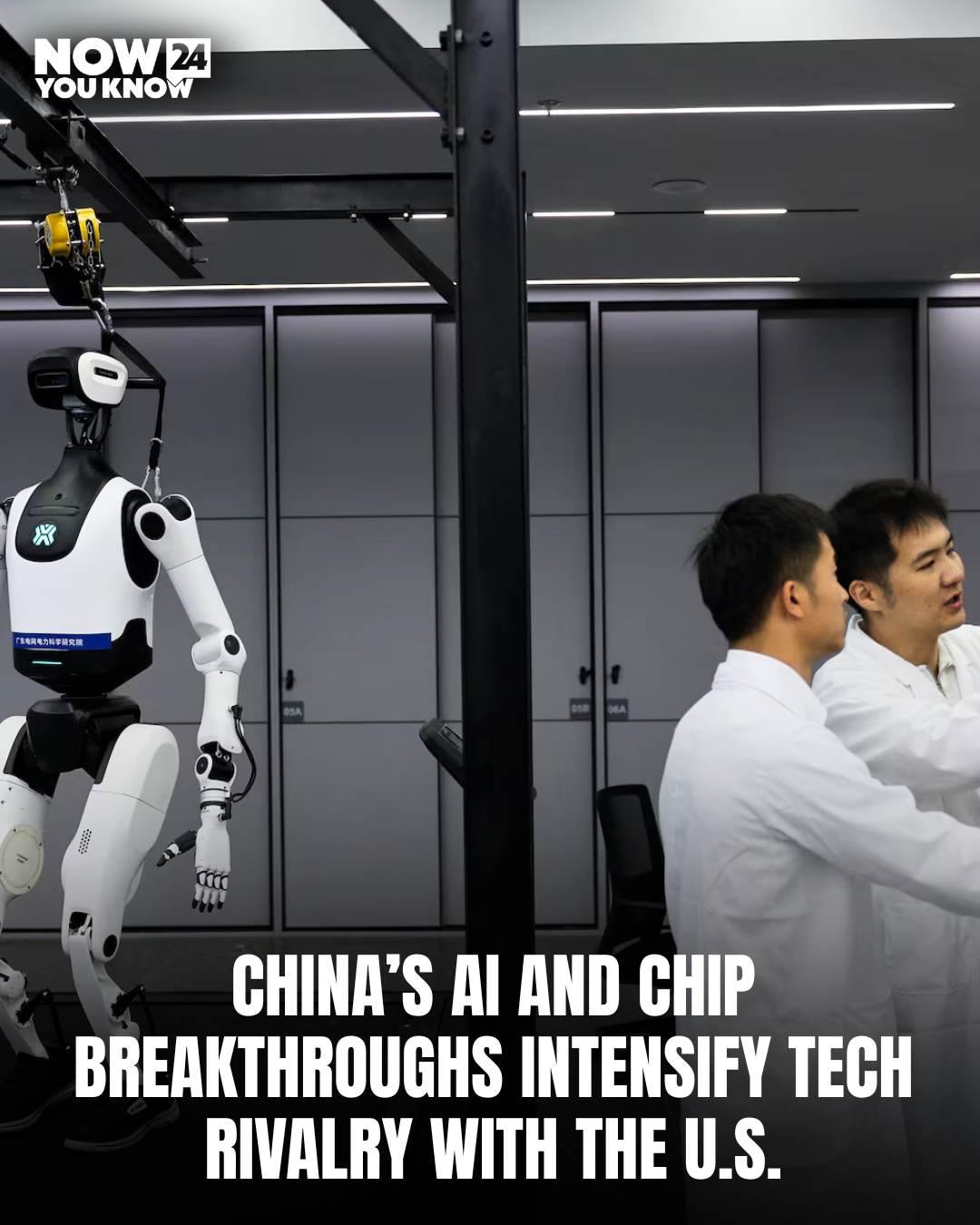
Artificial intelligence is not the only area drawing attention. Chinese robotics companies have demonstrated increasingly capable humanoid robots, while reports that China has expanded production of specialized AI chips have raised concerns across financial markets and the semiconductor industry.
These developments underscore China’s growing ability to compete in technologies that are expected to shape future economic growth, manufacturing, and national security.
A Rivalry Likely to Continue
The technology competition between the United States and China is expected to remain one of the defining global issues in the years ahead. Decisions surrounding AI regulation, semiconductor manufacturing, and advanced robotics could influence not only innovation but also international trade and geopolitical relations.
As both countries invest heavily in next-generation technologies, companies, governments, and investors will be watching closely to see how the balance of technological leadership evolves.