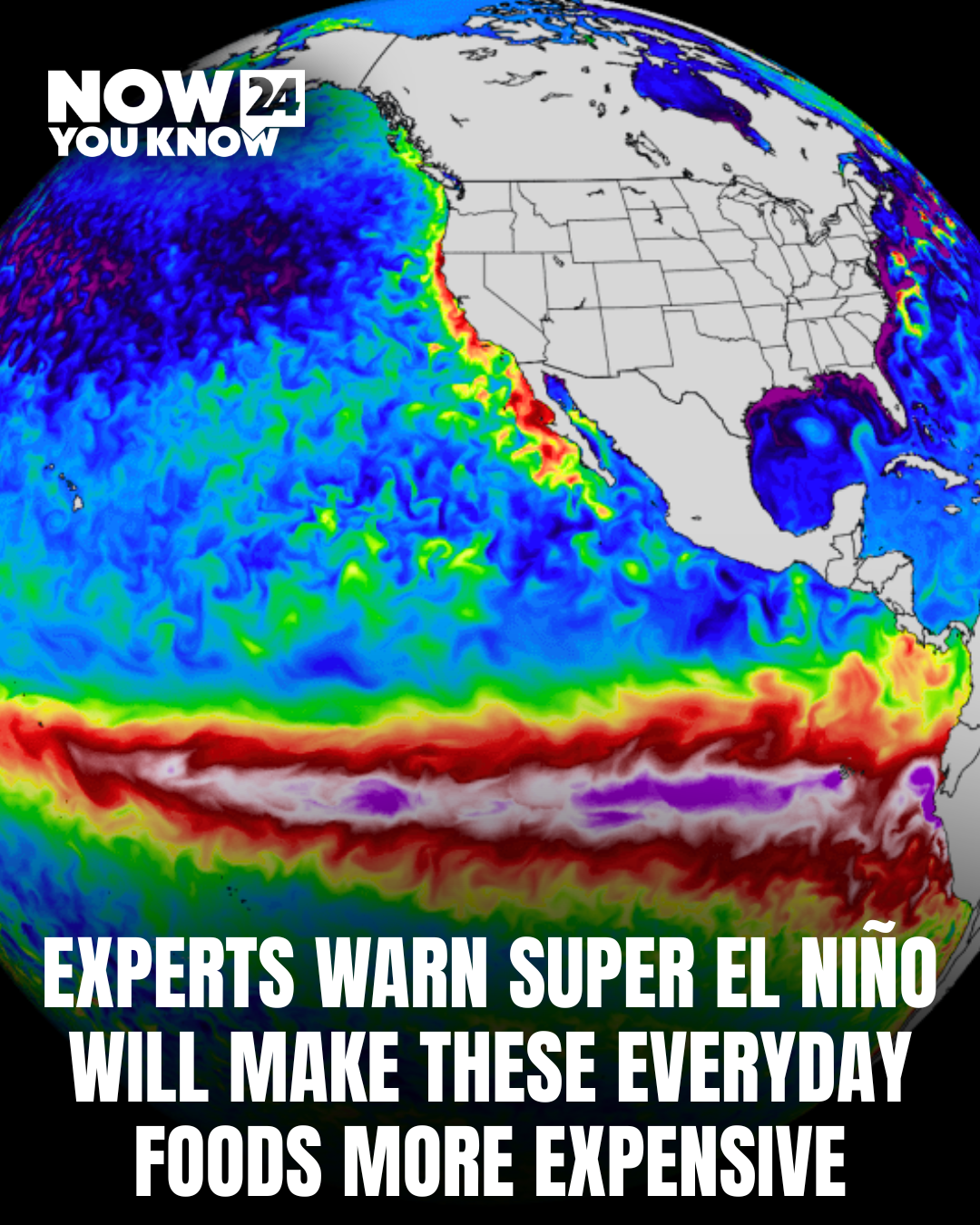

Experts are warning that a powerful El Niño weather event could soon impact global food supplies, potentially driving up the prices of everyday items.
The climate phenomenon, which is linked to unusually warm ocean temperatures in the Pacific, has historically disrupted farming and food production across multiple continents. Analysts now fear another strong event could place additional pressure on households already struggling with rising living costs.
What Is El Niño?
El Niño occurs when sea surface temperatures in parts of the Pacific Ocean become significantly warmer than average. These changes can alter weather patterns around the world, triggering droughts in some regions and severe flooding in others.
While the phrase “Super El Niño” is commonly used in headlines, meteorologists note that it is not an official scientific term. Instead, it describes an especially intense El Niño event with stronger-than-normal global impacts.
Why Food Prices Could Rise
Weather conditions play a major role in agriculture, meaning even small climate shifts can affect crop harvests and supply chains. Experts say products heavily dependent on stable growing conditions are most at risk.
According to weather specialists, items such as coffee, tea, cocoa, bananas, sugar, and fresh vegetables could become more expensive if harvests are damaged in key exporting countries.
For countries that rely heavily on imported produce, supply shortages may also lead to empty shelves or reduced availability of certain foods.
Supply Chains Already Under Pressure
Analysts have pointed to previous El Niño events as examples of how quickly prices can rise when production slows. During recent climate disruptions, several countries experienced shortages of fruits and vegetables due to poor harvests and transportation issues.
Food experts also warn that the impact may extend beyond imported goods. Soy production in Brazil, for example, was hit during earlier El Niño conditions, affecting animal feed prices and eventually increasing the cost of poultry products.
How Long Could The Effects Last?
Experts say the economic effects of a strong El Niño event may take several months to fully appear in supermarkets. However, once supply chains are disrupted, prices can remain elevated long after weather conditions improve.
Some researchers also warn that climate-related disruptions are becoming more frequent, meaning food systems worldwide could face growing pressure in the years ahead.
Consumers are now being advised to prepare for possible price increases across several everyday grocery items if extreme weather patterns intensify later this year.