




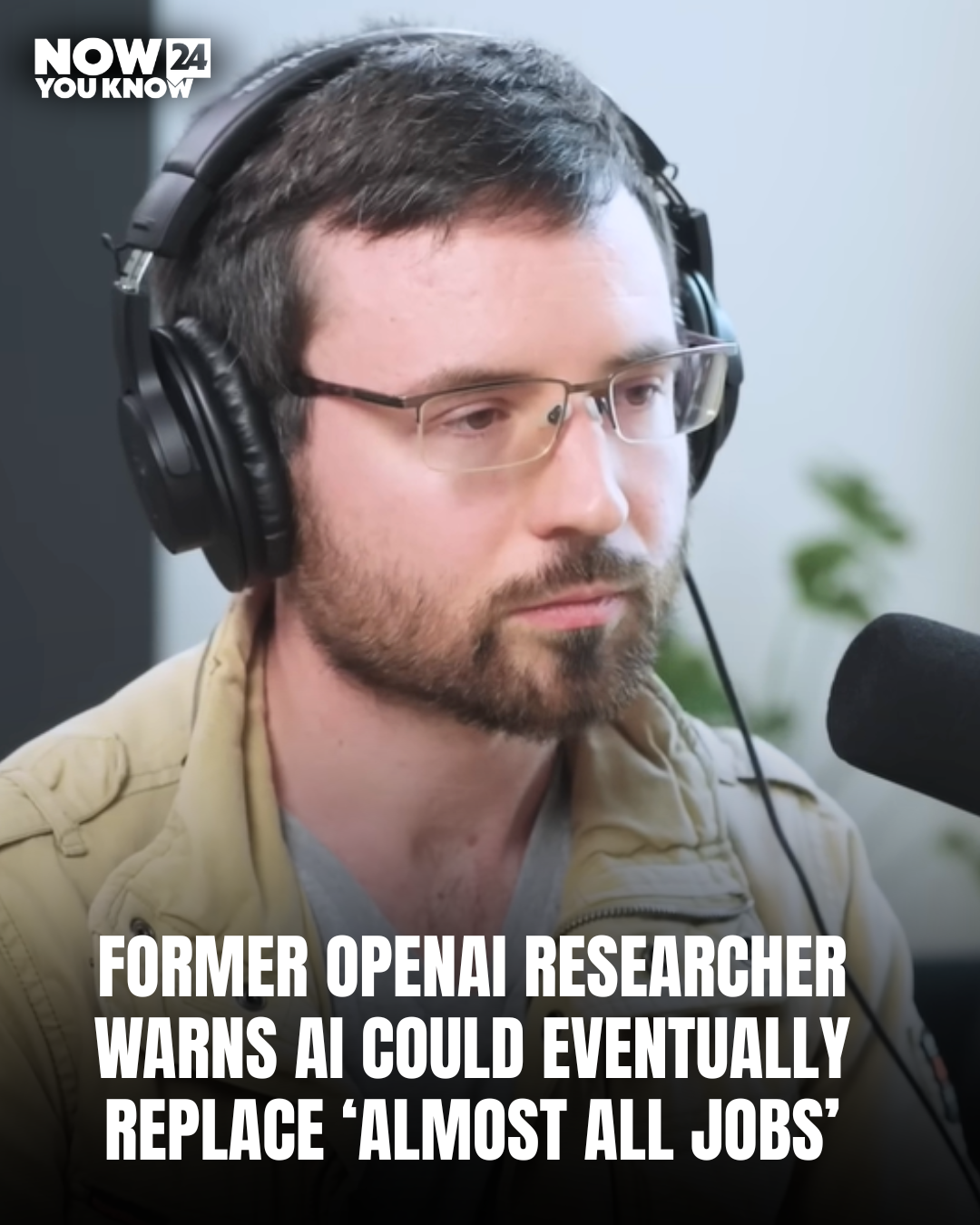

A former OpenAI researcher has warned that rapid advances in artificial intelligence could eventually transform the job market on a massive scale, arguing that AI may one day be capable of performing nearly every type of human work.
Daniel Kokotajlo, who previously worked as a governance researcher at OpenAI and now leads the AI Futures Project, shared his views during an interview about the long-term impact of increasingly capable AI systems.
A Prediction, Not a Current Reality
Kokotajlo said that if developers succeed in creating what researchers often call artificial general intelligence (AGI) or even more advanced AI systems, those systems could theoretically perform almost every job more efficiently than humans.
He stressed that this is a future scenario, not a description of today’s technology. Current AI tools, he said, remain powerful but are not yet reliable enough to fully replace human workers across most professions.
The Debate Over AI and Employment
According to Kokotajlo, the biggest question may not be whether AI can perform certain jobs, but whether governments and society choose to allow it.
He suggested that decisions about which roles AI should be permitted to take over will ultimately become political and regulatory questions rather than purely technical ones.
Many experts have echoed similar concerns while also noting that previous technological revolutions eliminated some jobs but created entirely new industries and careers.
Growing Concerns Around AI
The rapid development of AI has sparked debate far beyond employment.
Critics have raised concerns about deepfakes, copyright issues, misinformation, privacy, and the environmental impact of large AI data centers. Others worry about how automation could reshape the workforce if AI capabilities continue improving.
At the same time, many businesses are adopting AI to assist employees rather than replace them outright, using it to automate repetitive tasks and improve productivity.
What Comes Next?
Kokotajlo believes widespread job displacement is not happening on a large scale today, saying current AI systems still require significant human oversight.
However, he argues that if future AI becomes substantially more capable, society will face difficult questions about employment, education, and economic policy.
While predictions about AI’s long-term impact vary widely among researchers, most experts agree that the technology is likely to continue reshaping many industries over the coming years.