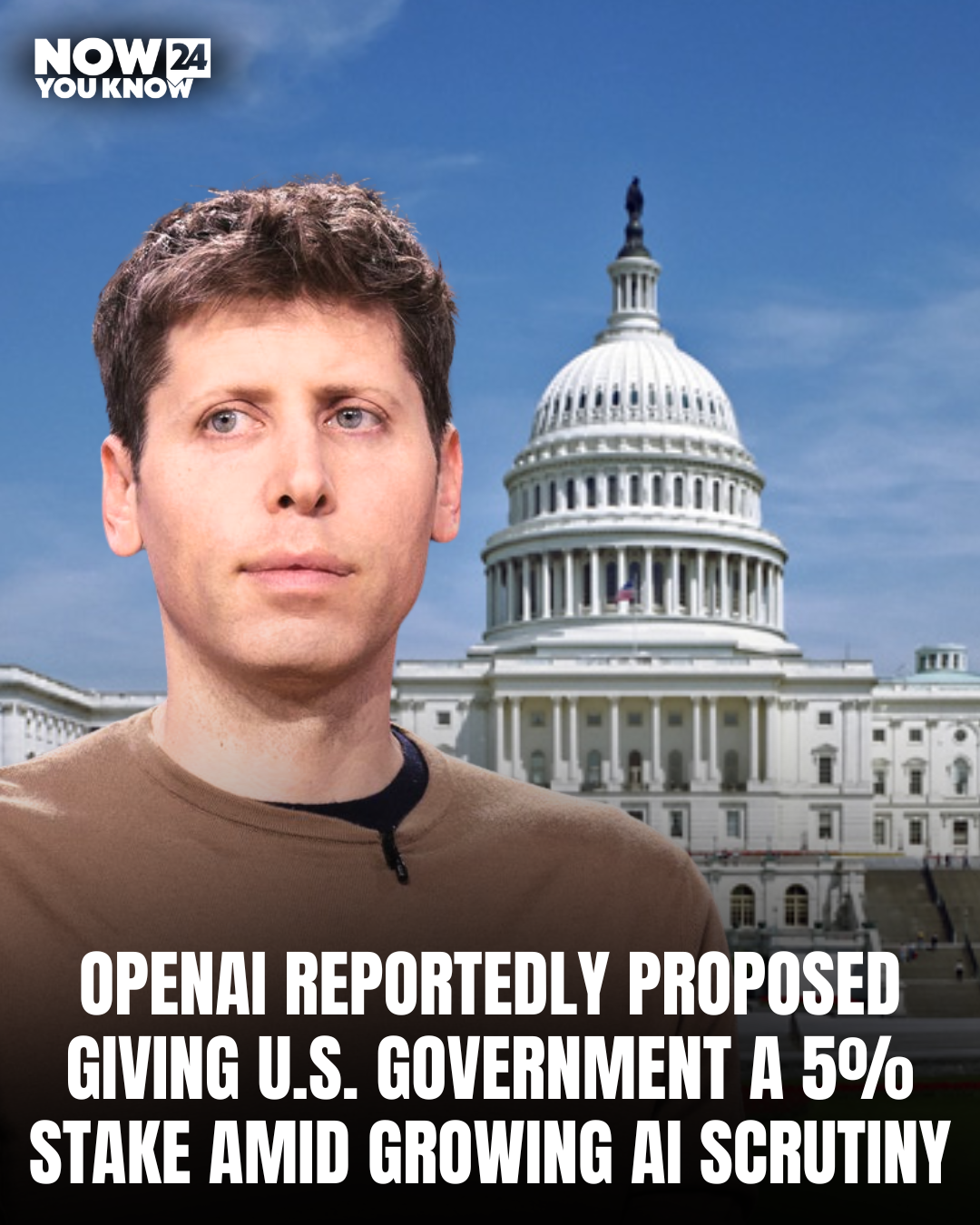

OpenAI has reportedly proposed granting the U.S. government a 5% ownership stake in the company as part of an effort to address growing political and regulatory pressure surrounding artificial intelligence. The proposal, first reported by the Financial Times, remains in the discussion stage and has not been finalized.
According to the report, OpenAI CEO Sam Altman argued that giving the public a financial interest in leading AI companies could help ensure Americans share in the economic benefits of the rapidly expanding industry. Based on OpenAI’s reported valuation of approximately $852 billion, a 5% stake would be worth about $42.6 billion.
A Broader Proposal for the AI Industry
The reported plan extends beyond OpenAI. It envisions a government-managed investment vehicle that would hold similar 5% stakes in other major U.S. AI developers, including Anthropic, Google, and Meta. However, there is no indication that those companies have agreed to participate, and discussions are said to be in the early stages.
Neither the White House nor the companies named in the report immediately commented on the proposal. If pursued, any arrangement involving government ownership of private AI companies could face significant legal, regulatory, and political hurdles.
Why the Idea Is Being Discussed
The proposal comes as Washington increases its focus on artificial intelligence, with lawmakers and regulators raising concerns about cybersecurity, job displacement, national security, and ensuring the public benefits from AI-driven economic growth. Several leading AI companies have also faced increased oversight regarding the release and export of advanced AI models.
OpenAI has previously floated the concept of a public wealth fund that would allow citizens to benefit financially from AI’s growth. The reported equity proposal appears to build on that idea by suggesting direct government ownership rather than relying solely on taxation or other redistribution methods.
What Happens Next?
At this stage, the reported proposal remains just that: a proposal. There is no agreement in place, no confirmation that other AI companies would participate, and no indication that Congress or federal regulators have approved such a framework.
Still, the discussions highlight how rapidly AI policy is evolving. As governments seek greater oversight of powerful AI systems, the debate is expanding beyond regulation to include whether the public should directly share in the financial gains generated by the technology.