
A Historic Launch With a Hidden Cost
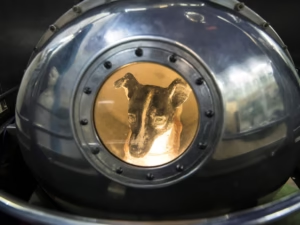
In 1957, a small stray dog named Laika became the first living creature to orbit Earth, marking a major milestone in the early Space Race. But behind the historic achievement was a mission that was never designed for survival.
From Moscow Streets to Space
Laika was a mixed-breed stray found on the streets of Moscow. Estimated to be around three years old and weighing about 13 pounds, she was selected for her calm temperament and ability to endure harsh conditions.
Intensive Training for a One-Way Journey
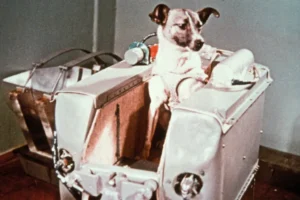
Before launch, Laika underwent weeks of training that included confinement in increasingly smaller cages and exposure to high-G centrifuges. Scientists wanted to prepare her for the extreme pressures of space travel, despite knowing the mission had no return plan.
A Spacecraft Built Under Pressure
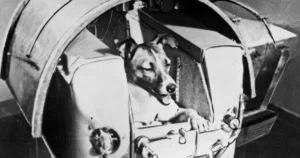
Sputnik 2, the spacecraft that carried Laika, was developed in just a few weeks to align with the 40th anniversary of the Bolshevik Revolution. It included a pressurized cabin, oxygen supply, and food designed to last several days, but lacked any system for reentry.
The Official Story vs Reality
At the time, Soviet officials claimed Laika survived for several days in orbit and was later euthanized humanely. This version of events was widely accepted for decades.
The Truth Revealed Years Later
In 2002, new information emerged confirming that Laika actually died just hours after launch due to overheating caused by poor thermal control in the spacecraft. The earlier reports had concealed the real circumstances of her death.
A Turning Point in Space Ethics
Laika’s mission provided valuable data that helped shape future human spaceflight. However, it also raised lasting ethical questions about the use of animals in scientific experiments.
Remembering Laika Today
Today, Laika is remembered not just as a pioneer of space exploration, but also as a symbol of sacrifice during a time of intense scientific competition.