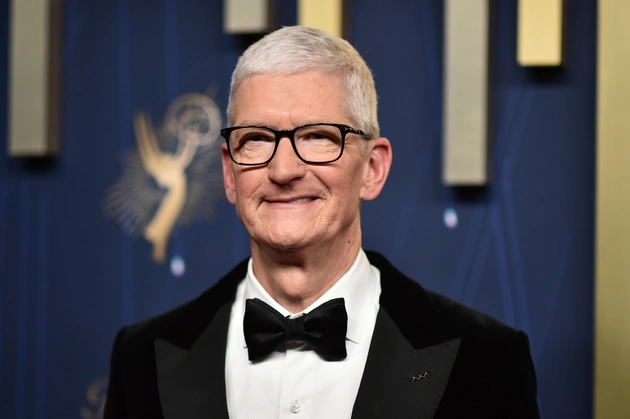

Apple’s transformation under Tim Cook represents one of the most significant corporate leadership transitions in technology history. When Cook assumed the CEO role in 2011, following Steve Jobs’ resignation due to health concerns, he inherited not just a company but a cultural phenomenon built around revolutionary product launches and meticulous design philosophy.
Now, as Cook prepares to step down in September 2026 with John Ternus set to take the helm, his legacy encompasses both remarkable successes and notable challenges that have reshaped how consumers interact with technology daily.
**The Evolution Beyond iPhone Dependence**
While the iPhone remained Apple’s primary revenue generator throughout Cook’s tenure, his strategic vision expanded the company’s ecosystem far beyond a single flagship product. This diversification strategy proved crucial as smartphone markets matured and upgrade cycles lengthened.
The 2012 launch of the iPad Mini marked Cook’s first major product introduction as CEO. Priced at $329, this compact tablet addressed a critical market gap, competing directly with lower-cost Android tablets while maintaining Apple’s premium positioning. The device appealed particularly to readers and users seeking more portable computing options.
Three years later, the iPad Pro revolutionized Apple’s tablet strategy entirely. Rather than simply offering media consumption devices, the Pro line, complete with Apple Pencil and Smart Keyboard accessories, positioned tablets as legitimate laptop alternatives for creative professionals and productivity-focused users.
**Wearables Revolution and Health Focus**
Perhaps no product better exemplifies Cook’s Apple than the Apple Watch, launched in 2015. As the company’s first entirely new hardware category since Jobs’ passing, the smartwatch faced initial skepticism but evolved into a cornerstone of Apple’s strategy. The device found its defining purpose in health and fitness tracking, introducing features like heart rate monitoring and electrocardiogram capabilities that transformed it from a luxury accessory into a potential life-saving device.
The 2016 introduction of AirPods further cemented Apple’s dominance in wearables. These wireless earbuds quickly became ubiquitous among iPhone users, spawning premium variants like AirPods Pro and the over-ear AirPods Max. Their success demonstrated Cook’s ability to identify and capitalize on emerging consumer behaviors as traditional headphone jacks disappeared from smartphones.
**Reimagining Core Products**
The 2017 iPhone X represented Cook’s boldest reimagining of Apple’s most important product. Marking the iPhone’s tenth anniversary, it eliminated the iconic home button in favor of Face ID facial recognition technology. Despite its premium $999 starting price, consumers lined up for days to purchase the device, validating Cook’s willingness to challenge established design conventions.
**Strategic Missteps and Learning Curves**
Not every Cook-era launch achieved similar success. The 2018 HomePod smart speaker struggled to gain traction against Amazon’s Echo and Google Home devices. Apple’s focus on premium audio quality over broad functionality limited its appeal in a market where voice assistants and smart home integration mattered more than sound fidelity.
The 2024 Vision Pro mixed-reality headset, priced at $3,499, represents Cook’s most ambitious and controversial product launch. Despite being touted as “the most advanced personal electronics device ever,” featuring 12 cameras and innovative Eyesight technology that displays the wearer’s eyes to others, consumer response remained mixed. The lack of compelling applications and the steep price point raised questions about its mainstream viability.
**Recent Innovations and Market Disruption**
Cook’s final years as CEO have showcased continued innovation. The iPhone Air, released in September 2025 alongside the iPhone 17 family, achieved a remarkable 5.6-millimeter thickness, demonstrating Apple’s ongoing commitment to engineering excellence. The device balanced “strength, lightness, and durability” according to company statements.
March 2026 saw the launch of the MacBook Neo, potentially Cook’s most disruptive product yet. At $599, it represents Apple’s most affordable laptop ever, powered by the A18 Pro chip typically found in iPhones. Available in indigo, blush, citrus, and silver, the device targets new market segments previously priced out of the Apple ecosystem. Technology reviewer Marques Brownlee described it as “potentially Apple’s most disruptive product in the last 10-plus years,” while industry executives acknowledged its market-shocking potential.
**Services: The Hidden Revenue Engine**
Beyond hardware, Cook’s expansion of Apple Services stands as a defining achievement. Apple TV+, Apple Music, Fitness+, and other subscription offerings have consistently shattered revenue records, creating recurring income streams that reduce dependence on hardware upgrade cycles. This services-focused strategy has fundamentally altered Apple’s business model, providing stability and growth opportunities in saturated hardware markets.
**Looking Forward**
As Cook transitions to executive chairman and Ternus assumes leadership, Apple faces evolving challenges including regulatory scrutiny, market saturation, and intensifying competition. Yet Cook’s legacy of ecosystem expansion, wearables dominance, and services integration has positioned the company for continued relevance in an increasingly connected world.
His tenure proves that while he may lack Steve Jobs’ showmanship, Cook’s operational excellence and strategic vision have sustained Apple’s innovation culture while adapting to new market realities.