
Artificial intelligence regulation in the United States has entered a new era.
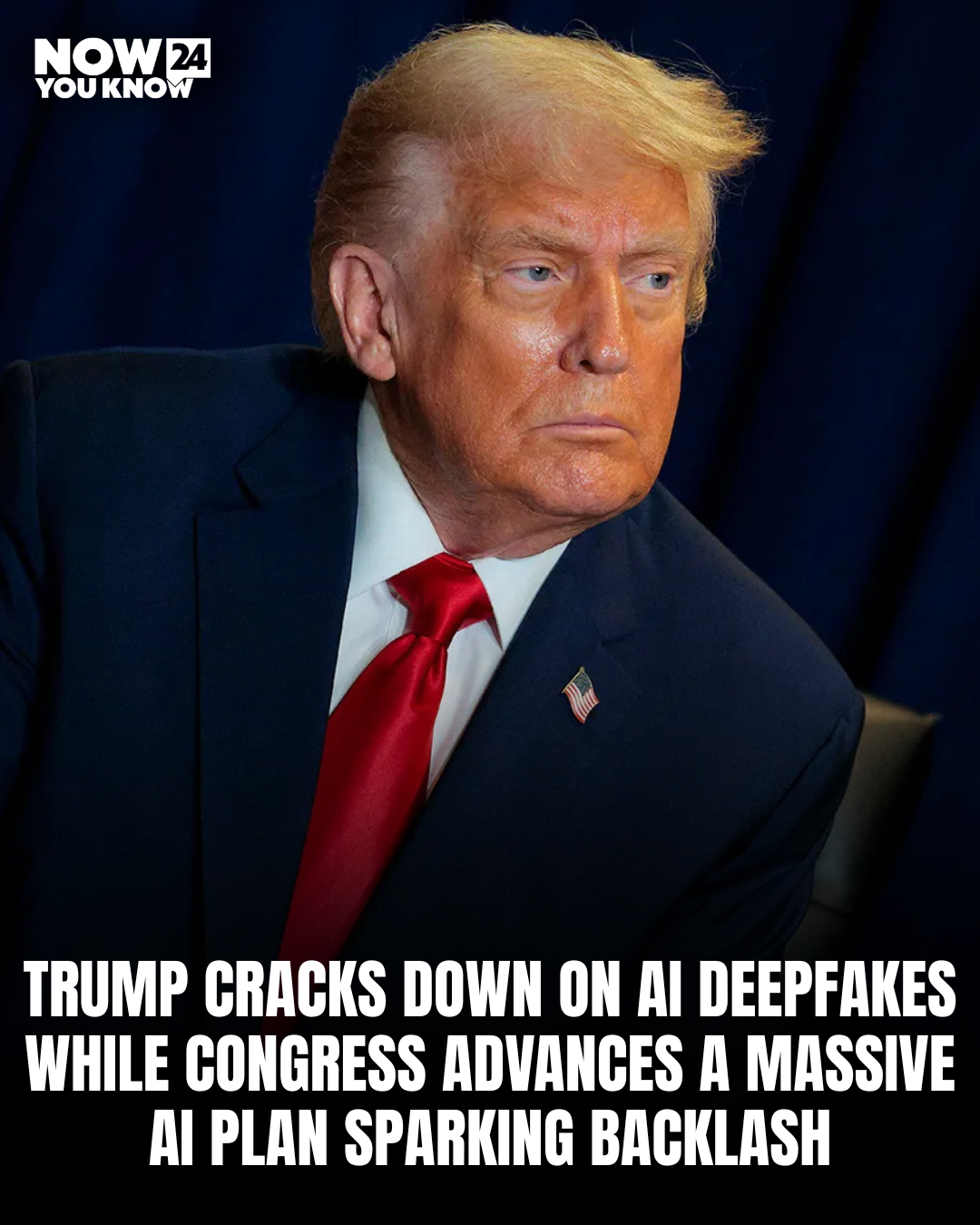
President Donald Trump has signed the TAKE IT DOWN Act into law, marking the first major federal law aimed directly at regulating a specific category of AI-generated content. At the same time, lawmakers in Congress are advancing a controversial proposal that could block states from creating their own AI regulations for the next decade.
The developments represent some of the most significant AI policy moves the U.S. has taken so far.
Trump Signs First Major AI Deepfake Law
On May 19, Trump signed the TAKE IT DOWN Act, legislation designed to combat the spread of non-consensual intimate imagery (NCII), including AI-generated deepfakes.
The law makes it a federal crime to knowingly publish sexually explicit images or videos of someone without their consent, including realistic AI-generated content designed to appear authentic.
Under the legislation, offenders could face penalties of up to three years in prison.
Supporters say the law is aimed at protecting victims from a rapidly growing problem fueled by advances in artificial intelligence.
The bill received rare bipartisan support in Congress before reaching Trump’s desk.
Senator Ted Cruz, one of the bill’s sponsors, called it a “historic win” for victims of revenge porn and AI-generated image abuse.
Senator Amy Klobuchar, who co-sponsored the legislation, said the law establishes important guardrails for both social media companies and emerging AI technologies.
Congress Advances Controversial AI Proposal
While the deepfake law drew broad support, another AI measure moving through Congress is generating fierce debate.
House Republicans recently passed a budget package containing a provision that would prevent states from enforcing their own AI regulations for 10 years.
Supporters argue that a patchwork of different state laws could slow innovation and create confusion for businesses developing AI technologies.
Republican lawmakers say a unified national approach would help the United States remain competitive in the global AI race.
Critics, however, argue the proposal would leave Americans with fewer protections at a time when AI technology is advancing faster than lawmakers can keep up.
Opponents have described the measure as a major gift to large technology companies, warning it could weaken oversight just as concerns over privacy, bias and AI-generated misinformation continue to grow.
The proposal is now headed to the Senate, where lawmakers are expected to continue debating the future of AI regulation.
Billions of Dollars for Artificial Intelligence
The House package also includes massive investments in government AI programs.
More than $1.7 billion would be directed toward artificial intelligence initiatives across multiple federal agencies.
Funding proposals include:
- Modernizing federal government technology systems using AI
- Expanding AI capabilities within the Department of Defense
- Using artificial intelligence to improve military operations and shipbuilding
- Accelerating audits and financial reviews within government departments
The funding reflects growing concern that the U.S. must move faster to compete with rivals such as China in advanced technology development.
Trump’s Massive AI Deal With the UAE
The administration has also been expanding AI partnerships internationally.
During a visit to the United Arab Emirates, Trump announced business agreements worth approximately $200 billion involving artificial intelligence, data centers, semiconductors and other advanced technologies.
The agreement includes plans for a major AI technology hub in Abu Dhabi that could eventually support one of the largest artificial intelligence infrastructure projects in the region.
Administration officials say the partnership will strengthen economic ties while helping expand American influence in the global AI race.
However, critics have questioned whether advanced AI technology and semiconductor exports should be shared with foreign partners, particularly amid growing concerns about competition with China.
Why This Matters
Taken together, these moves signal that artificial intelligence has become one of the biggest policy battlegrounds in Washington.
The new deepfake law is the first significant federal attempt to regulate AI-generated content, while Congress is simultaneously debating how much power states should have over future AI rules.
At the same time, billions of dollars in government spending and international partnerships are accelerating the race to dominate AI development.
The decisions made over the next few months could shape how artificial intelligence is regulated, developed and used in the United States for years to come.