
President Targets Conditions in ‘Blue Cities’
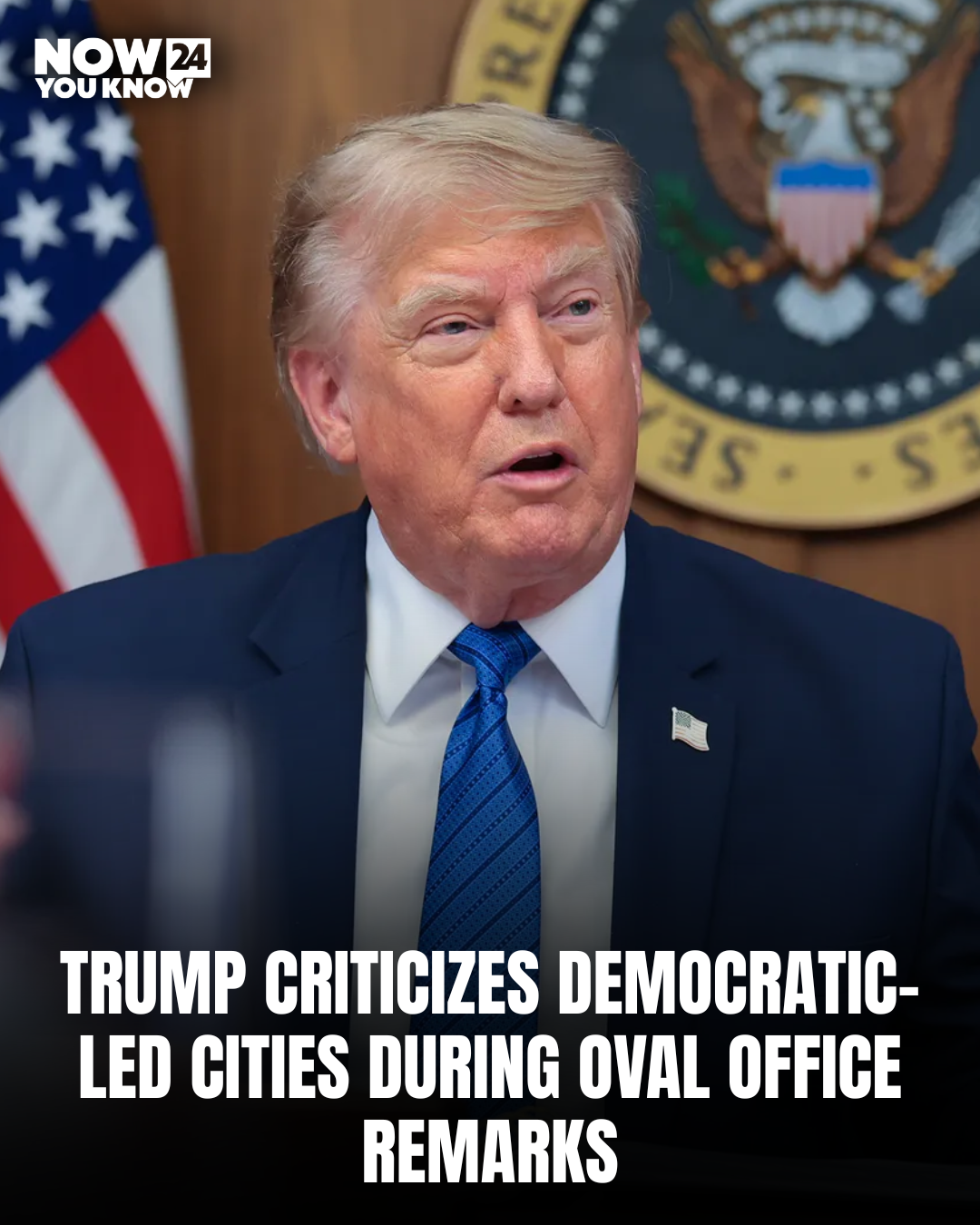
President Donald Trump criticized Democratic-led cities during remarks from the Oval Office, describing many of them as dirty, unsafe, and poorly maintained. Without naming specific locations, he argued that cities governed by Democrats have struggled with crime, cleanliness, and declining infrastructure.
Sharp Criticism of Urban Leadership
Trump claimed that many “blue cities” have foul-smelling streets, damaged storefronts, neglected public spaces, and rising crime. He suggested these conditions reflect what he considers the failure of long-standing Democratic leadership in major urban areas.
Supporters and Critics React
Supporters of the president echoed his comments, arguing that some large cities have faced growing challenges related to public safety, homelessness, and sanitation. Critics, however, accused Trump of making sweeping generalizations and said his remarks unfairly painted all Democratic-led cities with the same brush.
Unexpected Mention of Scotts Miracle-Gro
During the same appearance, Trump also praised Scotts Miracle-Gro, saying the company had replaced grass on the White House grounds at no cost. Following the public endorsement, the company’s stock reportedly rose by more than 4%, drawing attention from market watchers.
Political Debate Quickly Followed
Trump’s remarks sparked renewed debate across social media and political circles. Some commentators questioned whether a Democratic president making similar comments about Republican-led communities would receive the same public response, while others defended Trump’s blunt style as part of his political messaging.
Urban Issues Remain a Key Campaign Topic
Concerns about crime, public safety, homelessness, and city management have become recurring issues in national politics. Leaders from both major parties continue to offer different approaches to addressing these challenges, making urban policy a major topic heading into future political debates.
A Familiar Campaign Message
The president has frequently criticized Democratic leadership in large cities throughout his political career, making similar arguments during past campaigns and public appearances. His latest comments reinforce a message that is expected to remain central to discussions over governance and public policy.