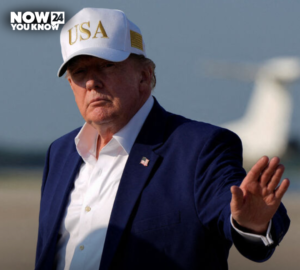

President Donald Trump is weighing in after a series of primary election results sparked debate about the future direction of the Democratic Party.
In Tuesday’s elections across several states, three Democratic Socialist-backed candidates defeated incumbent officeholders in heavily Democratic districts, marking a significant victory for progressive activists seeking to reshape the party.
The victories came in races involving candidates endorsed by New York City Mayor Zohran Mamdani, whose support helped bring attention to a new generation of progressive contenders.
Among the most notable results, Brad Lander defeated Rep. Dan Goldman in New York’s 10th Congressional District, Claire Valdez unseated Antonio Reynoso in the 7th District, and Darializa Avila Chevalier defeated Rep. Adriano Espaillat in the 13th District.
The winning candidates have supported policies that have generated strong reactions across the political spectrum, including calls to abolish Immigration and Customs Enforcement (ICE), forgive student debt, and overhaul the nation’s healthcare system.
The results quickly drew attention from President Trump, who used the outcome to warn about what he sees as a growing influence of far-left ideology in Democratic politics.
Posting on Truth Social, Trump wrote: “America the Beautiful will NEVER be a Communist Country!!!”
Supporters of the Democratic Socialists of America celebrated the victories as evidence that progressive policies continue to resonate with voters in some of the nation’s most reliably Democratic areas.
Critics, however, argued that the results could create challenges for Democrats heading into future elections, particularly in competitive districts where more moderate voters may be less receptive to left-wing policy proposals.
The debate has reignited broader questions about the Democratic Party’s future and whether progressive candidates can expand their appeal beyond deep-blue strongholds.
Some political observers believe the victories demonstrate growing grassroots enthusiasm among younger and more progressive voters, while others see them as largely reflective of the unique political makeup of the districts involved.
Regardless of interpretation, the results have already become a talking point in national politics, with both Democrats and Republicans offering sharply different views on what the primary outcomes mean.
For Trump and his supporters, the victories serve as evidence that the Democratic Party is moving further to the left. For progressive activists, they represent momentum for a movement that has spent years trying to gain a larger foothold within the party.
As attention turns toward future elections, the impact of these victories on the broader political landscape remains a subject of intense debate.