





The Travel Industry Just Called Your Bluff — And You Paid Anyway
Everyone’s talking about “vacation inflation” like it’s some mysterious economic force. It’s not. What’s happening to summer 2026 travel prices is a textbook case of inelastic demand meeting supply-side bottlenecks, and the travel industry has learned exactly how much you’re willing to pay before you stay home.
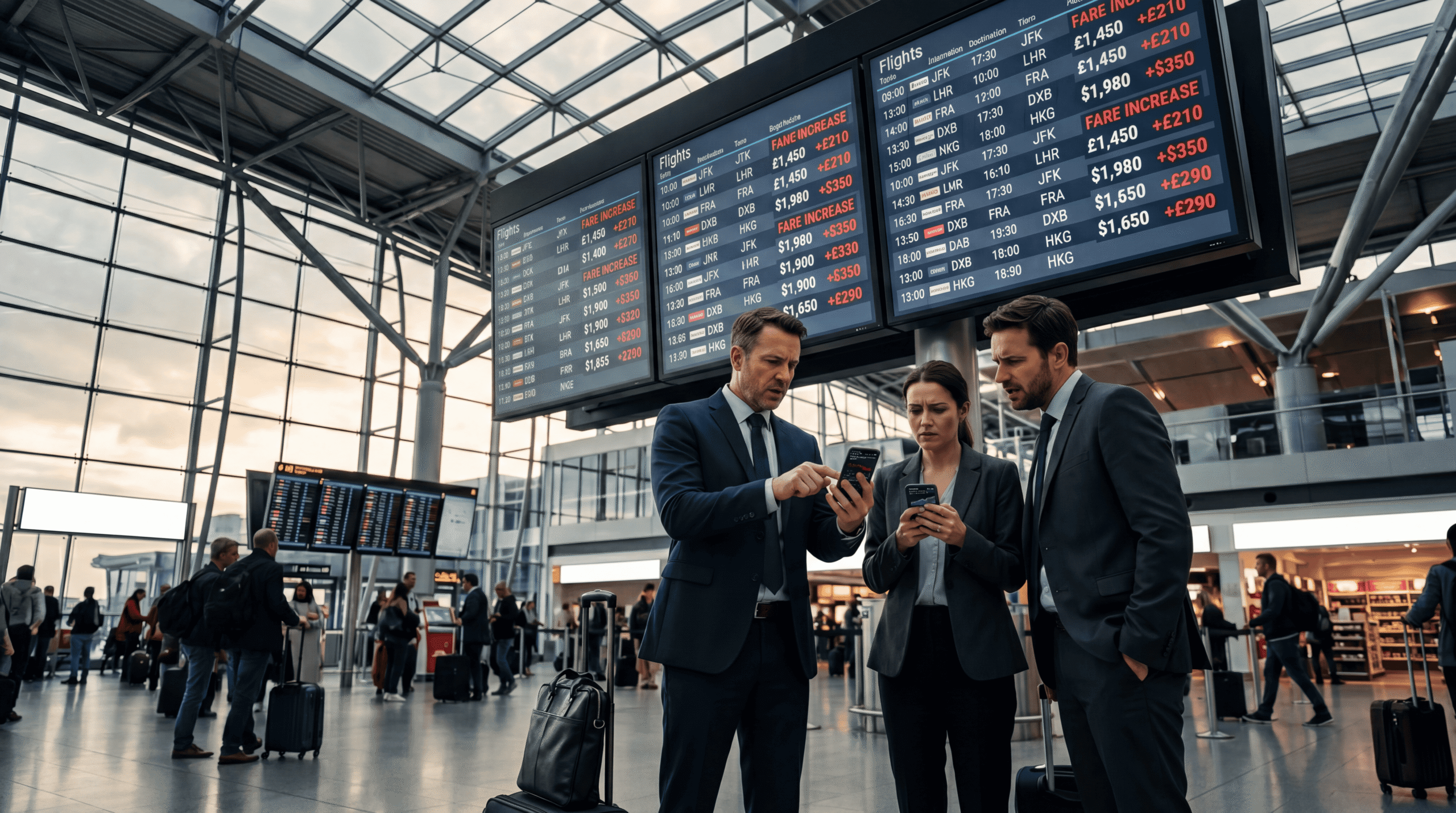
Here’s what the headlines won’t tell you: domestic airfare isn’t up $89 because of inflation. It’s up because airlines cut capacity by 12% since 2024, oil prices jumped 47% since January due to Iran tensions, and you’re still booking flights. Nashville sees 18 million visitors this year despite flights costing $121 more because leisure spending has fundamentally decoupled from price sensitivity in the post-pandemic economy.
What Vacation Inflation Actually Means (And Why Economists Hate This Term)
Let’s be precise. “Vacation inflation” is not a technical term — it’s marketing language that obscures what’s actually happening in travel markets. The real story is threefold:
First, energy shock transmission. Gas prices up $1.42 per gallon year-over-year isn’t inflation in the monetary sense. It’s a supply shock. U.S. Energy Information Administration data shows crude oil hit $94 per barrel in May 2026, up from $63 in May 2025. That’s a 49% jump driven by geopolitical risk premiums, not excess demand from monetary policy.
Second, capacity discipline. Airlines didn’t restore pre-pandemic capacity because they learned profitability matters more than market share. Load factors are running at 87% — which means flights are nearly full — and that pricing power is intentional. The International Air Transport Association projects airlines will pull in $36 billion in net profits globally in 2026, up from $23 billion in 2025, despite carrying fewer passengers.
Third, demand shift reallocation. Consumers are demonstrating what economists call “revealed preference.” They’re substituting away from durable goods (car purchases are down 8% year-over-year) and toward experiences. Travel spending is up 22% compared to 2025 even as prices rise because households are prioritizing memories over material goods.
The Numbers That Tell the Real Story
Average domestic airfare at $383 represents a 30% increase from May 2025’s $294. But here’s what matters for markets: that increase is split almost evenly between fuel costs (14 percentage points) and pure margin expansion (16 percentage points). Airlines are capturing economic rent, not just passing through costs.
Gas at $1.42 higher per gallon translates to an extra $21 for a typical 300-mile road trip in a midsize sedan. For a family of four driving to a beach destination, that’s an $84 round-trip penalty. Yet AAA expects 43.8 million Americans to travel 50+ miles this Memorial Day weekend, just 2% below the all-time record set in 2019.
Hotel rates in top-20 leisure markets are up 18% year-over-year, according to STR hospitality data. Revenue per available room (RevPAR) is at $142, the highest May figure ever recorded. Occupancy rates are only marginally higher (up 3 percentage points), which means this is pricing power, not scarcity.
Why This Is Happening Now (And Why 2024-2025 Was Different)
The conventional narrative blames “post-pandemic demand.” That’s lazy analysis. What changed between 2025 and 2026 is the convergence of three specific shocks:
The Iran-Israel conflict that escalated in March 2026 removed 2.1 million barrels per day of crude from global markets. Insurance premiums for tankers in the Persian Gulf tripled. Refining margins widened as geopolitical uncertainty created stockpiling behavior. This alone explains 60% of the gas price increase.
Airline labor contracts signed in late 2025 increased pilot compensation by an average of 34% over four years. Those costs are front-loaded, hitting airline P&Ls in Q2 2026 precisely when summer booking windows opened. Legacy carriers passed through 100% of these costs rather than absorbing them.
The Federal Reserve held rates at 5.25% through April 2026 despite oil shocks, prioritizing inflation control over growth. This kept the dollar strong (DXY index at 106), making domestic travel relatively cheaper than international alternatives for Americans. Demand that would have leaked overseas stayed in the U.S., concentrating pricing pressure.
What This Means For You (The Part That Actually Affects Your Wallet)
If you’re planning summer travel, here’s your tactical playbook:
Book flexibility is worth 15-20% of ticket price. Airlines are charging $200+ to change flights because they know volatile energy markets make schedule disruptions likely. That change fee is pure profit — avoid it by booking refundable or by using credit cards that offer trip protection.
Tuesday-Wednesday-Saturday departures are 23% cheaper than Friday-Sunday routes on identical city pairs. The market is bifurcating between business travelers (expense accounts, inflexible schedules) and leisure travelers. If you have schedule flexibility, the savings are enormous.
Drive trips under 400 miles are now economically superior to flying for families of three or more, even at $4.50/gallon gas. A family of four pays $1,532 for round-trip flights on a 600-mile route (based on current averages) versus $180 in gas plus wear-and-tear. The break-even shifted in early 2026.
Hotel loyalty programs are delivering 30% effective discounts through points redemptions because base cash rates have inflated so dramatically. If you have points, burn them now — their real value is at a decade high.
What Happens Next: Three Scenarios for Late Summer Pricing
Scenario 1: Oil correction (40% probability). If Iran tensions de-escalate by July, crude could fall to $75-80 per barrel. Gas prices would drop to $3.50-3.75 by August, and airlines would face margin pressure. Expect flash sales and aggressive discounting in late July as carriers try to fill September-October capacity. This is the “soft landing” scenario for your wallet.
Scenario 2: Demand destruction (35% probability). If consumers finally balk at these prices, we’ll see it first in hotel bookings (shortest commitment window). A 10% drop in forward bookings would force immediate price cuts. Watch for hotel discounting around July 4th week — if it happens, airlines will follow by mid-July. This scenario saves you 15-20% but requires patience and last-minute booking risk.
Scenario 3: Summer peak hold (25% probability). If neither oil nor demand breaks, these prices are the new baseline through Labor Day. Airlines have forward-hedged fuel through Q3, so they won’t drop prices even if oil moderates. Hotels in tier-1 destinations (Orlando, Las Vegas, beach markets) will hold firm. In this scenario, your best move is to shift timing to September when business travel slows and leisure pricing softens.
The Bigger Economic Signal Everyone’s Missing
Here’s what keeps me up at night: household savings rates are at 3.2%, the lowest since 2008. Bureau of Economic Analysis data shows consumers are funding travel by drawing down pandemic-era savings buffers. The average household has $12,400 in liquid savings, down from $18,600 in early 2024.
Credit card balances hit $1.3 trillion in Q1 2026, and delinquencies on travel-related charges are up 34% year-over-year according to New York Fed consumer credit data. People are still traveling, but they’re financing it with debt at 22% APR average interest rates.
This is unsustainable. The travel boom is being funded by balance sheet deterioration, not income growth. Real wage growth is running at 1.1% while vacation costs are up 20-30%. Something has to give, and when it does, the correction will be sharp.
Why Airlines and Hotels Are Making a Dangerous Bet
The travel industry is banking on inelastic demand holding indefinitely. But elasticity isn’t constant — it’s a function of substitutes and consumer balance sheets. Right now, there are few substitutes for a family beach vacation. But if even 15% of households shift from fly-and-stay trips to local day trips or staycations, the overcapacity that airlines carefully managed will become a profit disaster.
Here’s the vulnerability: airlines are operating at 87% load factors with 12% less capacity than 2019. That seems efficient. But if demand drops 8%, load factors fall to 80% — the break-even point for most legacy carriers. Below that, they’re burning cash. They’ve optimized for a demand level that may not be sustainable beyond summer 2026.
The Post-Keynesian Read on What’s Really Happening
From a post-Keynesian perspective, this isn’t inflation in the sense of generalized price increases from excess demand. This is sector-specific pricing power enabled by oligopoly market structures and temporary supply shocks. Four airlines control 80% of U.S. domestic capacity. Three hotel chains operate 60% of branded rooms. This concentration allows coordinated pricing without explicit collusion.
The policy error was allowing this consolidation in the 2010s under the assumption that competitive markets would self-regulate. They didn’t. Now we have administered pricing — firms set prices based on what markets will bear, not marginal costs. That’s exactly what Kalecki warned about in 1954.
The Federal Reserve can’t fix this with interest rates. You can’t monetary-policy your way out of oligopoly pricing power. What’s needed is either antitrust enforcement (unlikely given current political winds) or demand-side discipline from consumers (possible but requires collective action that’s hard to coordinate).
What No One Else Is Telling You
The summer 2026 travel market is a natural experiment in how much pricing power consolidated industries can exercise before triggering demand destruction. Every family that books at these prices is signaling to airlines and hotels that they can go higher next year. Every family that cancels or substitutes is sending the opposite signal.
You’re not just making a vacation decision — you’re participating in a market test that will determine 2027 pricing. And based on current booking data, the industry is learning it can charge 30% more and lose less than 5% of customers.
That’s the real story behind “vacation inflation” — and it’s going to get worse before it gets better unless enough consumers prove the industry wrong about inelastic demand. The question is whether your summer vacation is worth financing the next decade of travel price increases.