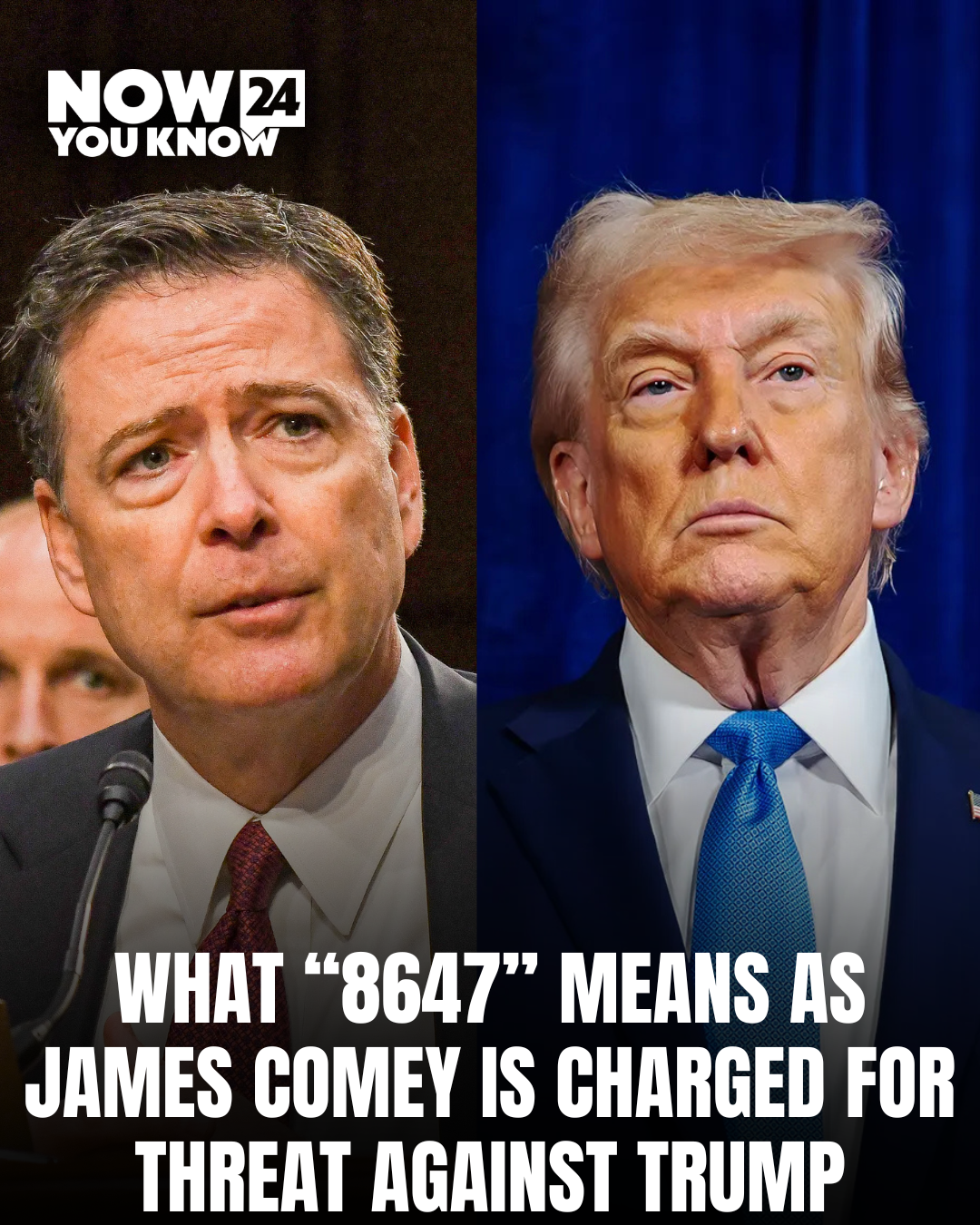

A cryptic number arranged in seashells has become the center of a major legal controversy involving former FBI director James Comey. Prosecutors allege that his Instagram post featuring “8647” amounted to a threat against President Donald Trump, while Comey denies any violent intent.
The case has quickly drawn national attention, raising questions about political speech, symbolism, and how far the law can go in interpreting online content.
How the “8647” Post Sparked a Case
The controversy began when Comey shared an image of seashells arranged to form “8647,” reportedly found on a beach. What may have seemed like a vague or political message quickly gained traction online.

Critics argued the numbers carried a hidden meaning tied to Trump. Comey later deleted the post, saying he did not realize some people interpreted it as encouraging violence and stressed he opposes violence.
Why the Case Is So Serious
Federal prosecutors have charged Comey with allegedly making a threat against the president through online communication. Legal experts note that such cases require proving intent, which can be difficult when the message is indirect or symbolic.
The situation is further intensified by ongoing concerns about threats against public officials in the United States.
What “8647” Actually Means
The meaning of “8647” is at the heart of the case.
The “47” is widely understood as a reference to Donald Trump, who is serving as the 47th president of the United States. That part of the phrase is not heavily disputed.
The debate centers on “86,” a slang term in American English. Traditionally, “86” means to remove, reject, or get rid of something. It is commonly used in restaurants to indicate an item is no longer available.
The Controversy Around “86”
While “86” most often means removal, some argue it can also imply something more serious, including elimination in a more extreme sense. This less common interpretation is what prosecutors are focusing on.
Because the phrase can carry multiple meanings, the case hinges on whether it was intended as political speech or a real threat.
Why James Comey Is a Key Figure
Comey is not an ordinary social media user. He served as FBI director from 2013 to 2017 and was fired by Donald Trump during the early stages of the Russia investigation.
Since then, he has remained a vocal critic of Trump, making their history a major factor in how the case is being interpreted politically.
Free Speech vs Threats
Under U.S. law, political speech is strongly protected, even if it is controversial or offensive. However, true threats are not protected.
Prosecutors must prove that Comey knowingly communicated a serious threat, not just a phrase that some people found alarming or offensive.
Political Reactions on Both Sides
Supporters of Trump argue that any message that could be interpreted as a threat should be taken seriously, especially given rising political tensions.
Critics of the charges say the case reflects political retaliation, pointing to Trump’s long-standing disputes with Comey and other opponents.
What Happens Next
The case is expected to move through federal court, where Comey’s legal team will likely argue that the post was protected speech and lacked intent.
Ultimately, the outcome may depend on how a court interprets a short, ambiguous phrase and whether it crosses the line from political expression into a criminal threat.