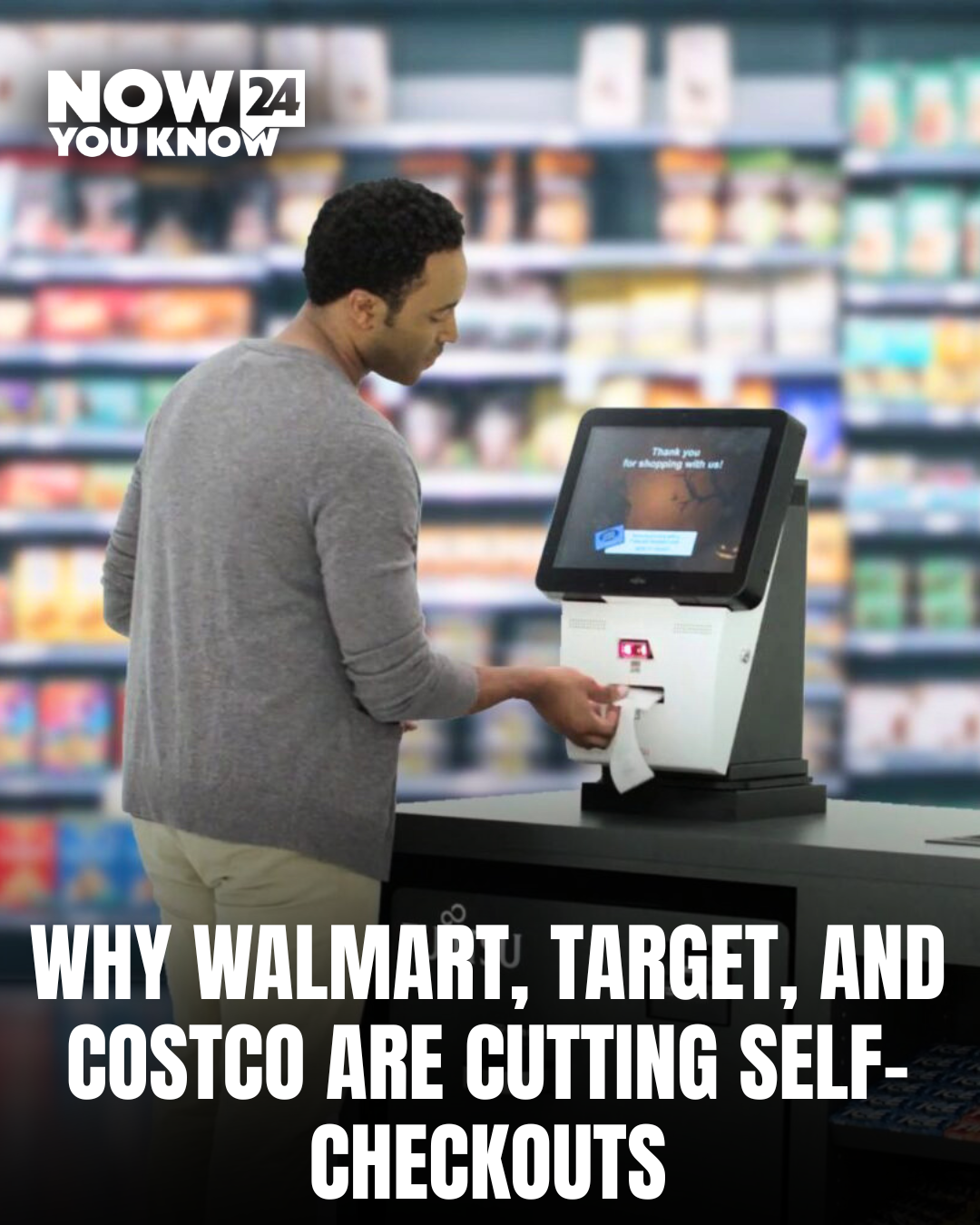

Major retailers across the United States are beginning to scale back self-checkout systems, reversing a trend that once defined modern shopping. Companies like Walmart, Target, and Costco are now testing limits, removing kiosks, or redesigning how self-checkout works.
The shift is not happening everywhere at once, but it reflects a growing concern across the retail industry.
The Real Reason Behind the Change
The biggest factor driving this shift is theft. Retail experts and reports point to self-checkout systems being more vulnerable because they rely heavily on customers scanning their own items.
Surveys suggest both intentional and accidental theft have increased significantly at these kiosks, prompting retailers to rethink how much they rely on them.
Many stores have found that the lack of oversight makes it easier for items to go unpaid, whether by mistake or on purpose.
Customer Frustration Is Also a Factor
Beyond theft, customer experience has played a major role. Shoppers often report long lines, technical glitches, and confusion when using self-checkout machines.
Retailers say they are responding to feedback by bringing back more staffed checkout lanes to improve service and reduce frustration.
New Laws and Regulations Are Coming
Another major pressure point is regulation. Lawmakers in several states and cities are proposing rules that would limit how self-checkouts operate.
Some proposals include:
- Item limits per transaction
- Mandatory staff supervision ratios
- Requirements to keep traditional checkout lanes open
These rules aim to reduce theft and protect jobs, but they also make self-checkout less flexible for retailers.
What Each Retailer Is Doing
Each company is taking a slightly different approach.
- Walmart is removing self-checkouts in some locations and increasing staffed lanes
- Target has introduced item limits at many stores
- Costco is testing hybrid systems that combine automation with employee oversight
Rather than eliminating the technology completely, most retailers are adjusting how it is used.
Is Self-Checkout Going Away?
Despite the changes, self-checkout is not disappearing. Industry experts say it is more likely to evolve into a more controlled system rather than a fully self-service model.
Retailers are experimenting with solutions like supervised kiosks, mobile checkout apps, and hybrid systems that balance speed with security.
What This Means for Shoppers
For customers, the experience will increasingly depend on the store. Some locations may still offer self-checkout, while others may rely more heavily on traditional cashier lanes.
The goal for retailers is to find a balance between convenience, security, and customer satisfaction.