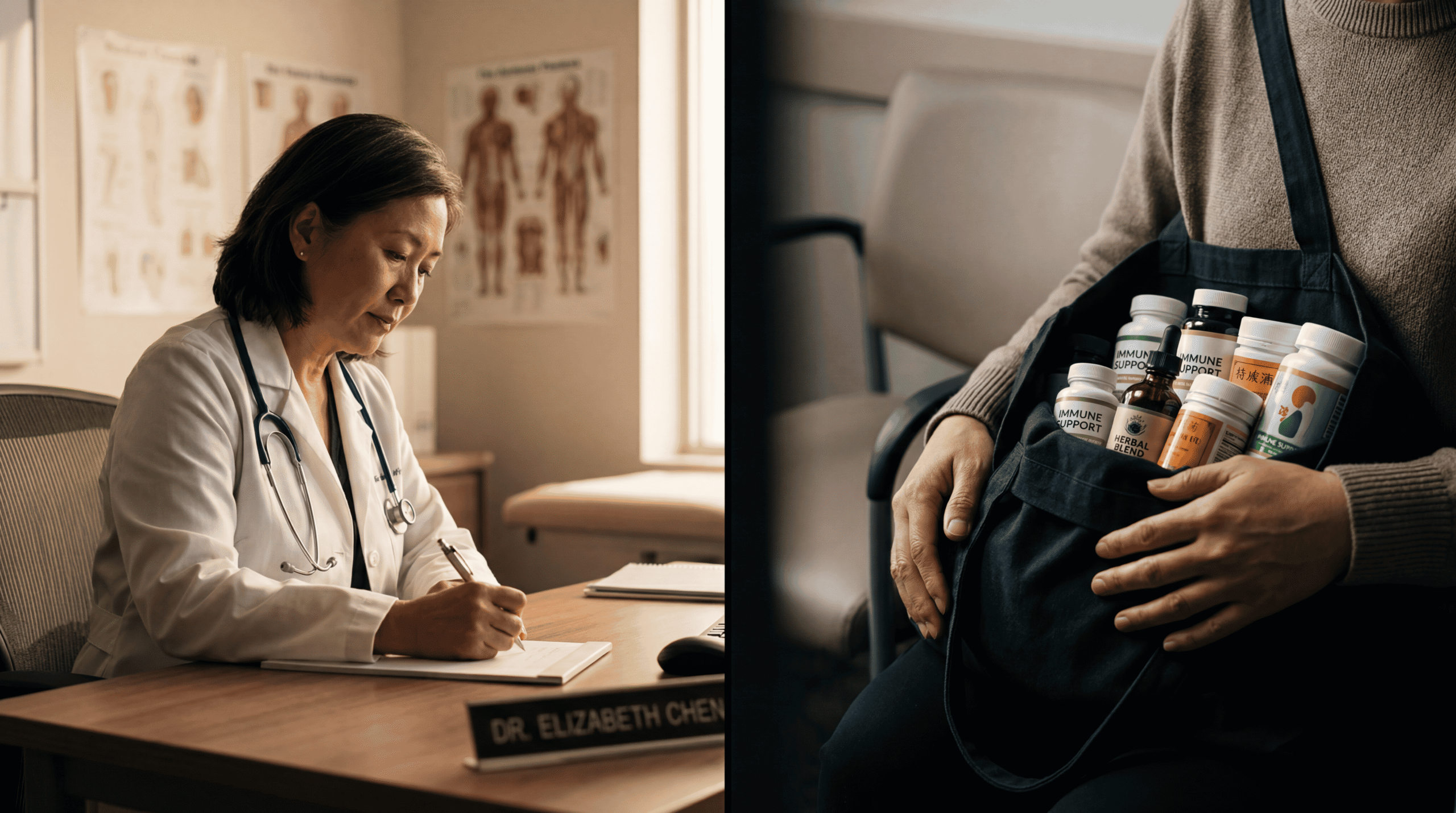

Here’s what most doctors won’t admit: A significant percentage of patients sitting in your exam room are taking herbal medicines, supplements, or traditional remedies—and they’re not telling you about it. This isn’t about cultural sensitivity or respecting alternative practices. This is about drug interactions that can cause liver failure, bleeding complications during surgery, and treatment failures that we blame on the disease when the real culprit is sitting in their medicine cabinet at home.
The silence is systematic, it’s dangerous, and it’s getting worse. Let me explain why this matters more than your annual physical.
The Numbers Behind the Silence
According to NIH research published in JAMA Internal Medicine, between 40-70% of patients using complementary and alternative medicine never disclose this to their physicians. That’s not a small oversight—that’s a majority of patients maintaining a parallel healthcare system you know nothing about.
The World Health Organization estimates that 80% of the global population uses some form of traditional medicine. In the United States alone, Americans spend over $30 billion annually on complementary health approaches, yet these substances rarely make it into the patient’s official medical record.
Here’s what keeps me up at night: We’re making clinical decisions based on incomplete data. We’re adjusting medication doses, planning surgeries, and interpreting lab results while flying blind.
Why Patients Stay Silent: It’s Not What You Think
Most physicians assume patients hide traditional medicine use because they’re embarrassed or uneducated. That’s medical arrogance talking. The real reasons are far more damning to our profession.
Patients don’t tell us because they’ve learned we don’t listen. Research from the Journal of General Internal Medicine shows that when patients do mention herbal supplements or traditional remedies, 58% of physicians respond dismissively or don’t document the information at all.
Think about that clinical interaction from the patient’s perspective. They mention they’re taking St. John’s Wort for mild depression, and you either ignore it, tell them it’s useless, or lecture them about “real medicine.” What do you think happens at their next visit? They’ve learned their lesson—just don’t mention it.
The second reason is more insidious: Many patients don’t consider supplements or traditional remedies to be “real medicine.” When you ask “What medications are you taking?” they mentally filter out anything they bought at a health food store or received from a traditional healer. In their cognitive framework, medicine is what comes from a pharmacy with your name on it.
The Biological Mechanisms That Make This Deadly
Let’s talk about what actually happens inside the body when traditional medicines interact with conventional pharmaceuticals. This isn’t theoretical—these are documented mechanisms that occur at the cellular level.
Cytochrome P450 enzyme interference: Many herbal medicines and supplements are metabolized by the same liver enzyme system (CYP450) that processes most pharmaceutical drugs. St. John’s Wort induces CYP3A4, dramatically increasing the metabolism of drugs like warfarin, birth control pills, immunosuppressants, and chemotherapy agents. The result? Your carefully calculated dose becomes subtherapeutic, and the patient’s cancer progresses or their transplanted organ gets rejected.
Ginkgo biloba, garlic supplements, and ginger all inhibit platelet aggregation through different mechanisms—ginkgo affects platelet-activating factor, while garlic inhibits thromboxane synthesis. Combine these with aspirin or anticoagulants before surgery, and you’re looking at hemorrhagic complications that shouldn’t have happened.
Here’s the mechanism nobody talks about: Some traditional Chinese medicine preparations contain adulterants—actual pharmaceutical drugs added to make them “work better.” Studies published in the Journal of Pharmaceutical and Biomedical Analysis have found undeclared steroids, heavy metals, and prescription medications in over 30% of imported traditional medicine products tested.
Your patient thinks they’re taking a natural herbal supplement. They’re actually getting an unregulated dose of a corticosteroid or diabetes medication, stacked on top of what you’ve prescribed. The resulting drug toxicity looks like treatment failure or disease progression—until someone finally asks the right questions.
What The Media Consistently Gets Wrong
Every article about traditional medicine falls into the same trap: They frame this as a cultural competency issue or a debate about whether alternative medicine “works.” Both framings miss the actual medical emergency.
This isn’t about respecting cultural practices or validating alternative approaches. This is about having complete medical information to make safe clinical decisions. A surgeon needs to know about garlic supplements for the same reason they need to know about aspirin—bleeding risk. An oncologist needs to know about milk thistle not because it might help, but because it alters chemotherapy metabolism.
The media also perpetuates the dangerous myth that “natural equals safe.” Arsenic is natural. Cyanide is natural. Amanita mushrooms are natural. Natural compounds are biologically active chemicals that affect human physiology—that’s literally the only reason people take them. Biological activity means potential for both benefit and harm.
The media rarely covers the dark side: A New England Journal of Medicine study estimated that dietary supplements send approximately 23,000 people to emergency departments annually in the United States. These aren’t minor reactions—these are emergency visits for cardiac symptoms, severe allergic reactions, and acute liver injury.
The Clinical Disasters I’ve Witnessed
Let me share real cases from my practice that illustrate why this silence kills:
Case 1: The Transplant Patient. A 54-year-old liver transplant recipient whose immunosuppressant levels kept dropping inexplicably. We increased the dose twice, concerned about organ rejection. Three months later, during a routine visit, his wife mentioned he’d been taking St. John’s Wort for mood since the transplant. The herb had induced the enzymes metabolizing his anti-rejection medication, effectively lowering his blood levels to dangerous territory. We caught it before rejection occurred, but barely.
Case 2: The Perioperative Disaster. A 67-year-old woman scheduled for hip replacement who didn’t mention she was taking ginkgo biloba, garlic supplements, and high-dose fish oil “for her memory and heart.” Despite stopping her aspirin a week before surgery as instructed, she experienced significant intraoperative bleeding. The surgery took twice as long, she required transfusion, and her recovery was complicated by anemia. All preventable if we’d had complete information.
Case 3: The Misdiagnosed Drug Toxicity. A 42-year-old woman with progressive liver enzyme elevations. We worked her up for autoimmune hepatitis, viral hepatitis, and fatty liver disease. Six months and thousands of dollars in testing later, a medical student asked if she took any supplements. She was taking kava kava for anxiety—a known hepatotoxin. Her liver enzymes normalized within eight weeks of stopping it.
The Trust Gap We Created
Here’s the uncomfortable truth: We physicians created this communication barrier. For decades, medical culture has been dismissive, sometimes contemptuous, of anything outside the pharmaceutical-surgical paradigm.
When patients mention traditional remedies, many of us respond with eye-rolling or condescending lectures. We don’t ask what they’re taking—we tell them to stop taking “that nonsense.” We’ve established a clinical dynamic where patients have learned to self-censor.
The solution isn’t cultural competency training—it’s clinical competency in asking better questions. Instead of “What medications are you taking?” try “What are you taking to stay healthy or treat any symptoms—including vitamins, supplements, herbal medicines, or traditional remedies?” The specificity matters. You’re giving permission to disclose.
Document everything. Not just the name, but the dose, frequency, and who recommended it. This information is as critical as drug allergies. It belongs in the problem list, the medication reconciliation, and the pre-operative assessment.
What You Should Actually Do
If you’re a patient, here’s your action plan: Create a complete list of everything you ingest that isn’t food. Include the brand name, ingredients, dose, and frequency. Bring this list to every medical appointment. Don’t wait to be asked—volunteer the information, especially before surgery or when starting new medications.
If your doctor dismisses this information or doesn’t document it, find a different doctor. Your life may depend on them having complete data.
If you’re a physician, implement a systematic approach: Use a standardized supplement and traditional medicine questionnaire at every visit. Train your staff to ask about supplements when taking vital signs. Create a non-judgmental clinical environment where disclosure is expected and documented.
Partner with pharmacists—they’re often better at eliciting supplement use and identifying potential interactions. Consider consulting resources like the National Center for Complementary and Integrative Health or Natural Medicines Database for interaction checking.
Most importantly, change your attitude. Whether or not you believe a supplement works is irrelevant to whether it can interact with medications or affect surgical outcomes. Your job is to have complete medical information, not to validate or invalidate your patient’s health choices.
The Bottom Line
The silence around traditional medicine use isn’t a cultural issue—it’s a patient safety crisis hiding in plain sight. Every day, patients are experiencing adverse drug interactions, treatment failures, and surgical complications because physicians are making clinical decisions based on incomplete information.
This isn’t about whether traditional medicine works. This is about whether we can provide safe medical care when we don’t know what’s actually going into our patients’ bodies. The answer, unequivocally, is no.
The solution requires both sides to change: Patients must disclose everything, and physicians must create clinical environments where disclosure happens without judgment. Until that gap closes, we’re all practicing medicine blindfolded—and patients are paying the price with their health.
Your next doctor’s visit should include a complete inventory of everything you’re taking, including that fish oil, that turmeric, and those traditional herbs your grandmother recommended—because the life you save by speaking up might be your own.