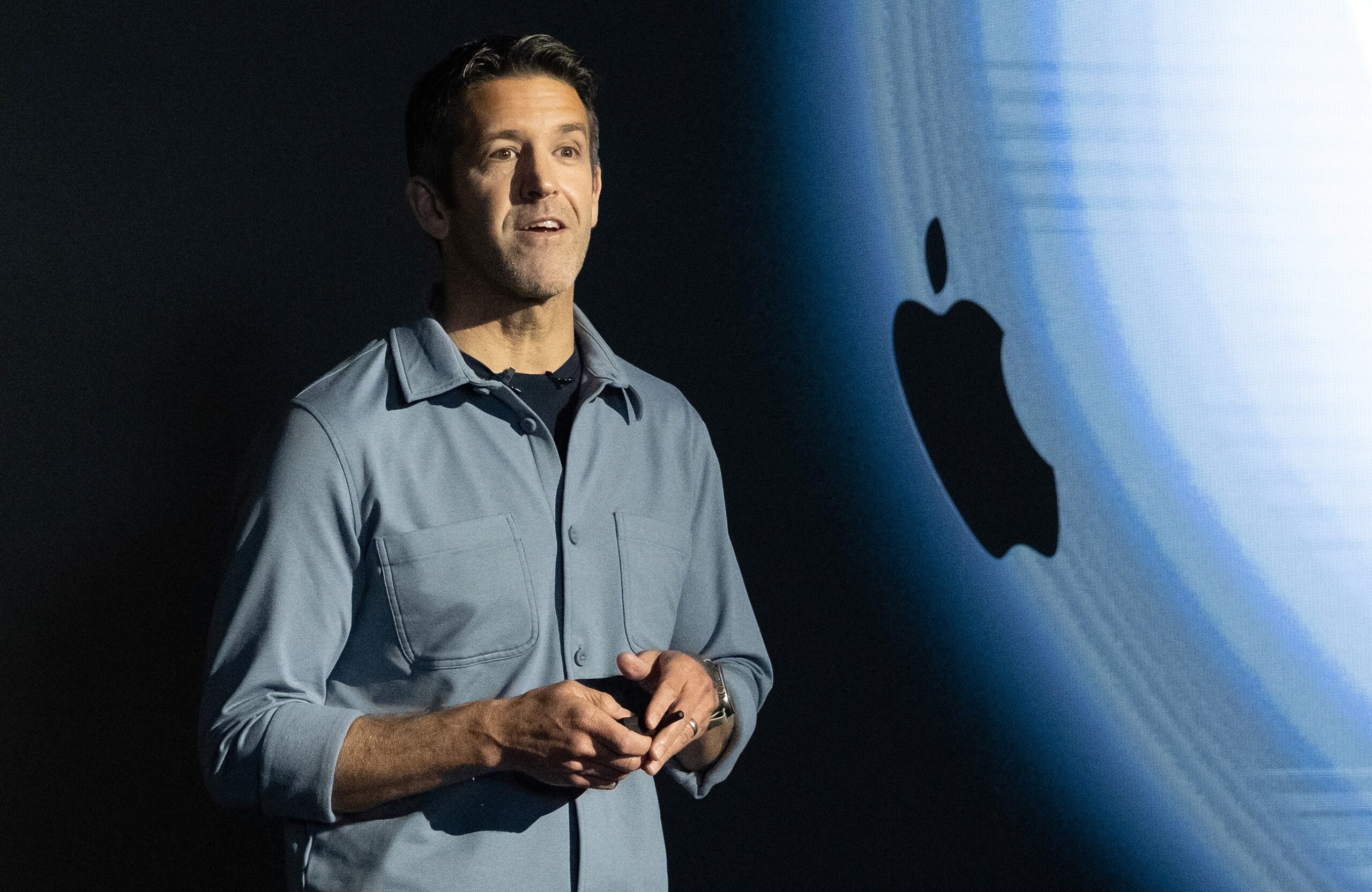

Apple’s announcement on Monday that John Ternus will become its next chief executive officer represents more than a simple leadership transition—it signals a fundamental strategic shift for the world’s most valuable technology company. The hardware engineering veteran, who has spent over two decades at Apple, will assume the role on September 1, 2026, succeeding Tim Cook in what industry observers are calling a deliberate bet on hardware innovation in the artificial intelligence era.
**The Man Behind Apple’s Products**
Ternus brings a distinctly different profile to Apple’s top position compared to his predecessor. Having joined the company in 2001, he has spent his entire Apple career focused on the tangible products that consumers hold in their hands. As senior vice president of hardware engineering, Ternus has overseen the development of virtually every major Apple device in recent years, including the iPhone, iPad, Mac, Apple Watch, and AirPods. His fingerprints are on the engineering decisions that have shaped how millions of people interact with technology daily.
This background stands in stark contrast to the software-centric leadership that many technology companies have embraced as they rush to develop artificial intelligence capabilities. By elevating a hardware specialist to the CEO position, Apple appears to be charting a different course through the AI revolution.
**A Different AI Strategy Emerges**
While competitors like Microsoft, Google, Amazon, and Meta pour billions into developing proprietary AI models and expanding their computational infrastructure, Apple’s selection of Ternus suggests the company sees its future differently. Rather than competing directly in the AI model development race, Apple has chosen to partner with external providers, notably integrating OpenAI’s ChatGPT into its devices through its “Apple Intelligence” features.
This approach allows Apple to focus on what has historically been its greatest strength: creating premium hardware that serves as the gateway for consumer technology experiences. The numbers support this focus—hardware sales generated approximately $115 billion of Apple’s $143.8 billion quarterly revenue in the period ending December 31, representing about 80% of the company’s total income.
**Industry Analysts Offer Mixed Perspectives**
The investment community and technology analysts have responded to the succession announcement with varying degrees of enthusiasm. Gil Luria, a technology analyst at D.A. Davidson, views the appointment positively, suggesting it positions Apple to dominate the device space as AI becomes more prevalent. He envisions Apple innovating in emerging hardware categories such as smart glasses, AI pins, foldable phones, and more accessible virtual reality devices than the current Vision Pro.
“They spend a lot on research and development and capital expenditure by their standards, but it’s obviously a rounding error compared to what Amazon, Microsoft, Google, and Meta are spending chasing the top model,” Luria explained, highlighting Apple’s more focused investment strategy.
However, not all observers share this optimistic view. Dan Ives of Wedbush Securities expressed concerns about the pressure Ternus will face, particularly in demonstrating AI leadership. Patrick Moorhead, CEO of Moor Insights & Strategy, characterized Ternus as an operational expert rather than a “risk-taking visionary,” suggesting investors should expect “tight operational execution, margin management, and incremental product iteration” rather than revolutionary changes.
**The Hardware-First Philosophy in an AI World**
Apple’s strategy appears built on a fundamental belief: regardless of which companies develop the most advanced AI models, consumers will need sophisticated hardware to access and utilize these capabilities. By focusing on creating the best devices rather than the best AI models, Apple positions itself as the essential intermediary between advanced AI services and end users.
This approach has precedent in Apple’s history. The company has rarely been first to market with new technologies, instead focusing on perfecting the user experience and hardware implementation. From smartphones to tablets to smartwatches, Apple has consistently succeeded by creating superior hardware platforms that others’ services run through.
**Looking Ahead: Challenges and Opportunities**
As Ternus prepares to take the helm, he faces both significant opportunities and substantial challenges. The AI revolution is reshaping consumer expectations and creating new product categories that didn’t exist just years ago. Apple’s massive research and development budget, while smaller than some competitors’ AI investments, still provides substantial resources for hardware innovation.
The success of this hardware-first strategy will likely depend on Apple’s ability to identify and develop the next generation of must-have devices. Whether that means perfecting augmented reality glasses, creating new form factors for AI-powered devices, or reimagining existing product categories, Ternus’s engineering background positions him to lead these efforts.
The transition also represents a full-circle moment for Apple, returning to its roots as a company defined by revolutionary hardware design. As the technology industry grapples with how to monetize and deploy artificial intelligence, Apple’s bet on hardware excellence may prove to be either prescient strategic positioning or a missed opportunity to lead in AI development. Time, and Ternus’s leadership, will tell which interpretation proves correct.