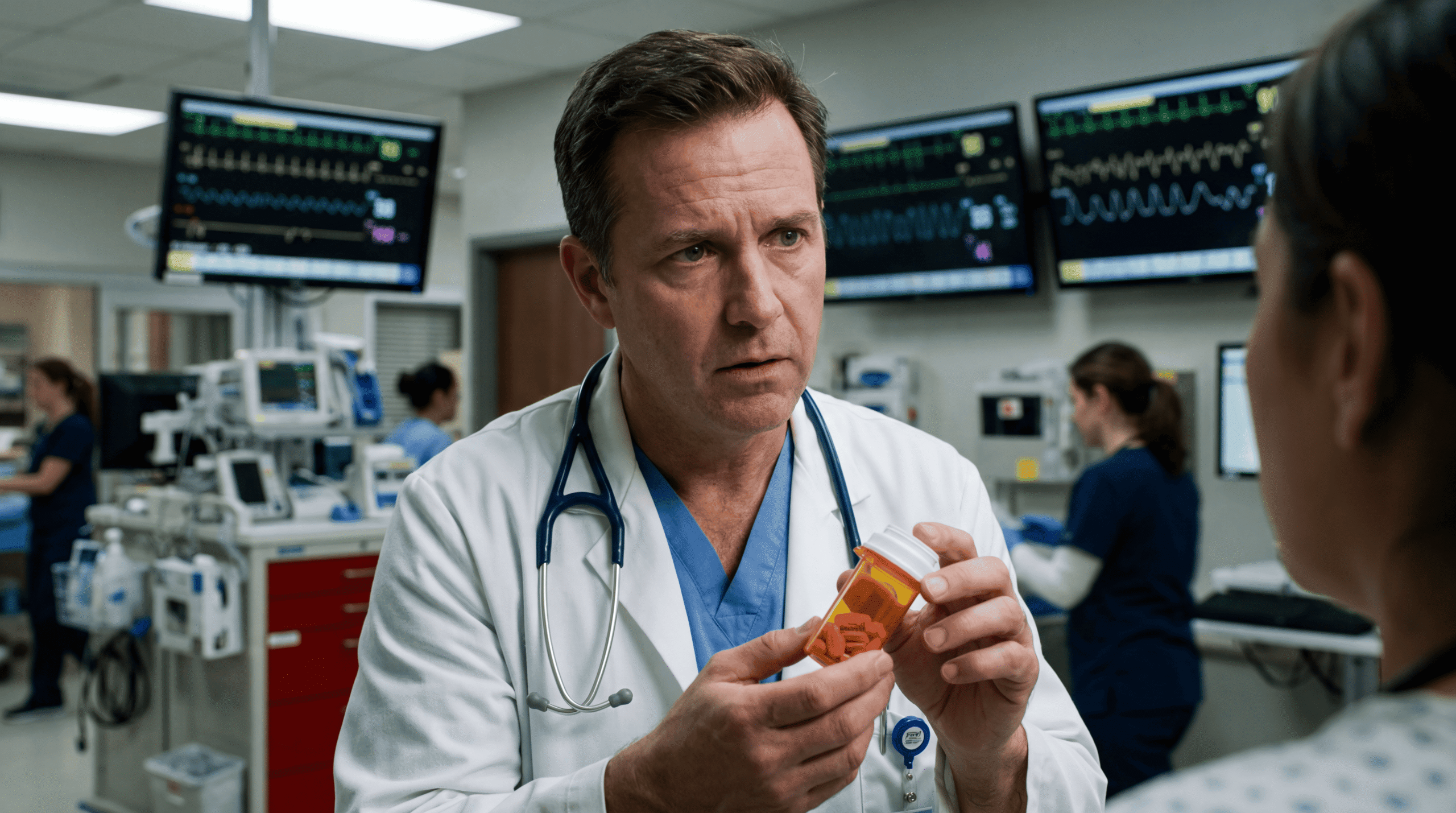

Let me be blunt: diphenhydramine — the active ingredient in Benadryl — is not a harmless allergy pill when taken in suprapharmacologic doses. It’s a potent anticholinergic agent that can trigger life-threatening cardiac arrhythmias, generalized seizures, and acute psychosis in children who think they’re just doing a viral challenge.
Emergency departments across the country are seeing the same nightmare scenario play out: a 13-year-old comes in seizing after swallowing 12-14 Benadryl tablets to see ‘spiders crawl on the walls.’ What started as a TikTok trend in 2020 has resurged, and we’re still treating the casualties.
What the Media Gets Completely Wrong About Benadryl Toxicity
Every news report calls this an ‘allergy medication overdose’ like we’re talking about taking too many vitamins. That fundamentally misrepresents the pharmacology. Diphenhydramine is a first-generation H1 antihistamine that crosses the blood-brain barrier freely and antagonizes muscarinic acetylcholine receptors throughout your central and peripheral nervous system.
At therapeutic doses (25-50mg), it blocks histamine receptors to reduce allergy symptoms. At doses above 300mg — which these challenges explicitly encourage — you’re inducing anticholinergic toxidrome. That’s not ‘taking too much allergy medicine.’ That’s chemical disruption of neurotransmission.
The media also focuses exclusively on hallucinations, which makes it sound like a bad trip. But anticholinergic poisoning causes seizures in approximately 4-8% of severe cases, ventricular arrhythmias, rhabdomyolysis, and genuine mortality risk. The FDA reported at least one death directly attributed to this challenge in 2020.
The Actual Mechanism: Why High-Dose Diphenhydramine Is Dangerous
Here’s what happens inside a child’s body when they ingest 500-700mg of diphenhydramine (the typical ‘challenge’ dose):
Cardiac effects: Diphenhydramine blocks cardiac sodium and potassium channels, prolonging the QRS interval and QT interval on ECG. This creates the substrate for torsades de pointes — a polymorphic ventricular tachycardia that degenerates into ventricular fibrillation. Translation: your heart stops beating in an organized rhythm. You die unless someone immediately shocks you.
Central nervous system effects: At high doses, muscarinic antagonism produces delirium, not hallucinations. Patients develop anticholinergic psychosis — they’re confused, agitated, picking at invisible objects, unable to distinguish reality. The spiders aren’t ‘cool visual effects.’ They’re your brain misfiring because acetylcholine signaling is blocked.
The seizures occur through multiple mechanisms: lowered seizure threshold from sodium channel blockade, direct CNS excitation, and disrupted GABAergic inhibition. One case series from 2020 documented three teenagers who developed status epilepticus (continuous seizure activity) requiring ICU admission and mechanical ventilation.
Peripheral anticholinergic syndrome: You get the classic toxidrome — dry mouth, urinary retention, hyperthermia, flushed skin, dilated pupils. The hyperthermia is particularly dangerous because it can trigger rhabdomyolysis (muscle breakdown) leading to acute kidney injury. I’ve seen core temperatures reach 106°F in diphenhydramine toxicity.
Why Children Are Uniquely Vulnerable
Adolescent brains are not just smaller adult brains. The prefrontal cortex — responsible for risk assessment and impulse control — doesn’t fully mature until the mid-20s. When you combine developmental impulsivity with a challenge that promises ‘crazy hallucinations,’ you get predictable behavior.
But there’s a pharmacokinetic vulnerability too. Children and adolescents have higher hepatic clearance rates than adults, which sounds protective but actually creates danger. They metabolize diphenhydramine faster, yes — but that also means they reach toxic serum concentrations more rapidly after ingestion. The time from ‘swallowing pills’ to ‘seizing on the floor’ can be under 90 minutes.
Body mass matters enormously. A 50kg teenager taking 600mg of diphenhydramine is receiving 12mg/kg. An adult with the same dose at 80kg gets 7.5mg/kg. That difference in weight-adjusted dosing significantly affects toxicity risk.
What Actually Happens in the Emergency Department
When a teenager arrives in my ED after a Benadryl challenge, here’s the clinical sequence:
Immediate assessment: We check vital signs, establish IV access, place them on continuous cardiac monitoring. The ECG is critical — we’re looking for QRS widening (>100ms) or QTc prolongation (>500ms), both of which indicate severe toxicity and arrhythmia risk.
If they’re seizing, we give benzodiazepines (lorazepam or midazolam) first-line. Seizures from anticholinergic agents often require higher doses than typical seizures because the underlying mechanism isn’t just neuronal hyperexcitability — it’s fundamental disruption of inhibitory neurotransmission.
Decontamination: If they present within 1-2 hours of ingestion and aren’t seizing or deeply altered, we may give activated charcoal. But honestly, most arrive too late. Diphenhydramine absorbs rapidly. By the time parents realize what happened, the drug is already systemically distributed.
Physostigmine consideration: This is where emergency medicine gets interesting. Physostigmine is an acetylcholinesterase inhibitor that can reverse anticholinergic toxicity by increasing synaptic acetylcholine. It’s remarkably effective for severe delirium — patients can go from thrashing and hallucinating to calm and oriented within 15 minutes.
But it’s contraindicated if the ECG shows conduction delays because it can paradoxically worsen cardiac toxicity. So we have a treatment that works beautifully for the psychiatric symptoms but can’t be used in exactly the patients who are sick enough to need it most.
Supportive care: Most cases require 24-48 hours of monitoring. We give IV fluids, control hyperthermia with external cooling, treat arrhythmias if they develop (sodium bicarbonate for wide-complex tachycardia), and wait for the drug to metabolize. There’s no dialysis that removes diphenhydramine effectively. You support them through it or they die.
The Long-Term Effects Nobody Discusses
Here’s what frustrates me most about media coverage: everyone focuses on acute hospitalization, but nobody talks about what happens after.
Patients who seize from diphenhydramine toxicity have a documented risk of developing epilepsy later in life. Drug-induced seizures, particularly from sodium channel blockers, can cause permanent neuronal damage and lower the threshold for future seizure activity. These kids may need anticonvulsant medications for years.
Cardiac effects can persist too. Severe QT prolongation can trigger electrical remodeling in cardiac myocytes. I’ve seen teenagers who had normal ECGs before diphenhydramine poisoning develop prolonged QTc that takes months to normalize — leaving them at elevated risk for sudden cardiac death during that window.
The psychiatric sequelae get ignored entirely. Acute anticholinergic psychosis is terrifying. Patients describe feeling trapped in nightmare reality where they couldn’t distinguish hallucinations from actual events. Some develop PTSD symptoms afterward. Others develop persistent anxiety about ‘losing their mind’ again.
Why This Challenge Keeps Resurfacing
The Benadryl Challenge emerged on TikTok in 2020, got suppressed after FDA warnings and media coverage, then resurged in 2023-2024. Why?
First, the medication is cheap and universally available. You don’t need a prescription. You don’t need to know a dealer. You walk into CVS with $8 and walk out with enough diphenhydramine to induce severe toxicity.
Second, the threshold information spreads through social media. Kids learn that ’12-14 pills’ produces effects. That specificity is dangerous because it creates a reproducible ‘recipe’ for toxicity. Contrast this with other overdoses where dosing is unpredictable.
Third, adolescent culture treats pharmaceutical medication differently than ‘drugs.’ There’s a cognitive disconnect where something sold over-the-counter feels safer than something illicit, even at toxic doses. Parents store Benadryl in unlocked medicine cabinets. Kids perceive it as ‘not really drug use.’
Fourth — and this is the mechanism nobody wants to acknowledge — it works. High-dose diphenhydramine does produce intense hallucinogenic effects. That reinforces the challenge. If kids took 14 pills and nothing happened, the trend would die instantly. But they do hallucinate, they do film it, and that content gets shared.
What the Research Actually Shows
The American Association of Poison Control Centers reported a 21% increase in diphenhydramine toxicity cases among teenagers from 2019 to 2021, with intentional abuse accounting for the majority of severe cases.
The FDA issued an official safety communication in September 2020 specifically warning about the TikTok challenge after receiving reports of teenagers requiring hospitalization and at least one death.
A 2021 toxicology study analyzed 250 cases of intentional diphenhydramine overdose in patients under 18. The findings: 28% required ICU admission, 12% developed seizures, 8% had cardiac arrhythmias requiring treatment, and 3% needed mechanical ventilation. The median ingested dose in severe cases was 550mg (equivalent to 22 of the standard 25mg tablets).
What’s chilling is the dose-response relationship. Below 300mg, most patients experience drowsiness and mild delirium. Between 300-500mg, there’s severe delirium and hallucinations. Above 500mg, you start seeing seizures and cardiac toxicity. The challenge doses typically fall in the 500-700mg range — right in the high-risk zone.
What Parents Actually Need to Know
This isn’t about demonizing TikTok or Benadryl. This is about understanding that first-generation antihistamines have genuine toxicity at high doses, and adolescents are actively seeking those toxic effects.
Lock up antihistamines like you would opioids. I’m serious. Treat over-the-counter diphenhydramine with the same security as prescription medications. If your teenager needs it for allergies, dispense the dose yourself.
Know the early signs of anticholinergic toxicity: flushed skin, dilated pupils that don’t react to light, dry mouth, confusion, picking at clothes or invisible objects, slurred speech, urinary retention. If you see these symptoms and suspect ingestion, go to the emergency department immediately. Don’t wait to see if it gets worse.
Understand the timeline: Symptoms develop within 30-90 minutes of ingestion and peak at 2-4 hours. If your child seems ‘fine’ 30 minutes after you discover empty pill bottles, they’re not out of danger. Seizures typically occur 2-6 hours post-ingestion.
Talk about it directly. Don’t have a generic ‘drug talk.’ Show your teenager actual case reports. Show them ECGs from diphenhydramine toxicity. Explain what status epilepticus means. Adolescents respond better to concrete information about mechanisms than vague warnings about danger.
What You Should Actually Do
If you’re a parent: Inventory your medicine cabinet tonight. Diphenhydramine is in dozens of products — Benadryl, Tylenol PM, Advil PM, ZzzQuil, generic sleep aids, combination cold medications. A teenager can accumulate a toxic dose by raiding multiple bottles. Lock them in a cabinet or remove them from your home entirely.
If you’re a physician or pharmacist: Stop dispensing diphenhydramine casually for sleep or mild allergies in adolescents. We have safer alternatives. Second-generation antihistamines (cetirizine, loratadine, fexofenadine) don’t cross the blood-brain barrier and have no abuse potential. For sleep issues, address the underlying problem rather than reflexively recommending Benadryl.
If you’re an educator: Understand that this challenge resurges in waves. When you see clusters of students with dilated pupils, confusion, or picking behaviors during the school day, consider diphenhydramine toxicity. These kids need emergency medical evaluation, not disciplinary action for being ‘high at school.’
If you’re a teenager reading this: I’m not going to tell you ‘just say no’ because that’s never worked. What I will tell you is that anticholinergic delirium is not like other hallucinogens. It’s not visual distortions or euphoria. It’s terrifying confusion where you can’t tell what’s real, often accompanied by physical pain, sometimes followed by seizures that cause permanent brain damage. The risk-reward ratio is catastrophically bad.
The Bigger Picture on Pharmaceutical Abuse
The Benadryl Challenge represents a broader crisis in adolescent substance abuse: teenagers systematically exploring the toxicity profiles of common medications because they’re accessible and perceived as ‘safe.’
We’ve seen it with dextromethorphan (DXM) in cough syrup, with loperamide (Imodium) for opioid-like effects, with nutmeg for myristicin toxicity, and now with diphenhydramine. Each follows the same pattern: someone discovers that excessive doses produce psychoactive effects, the information spreads through social media, and emergency departments start seeing casualties.
The solution isn’t restricting access to every over-the-counter medication (though frankly, diphenhydramine probably shouldn’t be as readily available as it is). The solution is comprehensive drug education that teaches actual pharmacology instead of moral panics, combined with adolescent mental health resources that address why teenagers are seeking dissociative experiences in the first place.
Most kids doing the Benadryl Challenge aren’t ‘drug addicts’ or ‘troubled youth.’ They’re bored, curious, impulsive adolescents who fundamentally don’t understand that medications sold at CVS can be as dangerous as street drugs when misused. Our failure to communicate that reality clearly has created an entirely preventable public health crisis.
What I Want You to Remember
Diphenhydramine overdose is not a joke, not a rite of passage, and not something you ‘sleep off.’ It’s a legitimate medical emergency with documented mortality and morbidity. The fact that it’s marketed as an allergy medication doesn’t make it benign at high doses any more than the fact that acetaminophen treats headaches makes it safe to take 20 Tylenol.
Every bottle of Benadryl in your house right now contains enough medication to send a teenager to the ICU. Treat it accordingly.