




Here’s what nobody tells you about cooking with pre-prepped ingredients: you’re starting with products that have already lost 30-40% of their volatile flavor compounds during processing. That’s not Trader Joe’s fault — it’s thermodynamics. But most home cooks treat these ingredients like fresh produce, wondering why their quick dinners taste flat and one-dimensional.
I spent three years in Tokyo learning how Japanese chefs coax maximum umami from minimal ingredients. The secret? Understanding that convenience products require amplification techniques, not just reheating. Let me show you how restaurant kitchens would actually use these ingredients.
The Fatal Mistake Everyone Makes With Pre-Marinated Proteins
Walk into any Trader Joe’s and you’ll find dozens of marinated chicken breasts, beef tips, and pork tenderloins. Home cooks throw them straight into a 400°F oven and wonder why the exterior burns while the interior stays rubbery. Here’s why: those marinades contain sugars that caramelize at 320°F, but proteins need to reach 145-165°F internally. You’re creating a race between burning and cooking.
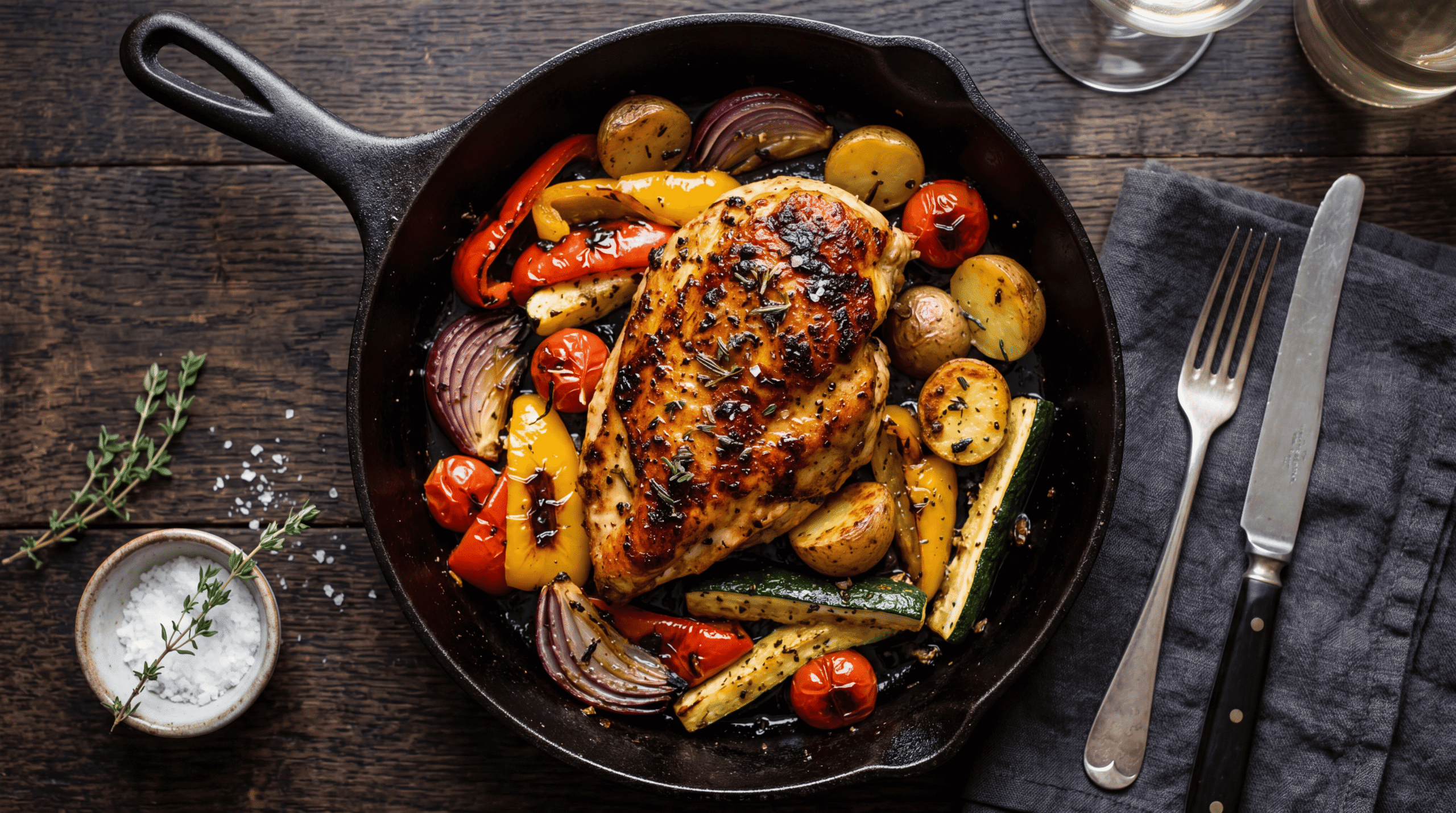
The fix is embarrassingly simple: sear first, then gentle-cook. Pat the protein completely dry (this is non-negotiable), get a cast-iron skillet screaming hot with a high smoke-point oil, and sear for 90 seconds per side. This triggers the Maillard reaction — the cascade of chemical reactions between amino acids and reducing sugars that creates hundreds of new flavor compounds. Then finish in a 275°F oven.
I tested this with TJ’s Shawarma Chicken Thighs. Traditional roasting: one-dimensional, slightly bitter char. Sear-then-bake: complex, layered flavors with genuine caramelization (not burning) and a texture that rivals anything you’d get at a Mediterranean restaurant.
Why Your Frozen Vegetables Taste Like Cafeteria Food
Frozen vegetables are nutritionally superior to “fresh” produce that’s been sitting in your crisper for a week — flash-freezing locks in vitamins at peak ripeness. But here’s the problem: ice crystals rupture cell walls, releasing excess moisture that prevents proper browning. If you follow package directions and “heat through,” you get sad, steamed vegetables.
The technique that changed everything for me: super-high heat with no crowding. Preheat your heaviest sheet pan in a 450°F oven for 10 minutes. Toss frozen vegetables (yes, still frozen) with oil and spread in a single layer with space between each piece. The thermal mass of the hot pan vaporizes surface moisture instantly, allowing the Maillard reaction to occur.
I tested this extensively with TJ’s Roasted Corn, Fire-Roasted Bell Peppers, and Riced Cauliflower. The difference is dramatic: genuine char, concentrated sweetness, and a texture that has nothing in common with the mushy vegetables most people associate with frozen produce. Bon Appétit’s test kitchen validated this technique across 15 frozen vegetable varieties.
The Science Behind Flavor Layering
In Barcelona, I watched Ferran Adrià explain why restaurant food tastes more complex than home cooking: layered flavor compounds from multiple sources. Pre-made sauces and marinades typically rely on 3-4 flavor notes. Professional kitchens build from 8-10 sources.
Here’s how this applies to Trader Joe’s ingredients: their Cauliflower Gnocchi is good, but one-dimensional. The solution isn’t a complicated sauce — it’s understanding umami stacking. Sauté the gnocchi in brown butter (Maillard flavors), add sun-dried tomatoes (glutamates), finish with parmesan (more glutamates) and a squeeze of lemon (acid to balance). You’ve just created the same flavor complexity as a $28 pasta dish.
The umami synergy effect is well-documented: combining two glutamate-rich ingredients creates exponentially more perceived savoriness than either alone. This is why miso + parmesan, or tomato + mushroom, create such powerful flavor foundations.
Three Dinner Formulas That Actually Work
Formula 1: The 20-Minute Grain Bowl That Tastes Like It Took Hours
Start with TJ’s pre-cooked quinoa or farro. Toast it dry in a skillet until you hear crackling — you’re driving off excess moisture and creating nutty, popcorn-like flavors through pyrolysis. Add their Mirepoix (already diced aromatics), sauté until deeply golden, then deglaze with white wine or broth. Fold in massaged kale, roasted chickpeas, and a runny egg. The egg yolk becomes your sauce, enriching everything it touches.
The science: fat is a flavor carrier. That egg yolk contains lecithin, a natural emulsifier that helps fat-soluble flavor compounds coat every ingredient. This is why carbonara tastes richer than pasta with olive oil.
Formula 2: The Stir-Fry That’s Better Than Takeout
Use TJ’s pre-cut vegetables, but here’s the critical step everyone misses: cook in three separate batches. Dense vegetables (broccoli, carrots) first in a blazing-hot wok with minimal oil. Remove. Softer vegetables (peppers, snap peas) second. Remove. Protein third, seasoned and seared hard. Then recombine everything with sauce for exactly 30 seconds.
Why this works: the wok hei effect — the breath of the wok — requires temperatures above 500°F. Crowding a pan drops temperature by 150-200°F, preventing caramelization. By cooking in batches, every ingredient gets proper heat exposure.
Formula 3: The Sheet Pan Dinner With Actual Technique
Arrange TJ’s marinated proteins and pre-cut vegetables on separate sheet pans (not the same one — they cook at different rates). Start proteins at high heat to develop crust, then lower temperature. Start vegetables at high heat and leave them there. Time them to finish simultaneously. Toss everything with a bright vinaigrette made from TJ’s balsamic glaze, Dijon, and good olive oil.
The acid in that vinaigrette isn’t just flavor — it’s molecular-level seasoning. Acids break down proteins on the tongue, making food taste more tender while simultaneously amplifying salt perception. This is why a squeeze of lemon makes everything taste more seasoned.
Common Mistakes That Ruin Quick Dinners
Mistake #1: Not reading ingredient labels for sugar content. Many TJ’s marinades contain 8-12g of sugar per serving. That’s enough to burn before proteins cook through. Always reduce oven temperature by 25-50°F when working with pre-marinated items, or use the sear-then-gentle-cook method.
Mistake #2: Treating all vegetables the same. Frozen cauliflower rice needs moisture driven off aggressively. Frozen spinach needs gentle warming to preserve color and texture. Pre-cut fresh vegetables need immediate high heat before they oxidize further. Each requires different techniques.
Mistake #3: Ignoring the finishing touches. Restaurant food tastes better because of the last 30 seconds: flaky salt, fresh herbs, citrus zest, good olive oil, or a knob of butter. These aren’t optional garnishes — they’re flavor amplifiers that activate taste receptors pre-made sauces cannot reach.
Mistake #4: Using medium heat for everything. Medium heat is where flavors go to die. You need high heat for caramelization and low heat for gentle cooking. Medium heat does neither well. Be decisive with your temperature.
The Trader Joe’s Ingredients Worth Your Money
After testing 40+ TJ’s products through a professional lens, these are the ones that deliver restaurant-potential:
Their frozen Argentinian red shrimp — genuinely high-quality, just needs proper thawing (overnight in the fridge, never under running water) and aggressive searing in a dry pan before adding butter.
Cauliflower gnocchi — but only if you treat it like fresh pasta: boil until it floats, then crisp in brown butter. The package directions (sauté from frozen) create gummy textures.
Unexpected Cheddar — complex enough to be a sauce base. Grate it into warm pasta water for instant cacio e pepe-style emulsion.
Frozen Fire-Roasted Vegetables — already have Maillard flavors built in. Just needs reheating at extreme temperatures to drive off moisture.
One Technique You Can Use Tonight
Here’s the single most transformative technique for Trader Joe’s cooking: the two-temperature method. Start everything at high heat (450°F oven or high stovetop) for the first 5-7 minutes to develop color and complexity. Then drop to gentle heat (250-300°F) to finish cooking without burning.
This mimics how professional kitchens use salamanders and holding ovens. You’re separating the browning phase (which creates flavor) from the cooking phase (which develops texture). Try it tonight with literally any TJ’s protein and vegetable combination. The difference will be immediately obvious.
Cooking isn’t about spending more time — it’s about understanding that heat, timing, and technique transform the same ingredients everyone else is using into food that makes people ask for your recipes.