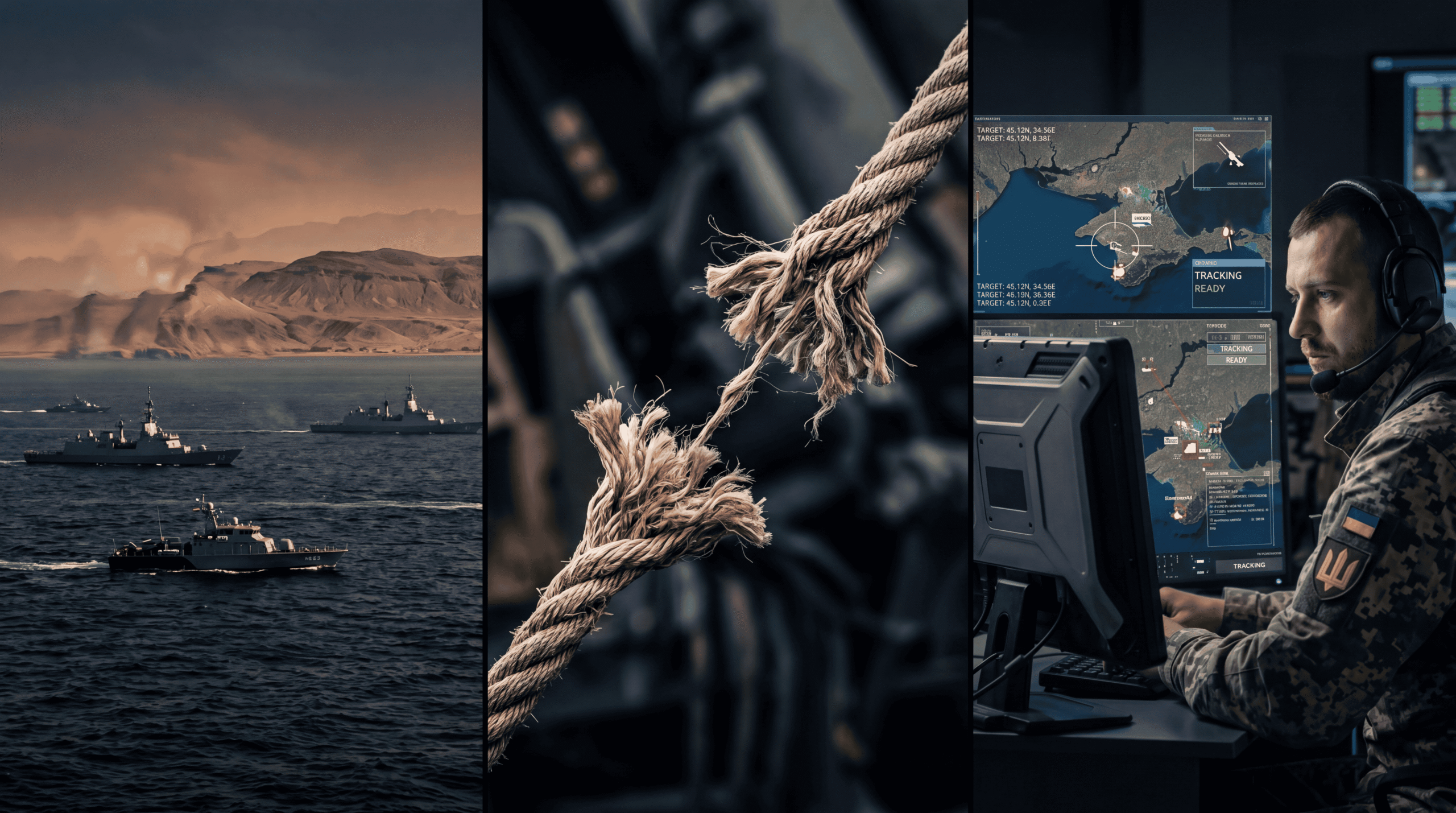

The world is one miscalculation away from a crisis that makes 2008 look like a dress rehearsal. Right now, three simultaneous pressure points—U.S.-Iran ceasefire negotiations teetering on collapse, climate-amplified chokepoint vulnerabilities in the Strait of Hormuz, and renewed tactical strikes in Ukraine—are converging in ways that expose how fragile our interconnected security architecture has become. What binds these crises isn’t geography. It’s the erosion of deterrence itself.
The Iran Ceasefire That Was Never Really a Ceasefire
Let’s be precise about what we’re calling a “ceasefire” between Washington and Tehran. It’s not a formal agreement—it’s a tacit understanding brokered through Omani intermediaries that both sides would dial back proxy attacks in Iraq and Syria while nuclear talks resume. The problem? Neither side has actually stopped arming their proxies.
According to recent Brookings analysis, Iranian-backed militias have conducted at least seven attacks on U.S. positions in the past month alone. Washington’s response has been surgical strikes that technically don’t violate the understanding but make clear the gloves haven’t come off only because neither side can afford full escalation—yet. This mirrors the 1969-1970 War of Attrition between Egypt and Israel: both sides claiming restraint while steadily ratcheting up violence until the dam breaks.
The real dynamic here isn’t about nukes or sanctions. It’s about regime survival in Tehran versus credibility management in Washington. Iran’s leadership needs to show hardliners they haven’t capitulated. The U.S. administration needs to show Congress it hasn’t been played. Both incentives push toward breakdown, not breakthrough.
When Weather Becomes a Weapons System: El Niño and Hormuz
Here’s the variable nobody’s pricing into their risk models: El Niño isn’t just making headlines for climate activists anymore. The current El Niño pattern is creating unprecedented temperature spikes in the Persian Gulf—surface water temperatures that affect everything from desalination plants to naval operations to the very viability of outdoor labor.
The Strait of Hormuz, through which 21% of global petroleum passes, becomes exponentially more vulnerable when you add extreme heat to political instability. Tanker operations slow. Port loading becomes dangerous during peak heat hours. Iranian fast-attack boats, which rely on surprise and speed, gain tactical advantages in the shimmering heat that degrades radar and visual tracking.
But here’s what keeps me up at night: climate stress is forcing a fundamental recalculation of chokepoint defense. The U.S. Fifth Fleet, based in Bahrain, is discovering that extreme heat affects everything from aircraft carrier flight operations to the cognitive performance of sailors on watch. According to Council on Foreign Relations reporting, operational readiness during summer peak temperatures has declined 18% over the past three years. Iran knows this. They’re not stupid.
This creates what military planners call a “shrinking window of assured response.” If Tehran decides to close the Strait, the U.S. ability to reopen it quickly is no longer guaranteed during summer months. That’s not a tactical problem—it’s a strategic revolution that undermines 40 years of Gulf security architecture.
Ukraine: The War That Refuses to Freeze
Meanwhile, in eastern Ukraine, the supposed “frozen conflict” everyone predicted is refusing to freeze. Recent attacks on Russian logistics hubs deep inside occupied territory signal something significant: Kyiv has decided that static defense is strategic defeat.
The latest strikes—hitting ammunition depots in Luhansk and oil infrastructure in Crimea—aren’t desperate moves. They’re calculated escalation designed to make Russia’s occupation untenable by degrees. Think of the Viet Cong’s strategy after 1968: avoid direct confrontation, attack supply lines, make the enemy’s presence unbearably expensive. It worked then. It might work now.
But there’s a darker parallel: the 1982 Falklands War showed how quickly a “managed” conflict can explode when domestic political pressure overrides strategic caution. Putin faces similar pressure. Russian military bloggers—the only quasi-independent voices left—are demanding retaliation. That creates a ratchet effect: each Ukrainian strike demands a Russian response, which demands a Ukrainian counter-response, and suddenly you’re in full-spectrum war without anyone quite deciding to start one.
The West’s calculation that it could support Ukraine just enough to avoid defeat but not enough to provoke Russia into wider war is revealing itself as fantasy. There is no “just enough.” There’s only winning or losing, and everything in between is temporary.
What This Means For You
If you’re reading this in New York or London or Singapore, here’s why you should care: these three crises don’t stay regional. An Iran escalation means $150+ oil overnight. A Hormuz closure means global recession. A Ukraine explosion means Article 5 decisions nobody wants to make.
But more immediately, it means supply chain chaos is about to get worse. Companies that thought they’d diversified away from China-dependence are about to discover they’re now vulnerable to Middle East energy disruptions and European security crises. The illusion of decoupled risk is ending.
For everyday citizens, this translates to: higher inflation that central banks can’t control, because it’s not monetary—it’s geopolitical. It means energy price volatility that makes 2022 look stable. It means the return of genuine uncertainty about whether regional wars stay regional.
The Architecture of Deterrence is Crumbling
What connects these three flashpoints is the breakdown of what strategists call “escalation dominance”—the ability of status quo powers to control the ladder of conflict. For 30 years, the U.S. and its allies assumed they could manage crises because they held overwhelming conventional superiority. That assumption is now obsolete.
Iran has drones and precision missiles that make billion-dollar warships vulnerable. Russia has tactical nukes and a willingness to absorb economic pain that Western democracies can’t match. Climate change is degrading the operational capabilities that underpinned American power projection. And everyone can see it.
This is what the collapse of deterrence looks like: not dramatic surrender, but gradual discovery that the threats you’ve relied on for decades no longer scare anyone. It’s why North Korea launches missiles with impunity. It’s why China buzzes Taiwan daily. It’s why the Houthis can attack commercial shipping and face no meaningful consequences.
What Happens Next: Three Scenarios
Scenario One: Managed Decline (40% probability) — All three crises muddle along for another 18-24 months. The Iran “ceasefire” survives because neither side can afford war before their respective elections. Hormuz stays open because the economic pain of closure hurts Iran worse than anyone. Ukraine becomes Syria: a low-intensity forever war that eventually bores Western audiences. This is the best-case scenario, and it still means persistent instability.
Scenario Two: Sequential Crisis (35% probability) — One flashpoint explodes, forcing concentration of Western attention and resources, which creates opportunity for escalation in the others. Most likely sequence: Iran tests a nuclear device, forcing U.S. focus to the Gulf, which Putin interprets as permission to escalate in Ukraine. This is 1939-1941 logic: dictators attacking while democracies are distracted.
Scenario Three: Simultaneous Escalation (25% probability) — A perfect storm where all three crises go critical within weeks of each other. Iran closes Hormuz after a U.S. strike, Russia launches a major offensive in Ukraine, and suddenly NATO is facing a two-front crisis it hasn’t planned for since the Cold War. This is the scenario that ends with genuine questions about nuclear use. Twenty-five percent probability means it’s not remote—it’s terrifyingly plausible.
The Decisions Being Made Right Now
In Washington, the debate is whether to prioritize Iran containment or Ukraine support—as if you can separate them. In Tehran, it’s whether the regime’s survival depends on nuclear breakout or economic reintegration. In Moscow, it’s whether grinding attrition in Ukraine serves Russian interests better than a knockout blow that risks NATO intervention. In Brussels, it’s whether Europe can actually sustain Ukraine support without American leadership.
These aren’t abstract policy discussions. They’re decisions being made by exhausted officials under crushing pressure, often with incomplete information, always with domestic political constraints. That’s how wars start: not because anyone wants them, but because the accumulation of smaller decisions forecloses better options.
Why This Time Really Is Different
Every analyst is taught to resist the temptation of “this time is different” thinking. Usually, it isn’t. But three structural factors make 2025 genuinely unprecedented:
First, climate impacts are now operationally relevant to military planning in ways they never were before. Heat, drought, and extreme weather aren’t background conditions—they’re tactical variables. Second, the diffusion of advanced weapons technology means regional powers can now impose costs on great powers that were impossible 20 years ago. And third, domestic political polarization in Western democracies makes sustained strategic commitment to anything almost impossible.
Put those three factors together and you get a world where deterrence is harder to establish, conflicts are harder to contain, and the space between peace and war is narrower than anyone wants to admit.
The Question No One’s Asking
Here’s what bothers me most: we’re treating these as three separate crises requiring three separate responses. But what if they’re actually one crisis—the crisis of transition from a unipolar world to whatever comes next? What if Iran, Russia, and climate stress are all just different manifestations of the same underlying reality: that the security order built between 1945-1991 is ending, and we have no idea what replaces it?
If that’s true, then managing individual flashpoints isn’t enough. We need a fundamental rethinking of how security, economics, and climate interact. We need new institutions, new treaties, new definitions of what “stability” even means. But that requires long-term thinking and multilateral cooperation precisely when domestic politics in every major power rewards short-term nationalism.
That’s the real crisis: not any individual conflict, but our collective inability to think systemically about interconnected threats. And unlike a missile strike or a nuclear test, that kind of crisis doesn’t announce itself with sirens. It just accumulates, quietly, until the day you wake up and realize the world you thought you knew doesn’t exist anymore.
The Strait of Hormuz isn’t just a chokepoint for oil—it’s a stress test for whether great powers can still manage crises they no longer fully control.