




You are destroying cabbage. I know this because after twenty years in professional kitchens from Barcelona to Tokyo, I have watched home cooks commit the same molecular massacre: they boil it into sulfurous submission, then wonder why their families reject one of nature’s most nutritionally dense vegetables. The problem is not the cabbage—it is your fundamental misunderstanding of its cellular structure and the volatile compounds that determine whether it tastes sweet and nutty or like a high school cafeteria nightmare.
Let me be direct: cabbage is not a punishment vegetable that requires drowning in water to become edible. It is a glucosinolate powerhouse containing cancer-fighting compounds, prebiotic fiber, and enough vitamin K to support bone health for three days—all for less than fifty cents per serving. The transformation from raw to sublime requires understanding one critical principle that changes everything: heat management controls enzymatic activity, and enzymatic activity controls flavor.
The Science Behind Cabbage’s Bad Reputation
Here is what actually happens when you overcook cabbage, explained at the molecular level. Raw cabbage contains glucosinolates—sulfur-containing compounds that remain stable and relatively odorless in their natural state. When you apply heat, especially prolonged boiling above 185°F (85°C), you activate an enzyme called myrosinase that breaks these glucosinolates into isothiocyanates and hydrogen sulfide. Hydrogen sulfide is the compound that smells like rotten eggs. This is not cabbage being cabbage—this is you creating a chemical reaction that should never happen.
The second problem is structural. Cabbage leaves contain pectin-rich cell walls that, when properly managed, soften into tender, sweet ribbons while retaining a pleasant bite. Boiling floods these cells with water, rupturing them completely and creating a mushy, waterlogged texture that releases even more sulfur compounds into your cooking liquid. You are essentially engineering the worst possible outcome through technique alone.
Research published in the Journal of Agricultural and Food Chemistry demonstrates that cabbage cooked for less than five minutes at moderate heat retains 85% of its glucosinolates in their beneficial form while developing sweet, nutty flavors through caramelization. Cook it for fifteen minutes in boiling water and you lose 65% of these compounds while maximizing sulfur volatiles. The science is unambiguous: shorter cooking times at higher, dry heat produce superior flavor and nutrition.
The High-Heat Revelation: Char First, Steam Second
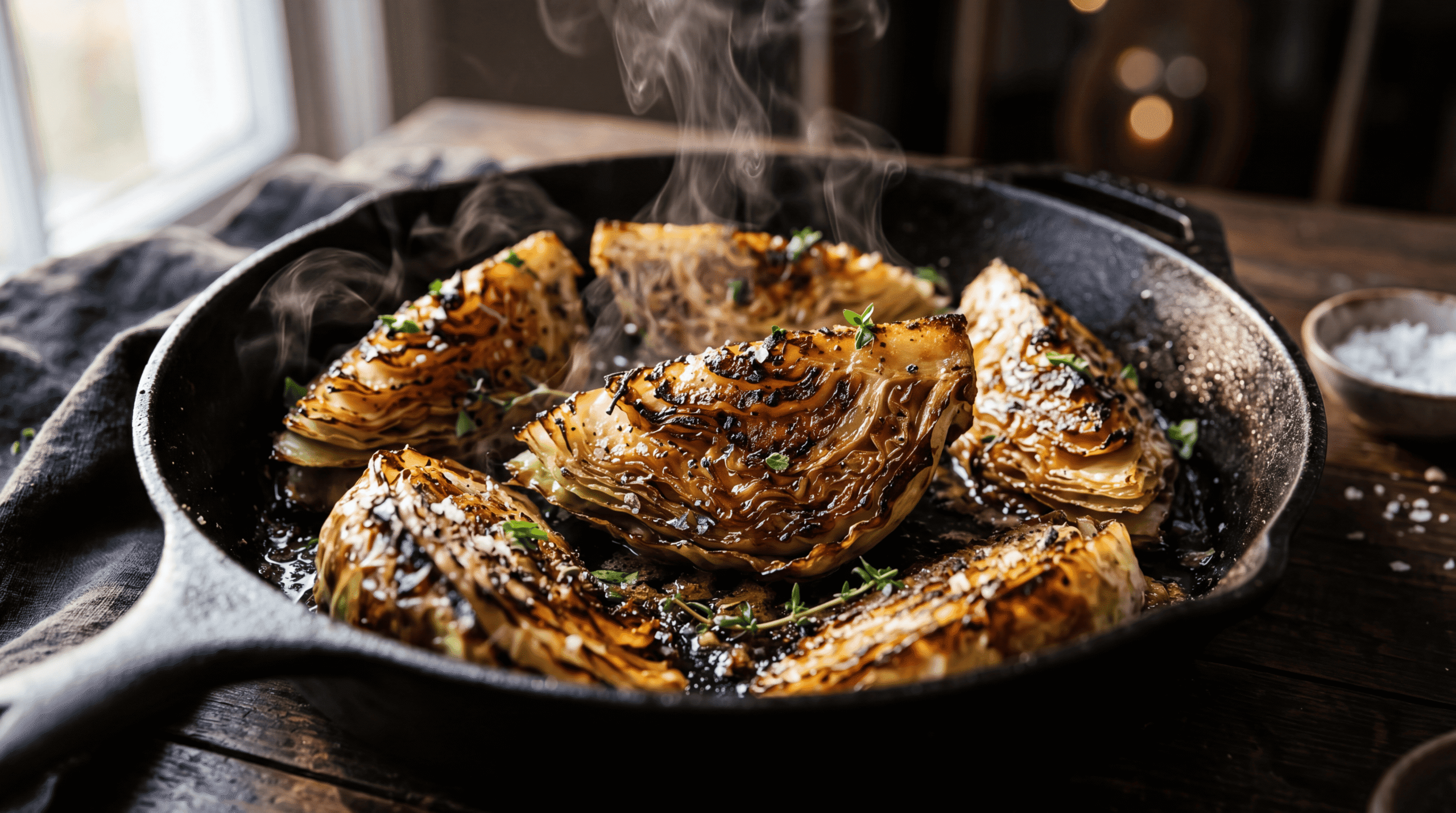
The technique that revolutionized cabbage in my kitchen involves a two-stage cooking method that restaurant chefs have used for decades but home cooks almost never attempt. You are going to char the cabbage first to develop Maillard browning and caramelization, then finish with a brief steam to soften the interior while preserving the crispy, golden exterior. This creates textural contrast and complex flavor that makes cabbage genuinely craveable.
Cut your cabbage into thick wedges—at least 1.5 inches at the core—leaving the core intact to hold the leaves together. Heat a cast iron skillet or heavy pan until it just begins to smoke (around 450°F/230°C), then add a high smoke-point oil like avocado or refined coconut oil. Place cabbage wedges cut-side down without moving them for 4-5 minutes. You want deep golden-brown caramelization bordering on char. This is not burning—this is concentrated flavor development through the Maillard reaction, where amino acids and reducing sugars create hundreds of new flavor compounds that taste nutty, sweet, and deeply savory.
Flip the wedges and add a quarter cup of water, stock, or wine to the pan, then immediately cover with a lid. The liquid will flash into steam, cooking the interior of the cabbage through gentle heat while the exterior remains crispy. After exactly three minutes, remove the lid and let any remaining liquid evaporate. Season aggressively with salt, and you have transformed a fifty-cent vegetable into something you would pay eighteen dollars for at a farm-to-table restaurant.
Fermentation: The Umami Bomb You Are Ignoring
If you are not fermenting cabbage, you are missing its most transformative application. Fermentation does not just preserve cabbage—it creates entirely new flavor compounds and amplifies its nutritional benefits through microbial metabolism. When lactic acid bacteria consume the natural sugars in cabbage, they produce lactic acid (which creates tangy flavor), probiotics (which support gut health), and increased bioavailability of vitamins and minerals.
The simplest fermentation requires only cabbage, salt, and time. Shred one medium cabbage, massage it with two tablespoons of fine sea salt until it releases liquid, then pack it tightly into a jar, ensuring the cabbage remains submerged in its own brine. Leave it at room temperature for 5-7 days, burping the jar daily to release carbon dioxide. What emerges is sauerkraut—but I want you to think beyond this single application.
Fermented cabbage becomes a condiment that adds acid, crunch, and umami to grain bowls, tacos, sandwiches, and scrambled eggs. It is the secret ingredient in my restaurant’s potato hash, adding complexity that makes guests ask what makes it taste so interesting. The fermentation process also reduces the glucosinolates that cause bitterness, making fermented cabbage sweeter and more digestible than raw. ChefSteps research shows that properly fermented cabbage contains up to ten times more bioavailable nutrients than its raw counterpart.
Raw Applications: Texture and Temperature Control
Raw cabbage deserves better than being relegated to sad coleslaw swimming in mayonnaise. The key to exceptional raw cabbage is understanding that its cellular structure requires physical and chemical intervention to become tender without cooking. Slicing cabbage paper-thin—ideally on a mandoline at 1/16 inch—partially breaks down cell walls through mechanical action, making it less fibrous and more palatable.
The second technique is salting and resting, which draws out water through osmosis while seasoning the cabbage from within. Toss thinly sliced cabbage with salt (about one teaspoon per pound), massage briefly, and let it rest for twenty minutes. The cabbage will release liquid, soften significantly, and become sweet rather than harsh. Rinse briefly if it tastes too salty, then dress it with acid (citrus juice, rice vinegar, or apple cider vinegar) and fat (olive oil, sesame oil, or a tahini dressing).
I use this technique for my Japanese-inspired cabbage salad with ginger-miso dressing, which has become one of the most requested recipes from my workshops. The cabbage is so finely shaved that it almost melts on the tongue, with a dressing that provides fat, acid, salt, and umami in perfect balance. Cabbage is also exceptional in tacos, providing crunch and freshness that contrasts with rich proteins, and it holds up far better than lettuce, which wilts immediately upon contact with hot fillings.
Braising: The Slow Transformation
When you want cabbage to become meltingly tender and infused with other flavors, braising is your technique—but it requires precise temperature control that most home cooks ignore. The goal is to hold the cabbage between 180-200°F (82-93°C) for an extended period, which gently breaks down pectin and cellulose without triggering the sulfur cascade that occurs at higher temperatures.
Cut cabbage into thick wedges, sear them in butter or oil until golden, then add liquid (stock, wine, or cider) to come about halfway up the cabbage. Add aromatics like garlic, thyme, bay leaves, or caraway seeds, then cover and transfer to a 325°F (163°C) oven. The gentle, even heat of the oven prevents hot spots and maintains the optimal braising temperature. After 45-60 minutes, the cabbage should be tender enough to cut with a fork but still hold its shape, with a glossy, concentrated braising liquid that becomes your sauce.
This technique works brilliantly with red cabbage braised with apples and red wine, a classic German preparation that demonstrates how cabbage absorbs and amplifies the flavors around it. The anthocyanins in red cabbage—the same compounds that make it purple—are pH-sensitive, meaning they turn bright pink in acidic environments and blue-gray in alkaline ones. Adding acid (vinegar or wine) not only improves flavor but preserves the vibrant color that makes the dish visually stunning.
Common Mistakes That Ruin Cabbage
Mistake 1: Cutting cabbage too far in advance. Once you cut cabbage, you expose interior cells to oxygen, which begins oxidizing vitamin C and other sensitive compounds. The cut edges also start releasing moisture, which concentrates sulfur compounds and creates off-flavors. Cut cabbage no more than an hour before cooking, or store cut cabbage submerged in cold water with a squeeze of lemon juice to slow oxidation.
Mistake 2: Using old cabbage that has been stored improperly. Cabbage stored above 40°F (4°C) begins breaking down, with enzymes converting sugars into sulfur compounds even before cooking. Fresh cabbage should feel dense and heavy, with tightly packed leaves and no soft spots. Store it in the coldest part of your refrigerator, wrapped loosely in plastic to prevent moisture loss while allowing some air circulation.
Mistake 3: Underseasoning or seasoning too late. Cabbage has a mild, slightly sweet flavor that requires aggressive seasoning to come alive. Salt should be added early in the cooking process to penetrate the dense cellular structure, and you should season in layers—salt when you start cooking, acid (vinegar or citrus) in the middle, and a final adjustment at the end. Many home cooks add salt only at the end, which leaves the interior bland and unbalanced.
Mistake 4: Ignoring the core. The cabbage core is often discarded, but it contains concentrated sweetness and a pleasant crunch when properly prepared. Slice the core very thinly and add it to stir-fries or slaws, where it provides textural contrast. In braised preparations, leaving the core attached helps the wedges hold together during cooking.
Integration Strategies: Making Cabbage Essential
The key to incorporating more cabbage into your cooking is treating it as a textural and flavor component rather than a side dish obligation. Add finely shredded cabbage to grain bowls for crunch and fiber that helps you feel satisfied longer. Stir-fry it with garlic and ginger as a five-minute side dish that pairs with any protein. Roast cabbage wedges alongside chicken or fish, where they absorb rendered fat and develop crispy edges. Blend blanched cabbage into soups for body and nutrition without overwhelming other flavors.
I add cabbage to my pasta e fagioli, where it contributes sweetness and substance that makes the soup more filling without added calories. I use it in dumplings, mixing finely chopped cabbage with pork and ginger for a filling that stays juicy during cooking. I even spiralize cabbage stems and use them like noodles, dressed with sesame-miso sauce for a low-carb alternative to pasta that actually tastes interesting.
The nutritional case for cabbage is overwhelming. One cup of cooked cabbage provides more than your daily vitamin K requirement, substantial vitamin C, folate, and fiber, all for approximately thirty-five calories. The glucosinolates that give cabbage its characteristic flavor are under active research for their potential anti-cancer properties, particularly in preventing hormone-related cancers. Cabbage is also a significant source of prebiotic fiber that feeds beneficial gut bacteria, supporting immune function and digestive health.
The One Technique That Changes Everything
If you take nothing else from this article, master this single technique: the high-heat sear-and-steam method for cabbage wedges. It transforms cabbage from something you tolerate into something you crave, and it requires only ten minutes from start to finish. Once you taste properly caramelized cabbage with a crispy, golden exterior and tender, sweet interior, you will understand why this vegetable has sustained human populations for thousands of years and why chefs around the world are rediscovering it as a centerpiece ingredient rather than an afterthought.
Cooking cabbage correctly is not about making it edible—it is about revealing the sweetness, complexity, and textural possibilities that have been there all along, waiting for you to apply the right technique. That is the difference between a home cook who tolerates vegetables and one who makes them the most exciting part of the meal.