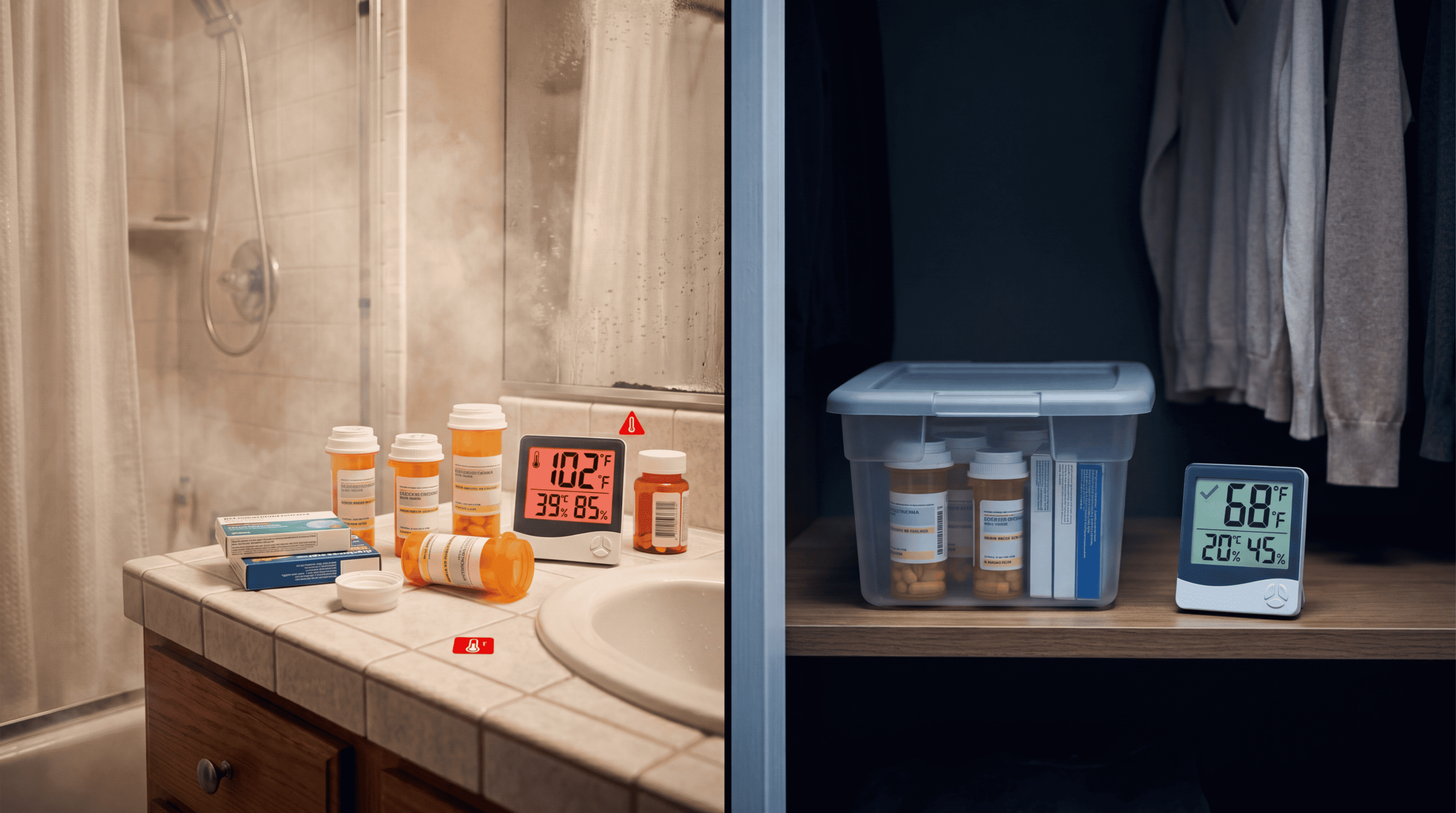

The Medical Truth About Heat and Your Medications
Every summer, millions of patients unknowingly destroy their medications by storing them exactly where their doctors tell them to: the bathroom medicine cabinet. The problem isn’t just extreme heat waves — it’s the daily temperature fluctuations in your home that silently degrade drug potency through a process called thermal decomposition, and most physicians never explain this during prescription consultations.
I’ve watched patients wonder why their blood pressure medication “stopped working” or their antibiotics didn’t clear infections. The answer often isn’t drug resistance or disease progression — it’s that the active pharmaceutical ingredient degraded before they took it.
The Chemistry Your Pharmacist Doesn’t Explain
Medications are not inert objects sitting on your shelf. They’re chemically active compounds constantly breaking down through hydrolysis, oxidation, and thermal degradation.
Heat accelerates these reactions exponentially. For every 10°C (18°F) increase in storage temperature above recommended conditions, most drugs degrade approximately twice as fast — a principle called the Arrhenius equation that pharmaceutical manufacturers use but rarely communicate to patients.
Take insulin, one of the most temperature-sensitive medications. Research published in PLOS ONE found that insulin stored at 37°C (98.6°F) — the temperature inside a hot car — loses up to 25% potency in just one month. Your bathroom during summer? Easily reaches 32°C (90°F) with shower humidity.
Nitroglycerin tablets for heart patients degrade even faster. Exposure to heat above 25°C (77°F) can render them ineffective within weeks, potentially leaving patients vulnerable during cardiac emergencies without realizing their life-saving medication is now pharmacologically inert.
The Medications Most Vulnerable to Heat Damage
Not all drugs respond identically to temperature stress. Certain medication classes face accelerated degradation that directly impacts clinical outcomes.
Biologics and insulin: Protein-based medications like insulin, growth hormones, and monoclonal antibodies undergo irreversible denaturation above 25°C. The molecular structure literally unfolds, destroying therapeutic activity permanently.
Antibiotics: Tetracyclines, amoxicillin-clavulanate, and liquid suspensions break down rapidly in heat. WHO stability guidelines show that some liquid antibiotics lose 50% potency if stored above 30°C for just two weeks — exactly what happens in many homes without air conditioning.
Cardiovascular medications: Nitroglycerin, aspirin, and certain blood pressure medications degrade quickly. Aspirin converts to acetic acid (vinegar smell is the warning sign), while nitroglycerin sublinguals lose effectiveness when exposed to light and heat simultaneously.
Thyroid medications: Levothyroxine is notoriously heat-sensitive. Patients often report symptoms returning in summer — not because their thyroid changed, but because their medication degraded in storage.
Psychiatric medications: Many antidepressants and antipsychotics, particularly liquid formulations, require stable temperatures. Degradation can lead to breakthrough symptoms that get misinterpreted as treatment failure rather than storage failure.
What The Media Got Wrong About Medication Storage
Health articles typically tell you to “keep medications in a cool, dry place” — vague advice that misses the critical details. Here’s what mainstream coverage consistently gets wrong:
Myth 1: The bathroom cabinet is fine if you keep the fan on. Wrong. Bathrooms experience the most extreme temperature and humidity fluctuations in your home. Showering creates 70-90% humidity and raises room temperature by 10-15°C. That combination accelerates both hydrolytic and thermal degradation pathways.
Myth 2: Refrigerator storage always protects medications. Not necessarily. Most medications shouldn’t be refrigerated unless specifically indicated. Insulin and biologics yes — but tablets and capsules can actually absorb moisture from refrigerator humidity, causing dissolution problems. Additionally, freezing most medications (which can happen in refrigerator cold spots) causes permanent damage.
Myth 3: If the pill looks normal, it’s still good. Pharmaceutical degradation often occurs with zero visible changes. You cannot assess drug potency by appearance. Chemical breakdown happens at the molecular level long before you see discoloration or crumbling.
Myth 4: Expiration dates account for your storage conditions. Expiration dates assume you stored medications at 20-25°C (68-77°F) with less than 60% humidity. Store them hotter, and they expire significantly earlier. FDA guidelines make this clear, but most patients never see these technical specifications.
Myth 5: Travel pill organizers are convenient and safe. Those plastic weekly organizers? They expose medications to light, air, and temperature fluctuations simultaneously — the trifecta of pharmaceutical degradation. Pills removed from protective packaging degrade up to 50% faster.
How Heat Actually Destroys Drug Molecules
Understanding the mechanism matters because it changes how seriously you take storage recommendations. Heat damage isn’t reversible — once the molecular structure changes, it’s permanent.
Thermal energy increases molecular vibration and collision rates. In drug molecules, this accelerates three main degradation pathways:
Hydrolysis: Water molecules attack chemical bonds, splitting drug molecules into inactive fragments. Beta-lactam antibiotics (penicillins, cephalosporins) are especially vulnerable. Heat plus humidity — like bathroom storage — creates ideal conditions for hydrolytic degradation.
Oxidation: Heat accelerates electron transfer reactions with oxygen, breaking down drug molecules. Vitamin C, aspirin, and certain heart medications oxidize rapidly at elevated temperatures. This is why some tablets have desiccant packets — to control moisture and reduce oxidation rates.
Photodegradation (when combined with light): Nitroglycerin is the classic example. UV and visible light provide energy that, combined with heat, breaks nitrate ester bonds. This is why these tablets come in amber bottles with cotton filling — to limit both light and air exposure.
Once these reactions occur, the medication doesn’t just become “weaker” — it may produce degradation products that are inactive, less effective, or potentially toxic. Research on degraded tetracycline antibiotics, for instance, showed they could cause kidney damage.
The Clinical Consequences Doctors See
In my practice, I’ve seen real clinical consequences from medication storage failures that initially masquerade as other problems:
A diabetic patient whose glucose control suddenly worsened didn’t need insulin dose adjustment — her insulin had been stored in her car console while she worked, regularly reaching 40°C (104°F). Once we identified the storage issue and replaced her supply, her glucose immediately stabilized.
A thyroid patient who complained of returning fatigue and weight gain hadn’t changed anything about her levothyroxine dose — but she’d moved her pills to a sunny windowsill. UV exposure combined with temperature fluctuations degraded the hormone.
An elderly cardiac patient experienced breakthrough chest pain not because his disease progressed, but because his nitroglycerin had been stored in a bathroom that regularly exceeded 27°C (80°F). The medication appeared normal but had lost therapeutic potency.
These aren’t rare occurrences. Studies in tropical climates show that up to 30% of medication treatment failures may relate to heat degradation rather than pharmacological resistance or disease progression.
What You Should Actually Do: Evidence-Based Storage Strategy
Here’s the specific guidance I give patients — not vague platitudes, but actionable protocols based on pharmaceutical science:
Identify the coolest, driest location in your home. This is usually a bedroom closet on an interior wall, away from windows and bathrooms. Measure the temperature with a basic thermometer during summer. Target: 20-25°C (68-77°F) with minimal fluctuation.
Keep medications in original containers. Those bottles aren’t just packaging — they’re engineered to protect contents from light, moisture, and air. The amber color filters UV light. The desiccant packets control humidity. The child-resistant caps limit air exchange. Don’t transfer to decorative containers or weekly organizers for long-term storage.
For temperature-sensitive medications (insulin, biologics, certain antibiotics): Use a small medication refrigerator or cooler with temperature monitoring. Standard refrigerators work but avoid placing medications near the back wall where freezing can occur. Never store in refrigerator doors — the temperature fluctuates too much with opening and closing.
During heat waves: If your home lacks air conditioning and exceeds 30°C (86°F), consider temporary refrigeration for heat-sensitive medications even if not typically refrigerated. Consult your pharmacist about which specific medications in your regimen qualify. For short-term heat emergencies, refrigeration damage is less concerning than thermal degradation.
When traveling: Never leave medications in a car, even briefly. A car interior reaches 50-70°C (120-160°F) in summer sun within 30 minutes. Use insulated medication travel cases with ice packs for temperature-sensitive drugs. For air travel, keep medications in carry-on luggage — cargo holds can reach extreme temperatures.
Check for degradation signs: While invisible chemical changes occur before visible ones, watch for: pills that crumble easily, tablets with cracks or chips, capsules that stick together, discoloration, unusual odors (especially vinegar smell from aspirin), or cloudy appearance in normally clear liquids. Any of these signs means discard and replace.
Reassess storage twice yearly: When you change clocks for daylight saving time, check medication storage conditions. Has temperature or humidity changed with seasons? Are medications still in optimal locations? Have you accumulated expired stock that should be discarded?
For liquid medications: These are even more vulnerable than solid dosage forms. Never store liquid antibiotics, suspensions, or solutions in bathrooms. Many require refrigeration after opening — follow those instructions precisely. Shake suspensions before each dose to ensure even distribution of active ingredient.
Special Considerations for Chronic Medications
If you take medications daily for chronic conditions, you have additional considerations beyond immediate storage:
Mail-order pharmacy deliveries: Medications can sit in delivery trucks or mailboxes for hours in extreme heat. If daytime temperatures exceed 32°C (90°F), request signature-required delivery or use pharmacy pickup instead. I’ve had patients receive melted medications that were clearly heat-damaged during shipping.
90-day supplies: While cost-effective, large quantities mean medications spend months in your home. If your storage conditions aren’t ideal, 30-day supplies actually preserve potency better because you cycle through inventory faster. Consider this trade-off during summer months.
Emergency medication stockpiles: If you maintain backup supplies for emergencies, rotate stock like expiration dates and store in the coolest possible location. Emergency medications that have degraded won’t help when you need them most.
When to Replace Heat-Exposed Medications
If medications were exposed to excessive heat, when should you replace them versus assuming they’re still effective?
Replace immediately: Insulin, biologics, nitroglycerin, and liquid antibiotics exposed to temperatures above 30°C (86°F) for more than a few hours. The risk of therapeutic failure outweighs the cost of replacement.
Probably replace: Any medication exposed to temperatures above 35°C (95°F) for more than 24 hours, or showing visible signs of degradation. The cost-benefit calculation favors replacement for critical medications like cardiac drugs, anticoagulants, and seizure medications where treatment failure has serious consequences.
Monitor closely: Medications exposed to moderately elevated temperatures (27-30°C/80-86°F) for several days may have reduced potency. For chronic conditions with measurable outcomes (blood pressure, glucose, cholesterol), monitor more frequently for the next month. If control worsens, consider medication replacement rather than dose escalation.
When in doubt, ask the pharmacist — not about general advice, but about your specific medications. Some drugs are remarkably stable; others degrade rapidly. Your pharmacist can access stability data for your exact formulations and provide evidence-based guidance rather than generic precautions.
The Takeaway That Changes Patient Outcomes
Your medication is only as effective as its storage conditions allow. Heat silently destroys drug potency through chemical degradation pathways that are irreversible and often invisible — and most patients discover this only after their disease control deteriorates and they’ve already progressed to stronger medications they may not have needed.
The next time your doctor prescribes a new medication, ask one question that almost no one asks but everyone should: “Where exactly should I store this to maintain its potency?” Then actually measure the temperature in that location, because your perception of “room temperature” may be very different from pharmaceutical stability specifications.
You wouldn’t leave fresh food sitting in a hot car and expect it to be safe to eat later — apply the same logic to the chemicals you put inside your body to manage your health.